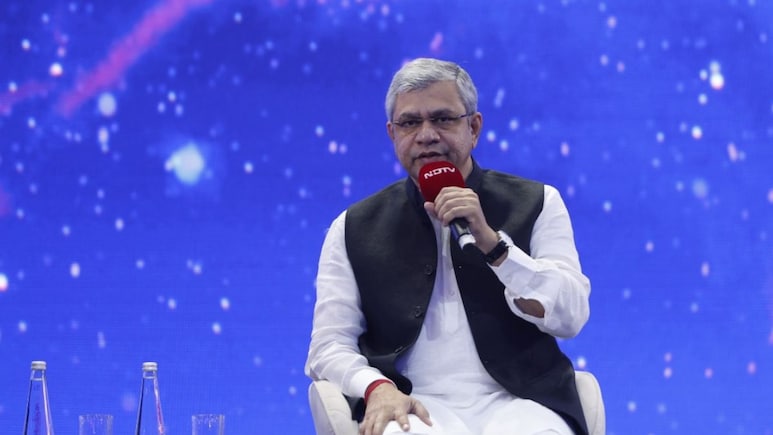
Union IT and Railways Minister Ashwini Vaishnaw has said that India's digital architectures are being endorsed and embraced globally, with at least 13 countries adopting the Unified Payments Interface (UPI) and 50 countries using the Aadhaar model for digital identity.
At the NDTV World Summit in Delhi last week, Vaishnaw called this a "big win" for India's technological innovation.
Speaking to NDTV Senior Managing Editor Vishnu Som, Vaishnaw said, "More than 13 countries are using the UPI architecture, including many rich nations. Japan has given a pattern to the UPI architecture."
Som noted that this wasn't just a policy statement, but also reflected India's vision of sharing its digital knowledge and infrastructure with the world.
Vaishnaw said India's approach to technology stands out because of its openness. "The big difference that we made in implementing this policy is that we made the entire thing open source. We made it open standards, we made it open access," he added.
This means if a country wants to implement this entire solution, they can absolutely be that digital and data sovereignty, while protecting their citizens' privacy, the Union Minister said.
Vaishnaw added that India designed its digital stack to be easy to adapt globally. "We positioned the entire stack in a way people found very easy to adapt," he said. "We told countries they are free to name it in their own language, culture, and ethos."
"We feel happy that the Hindu numerals we gave to the entire world - we gave them to Arabs, and from there they went to Europe. Europeans started calling them Arabic numbers, but they were actually Hindu numerals. We never charged any royalty for it," he said.
Vaishnaw said India believes that the knowledge created within the country should be shared for the benefit of all. "We don't send armies to other countries to conquer; we send our soft knowledge, our power to contribute to other societies."
Track Latest News Live on NDTV.com and get news updates from India and around the world


