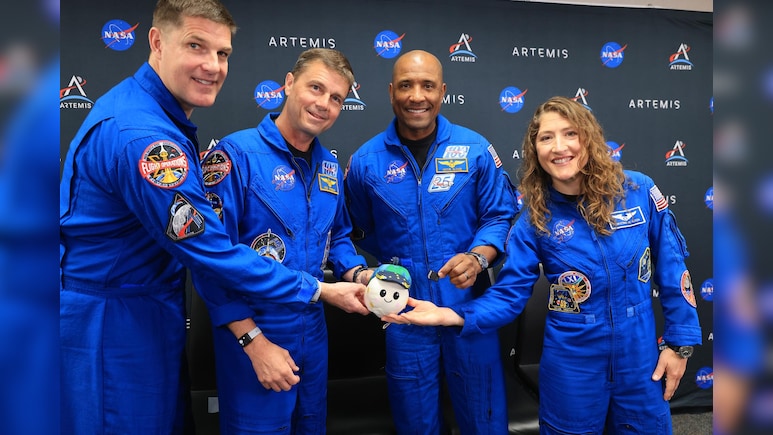
NASA's Artemis II mission will send humans around the Moon for the first time in more than five decades, but for the four astronauts chosen, the flight is as much about meaning as it is about mechanics. The astronauts, who will spend 10 days cramped in a car sized space craft, are currently under mandatory quarantine and the mission is slated to lift off no earlier than April 2, 3.54 am India time.
Before them, 24 men -- all American -- have flown near the moon and 12 have walked on the lunar surface. NASA is not postponing the launch because of the large solar flare that occurred on the surface of the Sun, saying it is safe to launch Artemis II.
"This mission is about setting the tone for everything that comes next," Artemis Commander Reid Wiseman has said, describing it as the bridge between testing spacecraft and returning humans to the lunar surface.
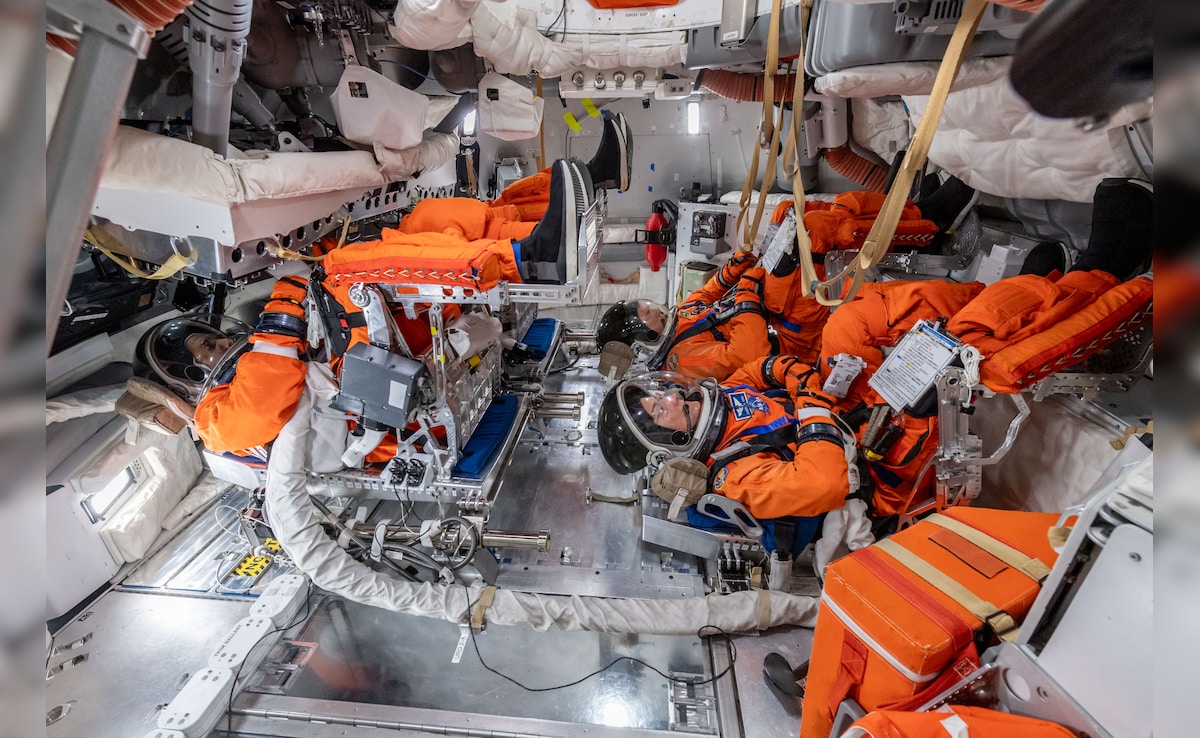
Artemis II will be a roughly 10-day crewed lunar flyby, launching aboard NASA's Space Launch System rocket and Orion spacecraft.
The mission will not land on the Moon, but it will take the crew farther into deep space than any humans have travelled since Apollo, testing life-support systems, navigation and human endurance beyond low Earth orbit.
Wiseman, a former US Navy fighter pilot and NASA astronaut with extensive spacewalking experience, will command the mission. As commander, he is responsible for crew safety, decision-making and the overall execution of the flight.
"For all of us, this isn't just a mission," Wiseman has said. "It is a responsibility, to do it right, for the people who follow".
Read: NASA Begins Countdown For Humanity's First Launch To Moon In 53 Years
Serving as Artemis Pilot is Victor Glover, a NASA astronaut and test pilot who previously flew aboard SpaceX's Crew-1 mission to the International Space Station. Glover made history during that flight as the first African American astronaut to serve on a long-duration ISS mission. Glover is the equivalent of Group Captain Shubhanshu Shukla who was the designated pilot on the Axiom-4 mission to the International Space Station in 2025.
Glover has described Artemis II as deeply personal. "This flight represents what's possible when you build something bigger than yourself," he has said, reflecting on the opportunity to help shape the next era of exploration.
On Artemis II, Glover will assist with spacecraft control, navigation and system performance, playing a central role during launch, lunar flyby operations and Earth re-entry. His experience operating complex systems in space places him at the operational heart of the mission.
One of the most historic aspects of Artemis II is the presence of Christina Koch, who will become the first woman ever to fly towards the Moon.
Koch, a NASA astronaut and engineer, already holds the record for the longest single spaceflight by a woman, having spent nearly a year aboard the International Space Station. She also took part in the world's first all-female spacewalk.
"To be part of the first crew returning to the Moon and represent so many who never saw themselves there before, is incredibly meaningful," Koch has said.
As a mission specialist, Koch will support spacecraft operations, monitor Orion's systems and contribute to scientific and technical evaluations throughout the flight. Her selection underscores NASA's stated commitment to expanding who gets to participate in humanity's biggest exploration milestones.
Read: Inside NASA's Artemis II Mission That Sends Humans Back Toward Moon
"This mission sends a message," Koch has said. "Not just about where we're going, but about who we bring with us."
The fourth member of the Artemis II crew is Jeremy Hansen of the Canadian Space Agency, the first Canadian astronaut to travel towards the Moon. A former fighter pilot and test pilot, Hansen brings experience in high-risk operational environments and reinforces the international character of the Artemis programme.
Hansen has spoken about the symbolic importance of his role. "This mission shows that exploration is not owned by one nation," he has said. "It is something we do together."
As a mission specialist, Hansen will support navigation, systems monitoring and mission objectives, while representing one of NASA's oldest international partners.
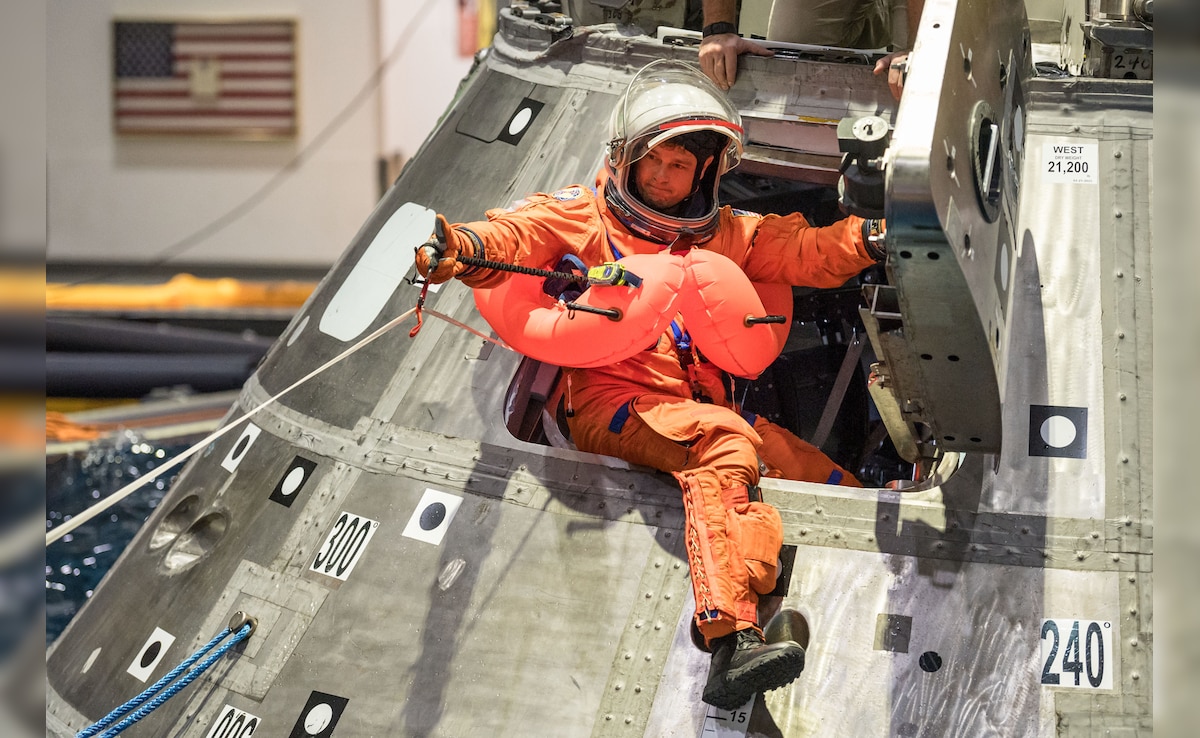
NASA officials say the Artemis II crew was selected not only for technical excellence, but for their ability to function as a cohesive unit under the psychological and physical demands of deep-space flight.
"These four astronauts represent the best of humanity," NASA has said, emphasising teamwork, resilience and shared purpose as essential qualities for missions beyond Earth.
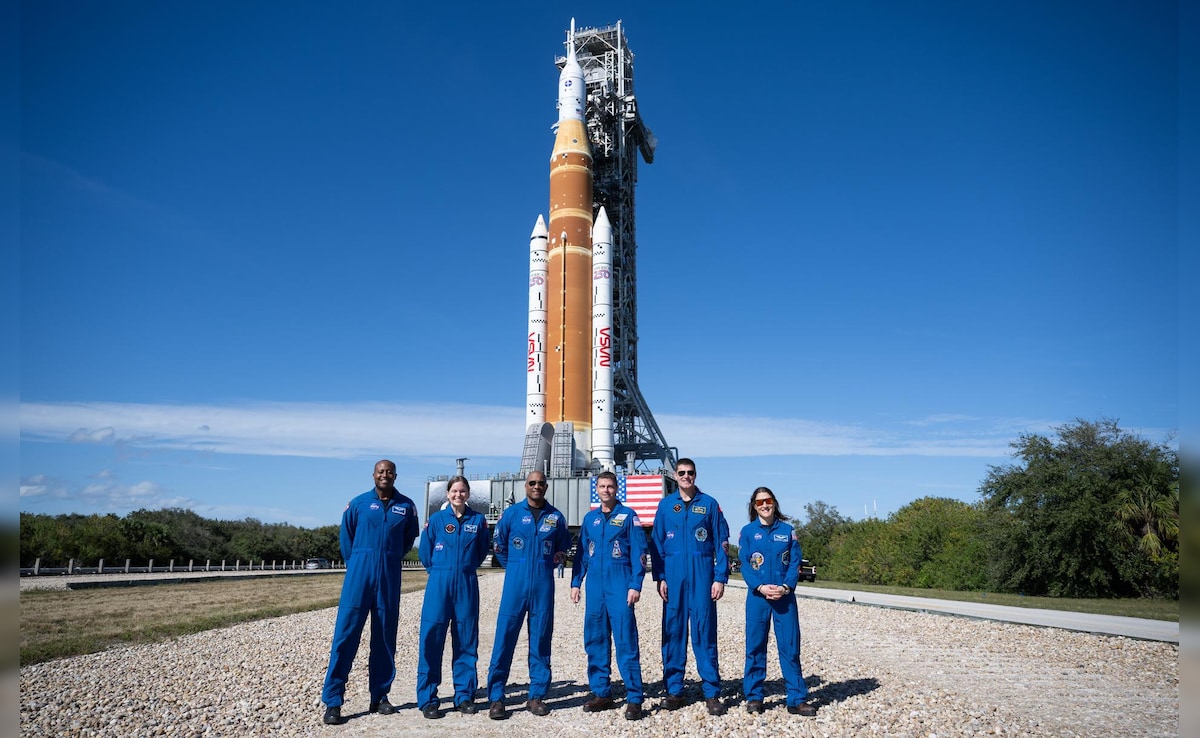
Artemis II will launch from Launch Complex 39B at Kennedy Space Centre, the same historic site used during the Apollo Moon missions.
After launch, the crew will spend the early phase of the mission verifying Orion's systems close to Earth before committing to the lunar trajectory. The spacecraft will loop around the far side of the Moon, offering views unseen directly by human eyes in generations, before returning home.
Read: NASA Shares Steps To Track Artemis II Lunar Flyby Mission In Real Time
The mission builds directly on the success of Artemis I, an un-crewed test flight that sent Orion around the Moon and back in 2022. Artemis II marks the first time NASA's deep-space architecture will be tested with humans aboard.
For the astronauts, however, the mission's significance goes beyond engineering milestones.
"This is about proving we're ready," Wiseman has said. "Ready to go farther. Ready to stay longer. Ready to explore together."
With Artemis II, NASA is not only returning humans to lunar space, but redefining what exploration looks like in the 21st Century --- international, inclusive and driven by a new generation. And when Christina Koch flies past the Moon, she will carry with her a moment that reshapes history, opening the lunar path wider than ever before.
Track Latest News Live on NDTV.com and get news updates from India and around the world


