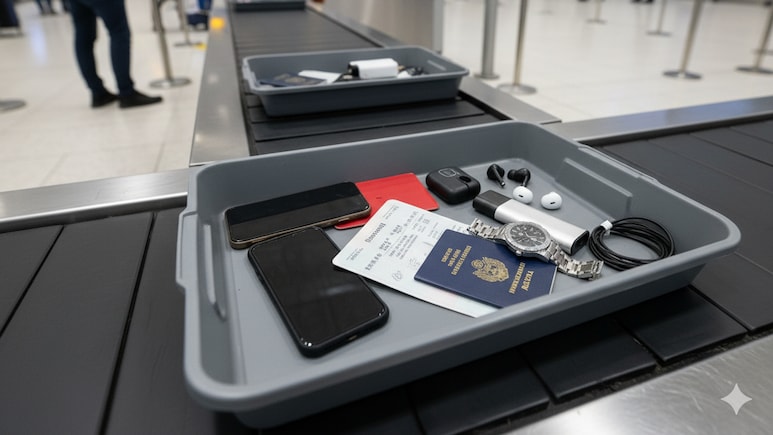
Air travel often begins in a rush - from making it to the airport on time to navigating long queues at check-in and security. By the time travellers reach the security checkpoint, the focus is usually on ensuring everything passes through smoothly: laptops are taken out, liquids are separated, belts are removed, and belongings are placed into plastic trays. Once cleared, the instinct is to hurry to the boarding gate or pause briefly for a to-go coffee. However, there is one crucial step many travellers overlook - sanitising their hands and belongings immediately after security.
The Overlooked Germ Hotspot At Airports
Research suggests that airport security trays are among the most significant sources of germs in airports, potentially even more contaminated than toilets. Unlike many other surfaces in an airport, these trays are handled by almost every passenger and are continuously reused throughout the day, often without frequent cleaning in between.
Considering their use, it is not difficult to see why they pose a risk. A tray that holds your phone or passport may have just been used by someone to place their shoes or a bag that has touched the washroom floor. With trays circulating rapidly from one traveller to the next, items placed inside can easily come into contact with a range of bacteria and viruses.
What Studies Have Found
A study conducted at Helsinki-Vantaa Airport in Finland during the winter of 2016 tested various commonly touched surfaces and found evidence of viruses on around 10 per cent of them. Notably, plastic security trays were identified as one of the more contaminated items.
The study detected rhinovirus, which is responsible for the common cold, as well as traces of influenza viruses. Surprisingly, the test did not detect respiratory viruses on the toilet surfaces.
These findings underline how easily infections can spread in high-traffic areas such as airports, where thousands of travellers pass through daily.
Also Read: 8 Hidden Germ Hotspots In Airports And Hotels You Should Watch Out For
How To Prevent Catching Germs At Airport Security
Experts suggest that better access to hand sanitising stations - particularly before and after security screening - can significantly reduce the spread of germs. More frequent cleaning of high-contact surfaces, including trays, would also help improve hygiene standards.
For travellers, a few simple steps can make a difference. Keeping a hand sanitiser readily accessible is essential. If possible, wiping the tray before placing personal items inside it can further minimise risk. More importantly, once you have collected your belongings, it is advisable to sanitise your hands as well as items like your phone, passport, boarding pass, and laptop.
Other Hidden Germ Hotspots At Airports
Security trays are not the only concern. Several other commonly used airport surfaces can harbour high levels of germs. A 2019 study found that self-check-in kiosks may carry up to 1,500 times more germs than a household toilet seat. On average, kiosk screens recorded approximately 2.5 lakh colony-forming units per square inch - a measure used to estimate bacterial and fungal presence.
Other frequently touched areas include payment terminals at shops, staircase railings, passport control counters, and children's play areas. Even the air in airports can contribute to the spread of germs.
Since you cannot know or control what would have been placed in your security tray before you picked it up, incorporating a quick sanitising routine after security checks may help in reducing exposure to germs.
Track Latest News Live on NDTV.com and get news updates from India and around the world


