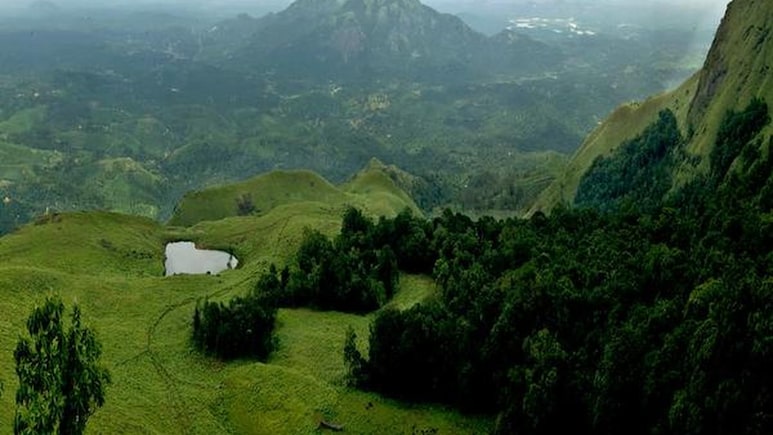
When Indians talk about trekking, the conversation almost always heads north. Kedarnath, Triund, Roopkund, the Valley of Flowers: the Himalayas dominate the imagination so completely that the Western Ghats barely get a mention. Which is a shame, because South India has its own spectacular trekking tradition, and right at the top of that list is Chembra Peak in Wayanad, Kerala. At 2,100 metres above sea level, it is the highest peak in Wayanad, the third tallest in the Western Ghats, and home to one of the most talked-about natural features on any trek in the country: a heart-shaped lake that, according to local legend, has never once dried up. If you have never considered the south for your next trek, Chembra is a very convincing argument to start.
Where Exactly Is Chembra Peak?
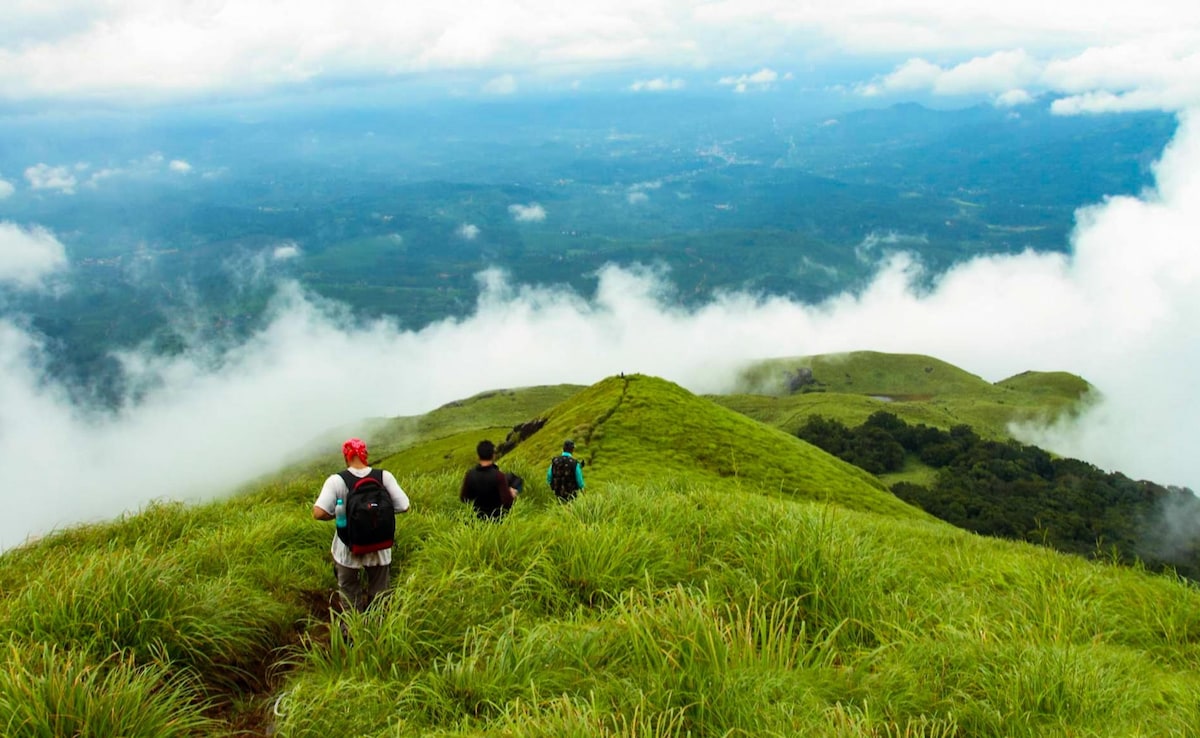
Chembra Peak, located in Wayanad district, Kerala, rises to about 2,100 metres in the Western Ghats, a UNESCO World Heritage Area known for its ecological significance. Wayanad, in northern Kerala, borders Karnataka and Tamil Nadu and uniquely features tea plantations, dense shola forests, tribal settlements, and wildlife corridors. Chembra Peak, the highest in Wayanad, stands at 6,890 feet, making it the third tallest in the Western Ghats. The nearest town is Kalpetta, 13 kilometres away, with the trek starting from the Forest Department check post near Meppadi, 22 kilometres from Kalpetta.
The Trek Route: What You Will Actually Walk Through
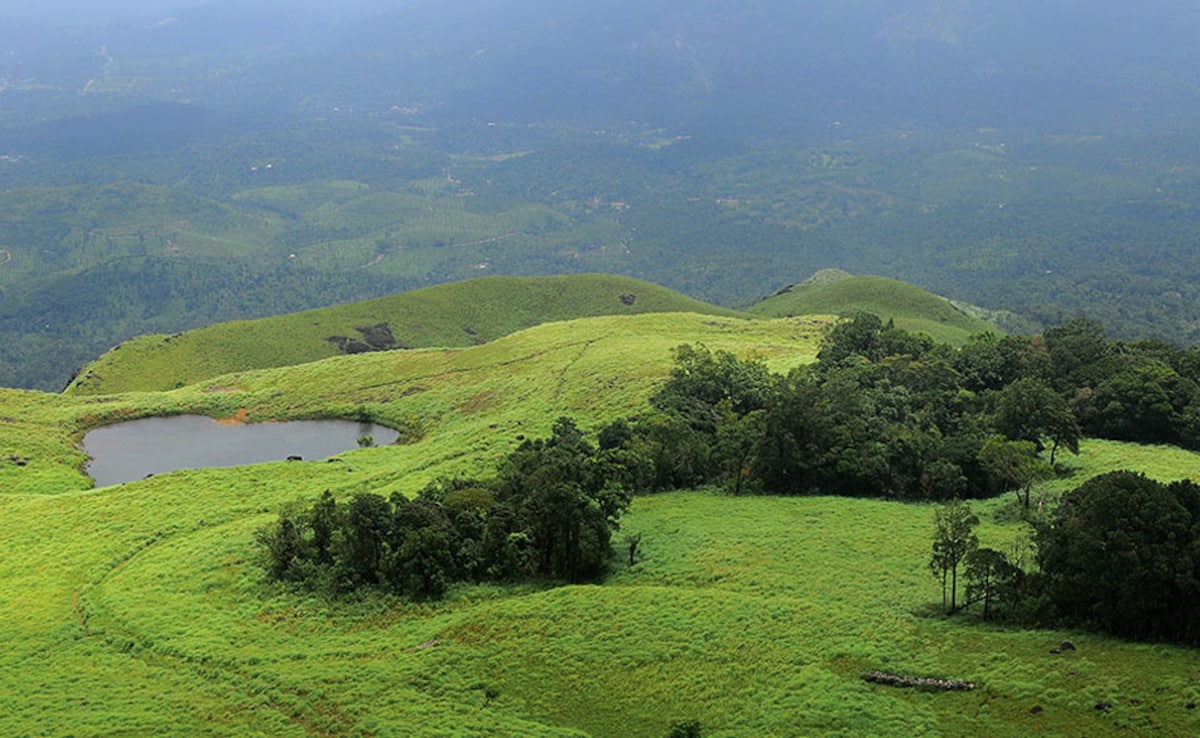
The Chembra Peak trek offers a dynamic landscape, making it a rewarding experience. It begins at the Forest Department check post, where you register and pay the entry fee. The trek is divided into two parts: from the forest office to the start point, which takes about 40 minutes on foot or 15 minutes by vehicle, and from the heart lake to the summit, a 1.5-kilometre stretch taking roughly 1.5 hours. The first section is stunning, with manicured tea estates and mist-laden rows of tea bushes. This transitions into a dense forest, cooling the air and filled with birds. The midpoint, Hridaya Thadakam, the heart-shaped lake, is a popular resting spot.
Also Read: Why Johar Valley In Uttarakhand Should Be Your Summer Destination This Year
Hridaya Thadakam: The Heart-Shaped Lake That Makes This Trek Iconic
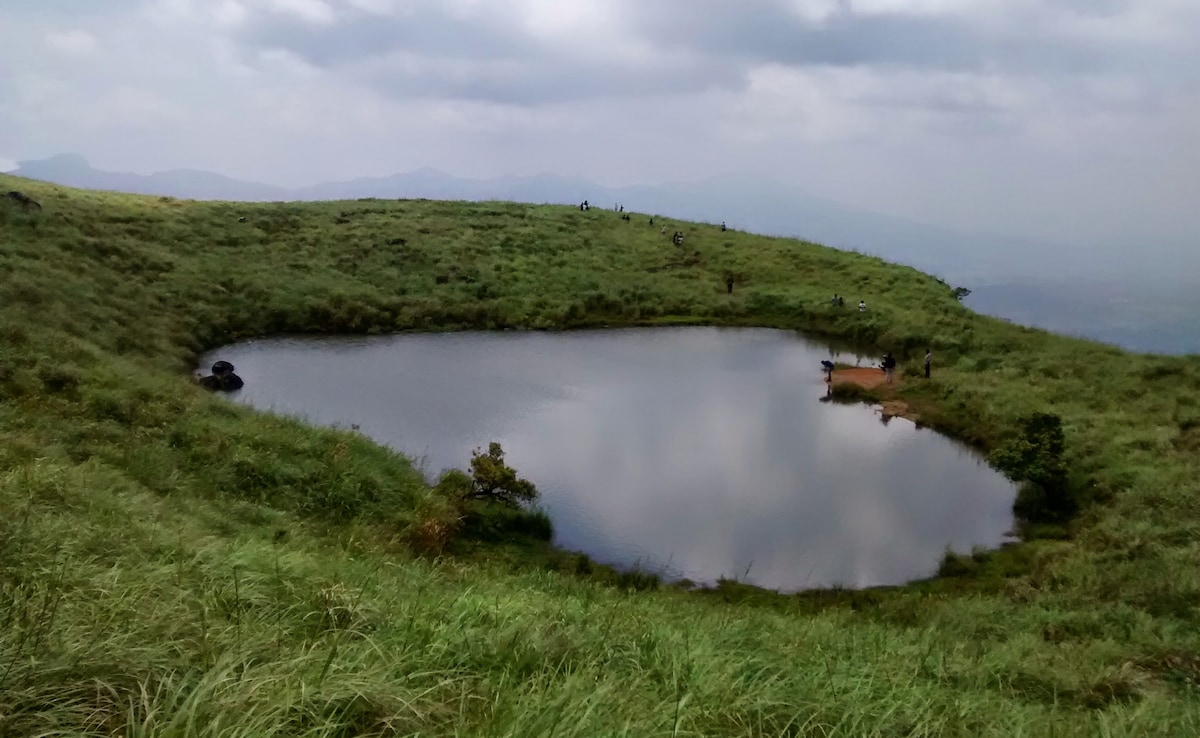
Hridaya Thadakam Lake, known as the Heart Lake, captivates with its perfect heart shape. Legend has it that Goddess Sita bathed here at Chembra Peak, and the lake has never dried up. Set in a lush valley surrounded by verdant hills and often shrouded in mist, its bright blue waters create a mesmerising scene. This lake remains full through dry seasons and low rainfall, thanks to its natural catchment and spring-fed basin. Yet, standing at its edge, the scientific explanation seems to miss the magic. Hridaya Thadakam is seen as a divine creation and a symbol of enduring love. Trekkers pause here for photography, recreation, and to enjoy the tranquil environment before heading to the peak. From certain angles, especially from the ridge above the lake's eastern edge, the heart shape is clear. From others, it requires a closer look. Regardless, the setting is extraordinary: a still, blue-green lake amidst mist-covered hills, with Chembra's summit above.
Reaching the Summit: What You Need to Know
Here is the part that some travel guides skim over, so let us be clear about it. While reaching Chembra Peak's summit is officially restricted for safety reasons, some experienced mountaineers still attempt it at their own risk. This endeavour is inherently dangerous and not recommended without thorough consideration. If you decide to go beyond the lake, carefully assess your fitness level, as the final ascent is steep and requires significant agility and endurance.
Most trekkers, particularly first-timers, treat the heart lake as the destination. This is entirely reasonable. The views from the plateau around the lake are already spectacular, with misty valley panoramas stretching into Karnataka on clear days. You are not missing out by stopping here.
For experienced trekkers who do push on to the summit, the terrain becomes significantly more demanding. The gradient steepens, the grass gives way to rock, and the trail becomes less defined. The payoff is a summit view that is genuinely one of the finest in the Western Ghats, with the hills of Wayanad, Kozhikode, and Nilgiris all visible on clear days.
Also Read: One Of The Biggest Film Studios In The World Is 'Haunted', And It's In Hyderabad
Your Complete Travel Guide to Chembra Peak
Best Time to Visit
The ideal period to visit is from September through February. While the peak remains accessible year-round, the rainy season from June to August makes the trails too slippery and unsafe, and summer months can be hot. The post-monsoon months of September and October are particularly special: the landscape is at its most intensely green, waterfalls are flowing down the hillsides, and the air is crisp and clear. Winter, from November to February, gives you the best visibility and the most pleasant walking temperatures.
Permits and Entry
The South Wayanad Forest Department manages the core trek route, requiring entry charges that cover permits and service fees. The office opens at 7 AM, and trekkers must submit their identity proof and complete formalities by the deadline. Entry fees: Rs 750 for up to 10 Indian nationals, plus Rs 75 per extra person; Rs 1,500 for up to 5 foreign nationals. Camera fees: Rs 40 for Indians, Rs 80 for foreigners. Drones are banned. Trekking starts at 7 AM, with a 5 PM peak closure; late reporting after 2 PM is not allowed. Arrive early due to weekend queues.
How to Get There
The nearest major city is Kozhikode (Calicut), about 75 kilometres from Meppadi. From Kozhikode, take the route towards Kalpetta and then continue to Meppadi. The drive from Kozhikode takes about two hours, depending on traffic. From Bengaluru, Wayanad is roughly 270 kilometres, a drive of around five to six hours depending on the route.
The nearest railway station is Kozhikode. From there, regular buses and taxis run to Kalpetta. Auto rickshaws and local taxis can take you from Kalpetta or Meppadi to the Forest Department check post.
What to Carry
Start between 7 AM and 8 AM for ample viewing time. Bring enough food and water, ideally two litres per person, as shops are only at the base. Wear proper trekking or sturdy sports shoes with good grip; avoid sandals. Grassy sections can be slippery, and rocky stretches need ankle support. Carry a light rain jacket for surprise drizzles. A small first aid kit and a change of socks are sensible. Use insect repellent and wear long socks in forested areas to avoid leeches.
On the Trail: Some Practical Advice
The descent can be challenging, especially post-monsoon when rocks are slippery. Use trekking poles for balance, descend slowly, and stick to the same track. Be cautious on steep sections. On the ascent, pace yourself; the tea estate section is deceptively easy, leading to exhaustion later. Walk steadily, hydrate regularly, and enjoy the changing landscape. Chembra Peak is in the Wayanad Wildlife Sanctuary, so be environmentally conscious. Leave no trace, stay on marked trails, and respect wildlife.
Also Read: From Dead Sea To Death Valley, 5 Lowest Places On Earth You Can Explore
Where to Stay
Kalpetta is the most convenient base for accommodation, with options ranging from budget guesthouses to mid-range hotels. Meppadi, closer to the trailhead, has a handful of homestays that make for a more immersive experience, particularly if you want an early start without a long morning drive. Several eco-stays and forest-adjacent homestays in the Vythiri area, about 15 kilometres from Meppadi, offer a good combination of comfort and proximity to the trail. Book in advance for the October-February peak season.
Why Chembra Stands Apart
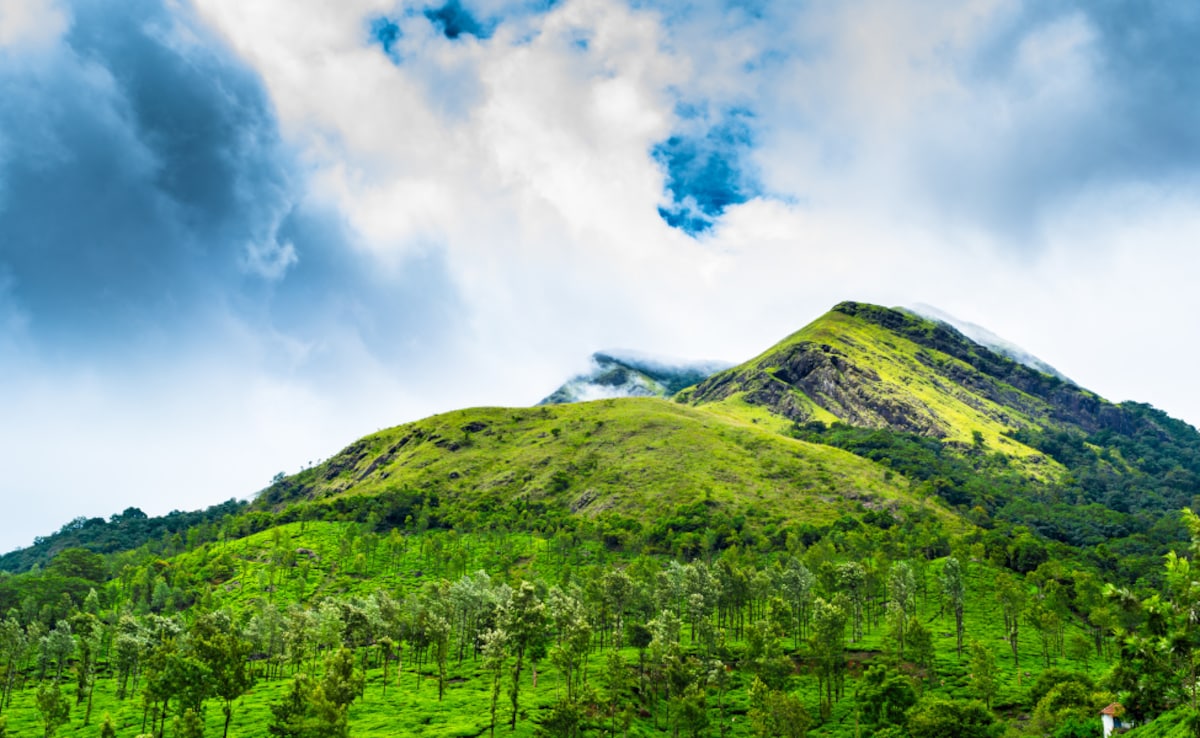
South India offers many worthwhile treks, but Chembra stands out for its unique combination of factors. Known for its height and the stunning heart-shaped lake along the path, it provides exceptional scenery in Kerala. The trek features diverse terrain, including tea estates, shola forest, high grasslands, and rocky ridgelines, all within a few kilometres. The biodiversity is impressive, with medicinal herbs, various bird species, and fauna. The heart lake, once seen, feels truly earned.
A Trek That Rewards Every Kind of Effort
Chembra Peak is the kind of place that gives you exactly as much as you put in. Come for a casual half-day, and the heart lake alone will justify the trip. Push on to the summit, and you get a view that few people in India will ever see. Come in the golden light of a November morning, and the Western Ghats will do things to you that no photograph can fully capture. The Chembra Peak trek is a visually pleasing activity with a taste of adventure and a sense of fulfilment, and it remains one of the most satisfying treks in South India. For anyone who has been postponing a Southern trek in favour of the well-trodden Himalayan routes, Chembra is the one that will make you wonder why you waited so long.
Track Latest News Live on NDTV.com and get news updates from India and around the world


