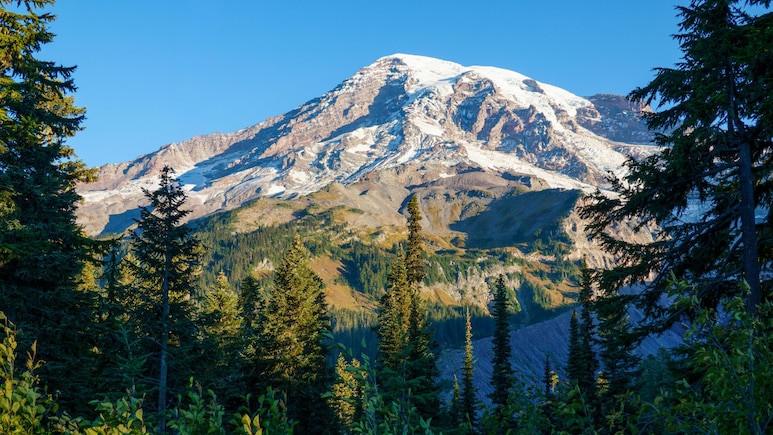
The world's tallest mountain carries the name of a man who neither measured it nor ever saw it.
Sir George Everest served as Surveyor General of India from 1830 to 1843. Yet the calculation that established Mount Everest as the highest mountain on Earth was made by Radhanath Sikdar, an Indian mathematician working for the Great Trigonometrical Survey.
At the time, the mountain was known to British surveyors simply as Peak XV.
Around 1852, Sikdar studied measurements collected from several survey stations across the Indian plains and foothills. The peak itself remained far away, inaccessible and partly hidden beyond Nepal's borders. But Sikdar did not need to stand at its base.
Also Read: Indian Railways Launches Online Excess Luggage Booking. How Much Can You Carry?
Using trigonometry, he calculated its height from the observed angles. He also accounted for the curvature of the Earth, atmospheric refraction, pressure and temperature. His conclusion changed geography: Peak XV was higher than Kanchenjunga and every other mountain measured until then.
Sikdar's calculation reportedly produced an astonishingly neat figure of 29,000 feet.
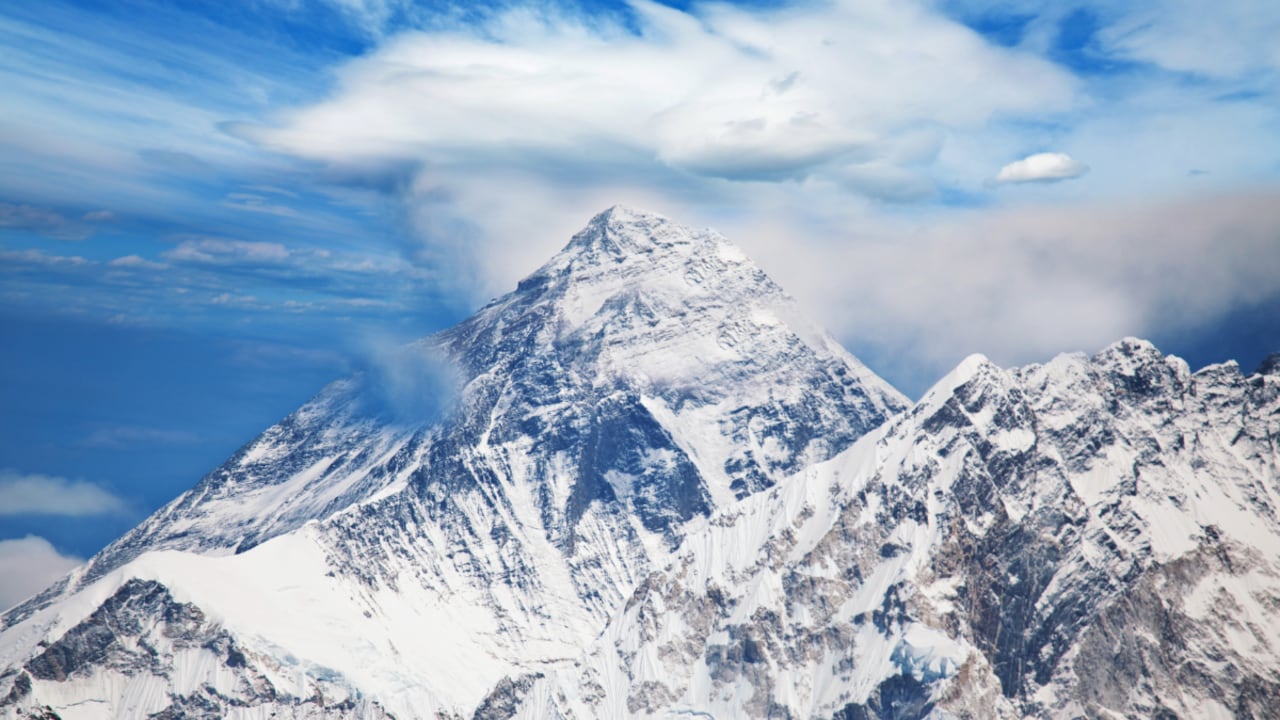
Photo: Canva
When Andrew Scott Waugh, George Everest's successor, announced the finding in 1856, the official height was published as 29,002 feet. According to the widely repeated account, two feet were added because 29,000 looked suspiciously rounded and might make the calculation appear less precise than it was.
Also Read: Sonam Wangchuk Gives His Verdict On Vande Bharat Train And Chenab Bridge
That figure remained official until later surveys refined the mountain's height to 29,029 feet, or 8,848 metres.
But Sikdar's name did not reach the map.
Waugh argued that the mountain's local names were uncertain or conflicting and proposed naming it after his predecessor. In 1865, the Royal Geographical Society formally adopted "Mount Everest".
The irony went even further. George Everest objected to the honour, arguing that his surname could not be properly written in Hindi or pronounced easily by Indians. The mountain also had an established Tibetan name, Chomolungma, while Nepal would later officially adopt Sagarmatha.
Everest received the name. Waugh made the announcement. Sikdar supplied the mathematics.
From observation points more than 100 miles away, an Indian mathematician looked at a collection of angles and numbers and discovered the roof of the world without ever climbing it.
Track Latest News Live on NDTV.com and get news updates from India and around the world


