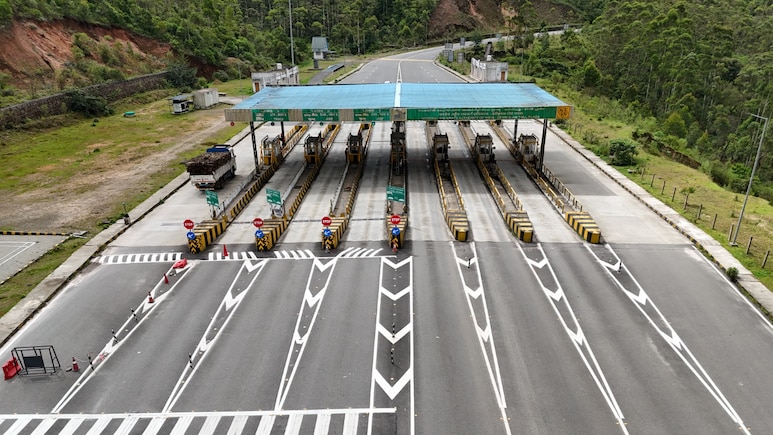
Road trips across North India are about to change in a big way. You could soon be driving from Delhi to Amritsar in just 4 hours instead of 8, or reaching Katra in nearly 6 hours instead of spending almost an entire day on the road. That's exactly what the ambitious Delhi-Amritsar-Katra Expressway promises once it is fully ready.
On Friday, Prime Minister Narendra Modi will dedicate another major stretch of this mega expressway, bringing it a significant step closer to completion. The expressway is expected to transform travel across Delhi, Haryana, Punjab and Jammu & Kashmir while making road journeys faster, safer and much more comfortable.
A Mega Expressway That's Changing Travel Across North India
During his visit to Haryana and Punjab, the Prime Minister will dedicate the first 157.92 km of the expressway (Packages 1 to 5), developed at a cost of around Rs 9,680 crore. Later in the day, he will also inaugurate the 30.9-km-long Package 6 in Jalandhar.
These newly opened sections are part of the massive 670-km Delhi-Amritsar-Katra Expressway, one of India's longest Greenfield expressway projects. Built as a four-lane access-controlled highway that can later be expanded to eight lanes, the expressway has been designed for faster, smoother and safer travel.
The National Highways Authority of India (NHAI) has divided the project into 21 construction packages spread across two phases so that work can be completed more efficiently. Once the entire corridor is operational, travelling between Delhi and some of North India's biggest cities and pilgrimage destinations will become much easier.
Also Read: How Much India's First Hydrogen Train Ticket Costs? Route And Unique Features You Should Know
The Impact On Travel Time
Photo: Pexels
The biggest highlight of the project is the dramatic reduction in travel time. Today, driving from Delhi to Amritsar usually takes around eight hours, depending on traffic. Once the expressway is fully complete, that journey is expected to take only about four hours. The Delhi-Katra journey will see an even bigger change. What currently takes nearly 14 hours will be reduced to roughly six hours. The distance itself will also become shorter, from around 727 km to nearly 588 km.
Where Will The Expressway Go?
The expressway begins near Delhi before entering Haryana. From there, it passes through Jhajjar, Rohtak, Sonipat, Jind and Kaithal before entering Punjab. In Punjab, it travels through Patiala, Sangrur, Malerkotla, Ludhiana and Jalandhar before reaching Nakodar.
This is where the expressway splits into two separate routes. One branch heads towards Amritsar, passing through Sultanpur Lodhi, Goindwal Sahib, Khadur Sahib and Tarn Taran before reaching Sri Guru Ram Das Ji International Airport. The second branch continues towards Jammu & Kashmir through Kapurthala, Gurdaspur, Dinanagar and Pathankot before finally reaching Katra, the base town for the Vaishno Devi shrine. This carefully planned route connects several major cities, religious centres and industrial regions across North India.
Also Read: Australia To Make Airport Arrivals Faster With New QR-Based Digital Passenger Cards
The Corridor Will Also Open Doors For Tourism And Business
The project is expected to give a major boost to tourism and religious travel. Millions of devotees travel every year to the Shri Mata Vaishno Devi shrine in Katra. The expressway will make that journey much quicker for people travelling by road from Delhi and neighbouring states. Tourists visiting Amritsar's Golden Temple will also benefit from shorter travel times. Along the way, the route improves access to important religious destinations such as Sultanpur Lodhi, Goindwal Sahib, Khadur Sahib and Tarn Taran.
The expressway is also expected to become a major economic corridor, improving the movement of goods across northern India. Better roads also make it easier for companies to move products, helping boost trade and create new employment opportunities in the region.
Although another important stretch is opening today, the Delhi-Amritsar-Katra Expressway is still under construction. Once fully completed, it is expected to become one of India's most important highways, connecting the national capital with Punjab and Jammu & Kashmir.
Track Latest News Live on NDTV.com and get news updates from India and around the world


