





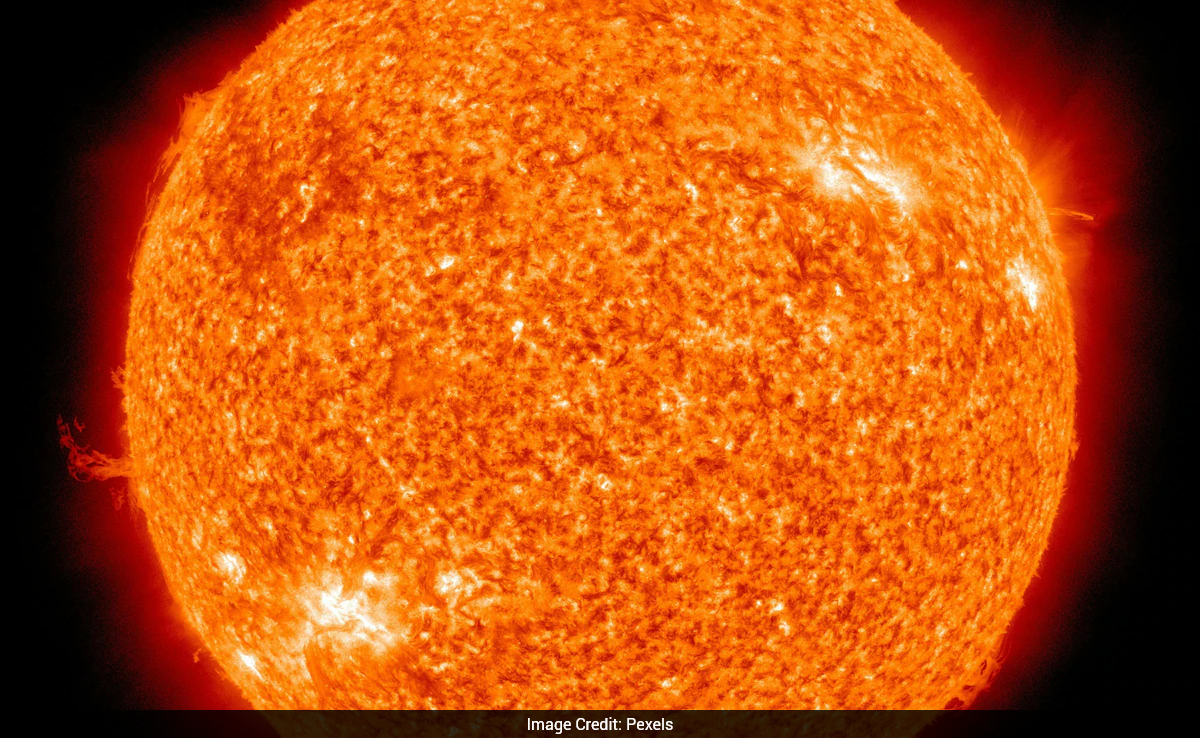
At the beginning of the year, Earth quietly reaches an important point in its journey around the sun. This moment is called perihelion. It is the time when our planet is closer to the sun than at any other time of the year, reported National Geographic.
In 2026, Earth's perihelion will take place on January 3 at 12:15 pm EST. This event happens about two weeks after the December solstice. The exact time of perihelion changes slightly every year because the Gregorian calendar does not perfectly match Earth's orbit. Leap years help correct some of this difference.
It may be surprising to many that the Earth is closest to the Sun in January, while at the same time, much of the Northern Hemisphere experiences cold weather. This is because Earth's seasons are determined by the tilt of its axis rather than its distance from the Sun.
The Earth does not orbit the Sun in a perfectly circular path. Its orbit is elliptical, with the Sun positioned slightly off-center. This causes the distance between Earth and the Sun to vary throughout the year.
Perihelion is when a planet or celestial body reaches its closest point to the Sun in its orbit. Conversely, when it is farthest from the Sun, it is called aphelion.
This difference in distance between the Earth and the Sun is very slight and cannot normally be felt. At perihelion, the Earth is approximately 91.4 million miles from the Sun, while during aphelion in July, this distance increases to approximately 94.5 million miles.
Earth's orbit also gradually changes due to the gravitational influence of other bodies in the solar system, especially the Moon and Jupiter. For these reasons, the exact time of perihelion can vary by a few hours each year.
While the Earth's distance from the Sun does have some impact on the planet, perihelion does not directly control the seasons. The biggest reason for changes in weather and temperature is the Earth's 23.5-degree axial tilt.
As the Earth orbits the Sun, this tilt tilts each hemisphere toward and away from the Sun at different times. Tilting toward the Sun results in longer days and direct sunlight, while tilting away results in shorter days and the Sun's rays reach at an oblique angle. For these reasons, the amount of solar energy reaching the Earth's surface varies by about 50 percent in the middle latitudes and is even more pronounced in the high latitudes.
Track Latest News Live on NDTV.com and get news updates from India and around the world

