





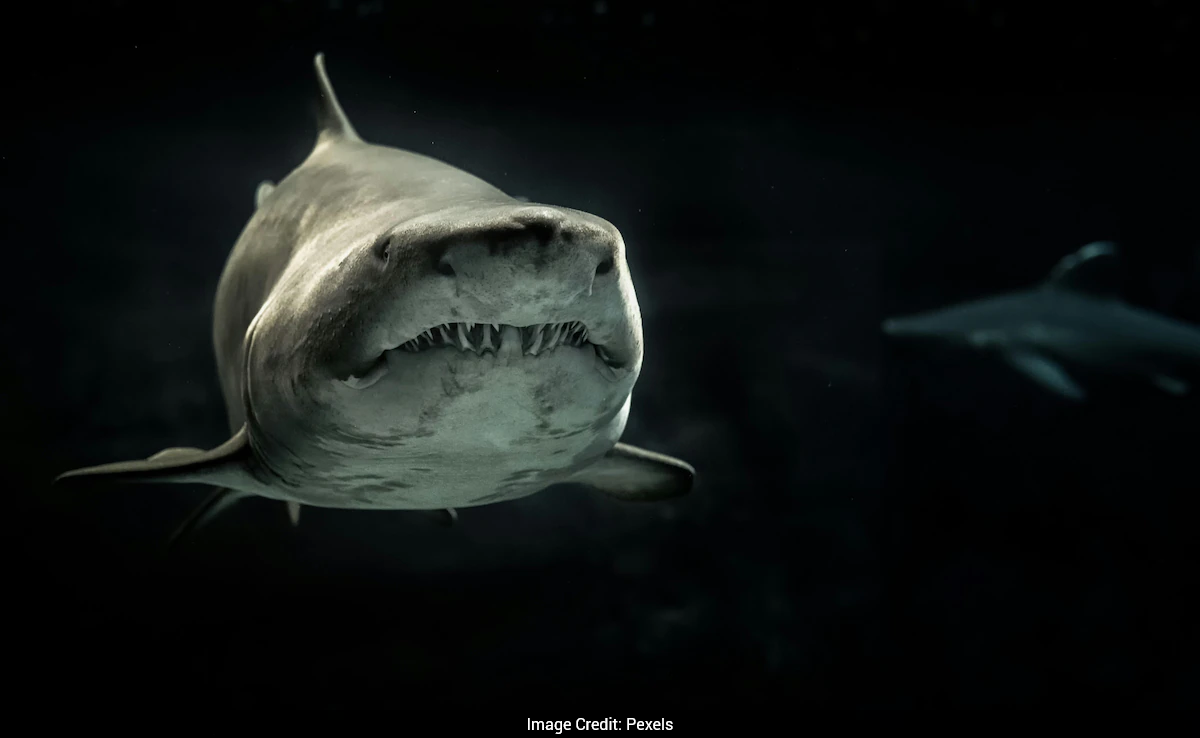
A team of researchers has identified a massive prehistoric shark that lived off the coast of what is now northern Australia, long before whales, great white sharks, or the giant megalodon appeared, reported Ny Post.
The shark is now considered the earliest known mega-predator in the lineage of modern sharks, living around 115 million years ago-15 million years earlier than other enormous sharks previously discovered.
Scientists estimate that this ancient shark could grow up to 26 feet long, making it larger than today's 20-foot great white sharks.
Benjamin Kier, senior curator of paleobiology at the Swedish Museum of Natural History and co-author of the study, explained that cardabiodontids were ancient and enormous predatory sharks, common during the latter part of the Cretaceous period, about 100 million years ago.
He said this discovery shows that giant cardabiodontids existed even earlier than previously believed.
Sharks have existed on Earth for about 400 million years, but lamniforms-which include today's great white shark-first appear in the fossil record about 135 million years ago.
At that time, these sharks were small, perhaps only a meter long. Researchers were surprised to find that lamniforms had already reached enormous sizes 115 million years ago.
The vertebrae that led to this discovery were found on a beach near Darwin in northern Australia. This region was once part of an ancient ocean that stretched from Gondwana (now Australia) to Laurasia (now Europe).
This location is known for its rich fossil record of prehistoric marine creatures, including long-necked plesiosaurs and ictyosaurs.
These five vertebrae, which estimate the shark's size, were discovered in the 1980s and 1990s but were long overlooked. Each vertebra was approximately 4.7 inches wide.
Kier explained that vertebrae are extremely important when studying ancient sharks because their skeletal structure is made of cartilage rather than bone. Most fossil evidence of sharks comes from their teeth, which they repeatedly lose throughout their lives.
This discovery highlights the enormous size and predatory dominance of ancient sharks and provides scientists with a new perspective on the early evolution of the ancestors of today's great white sharks.
Track Latest News Live on NDTV.com and get news updates from India and around the world

