





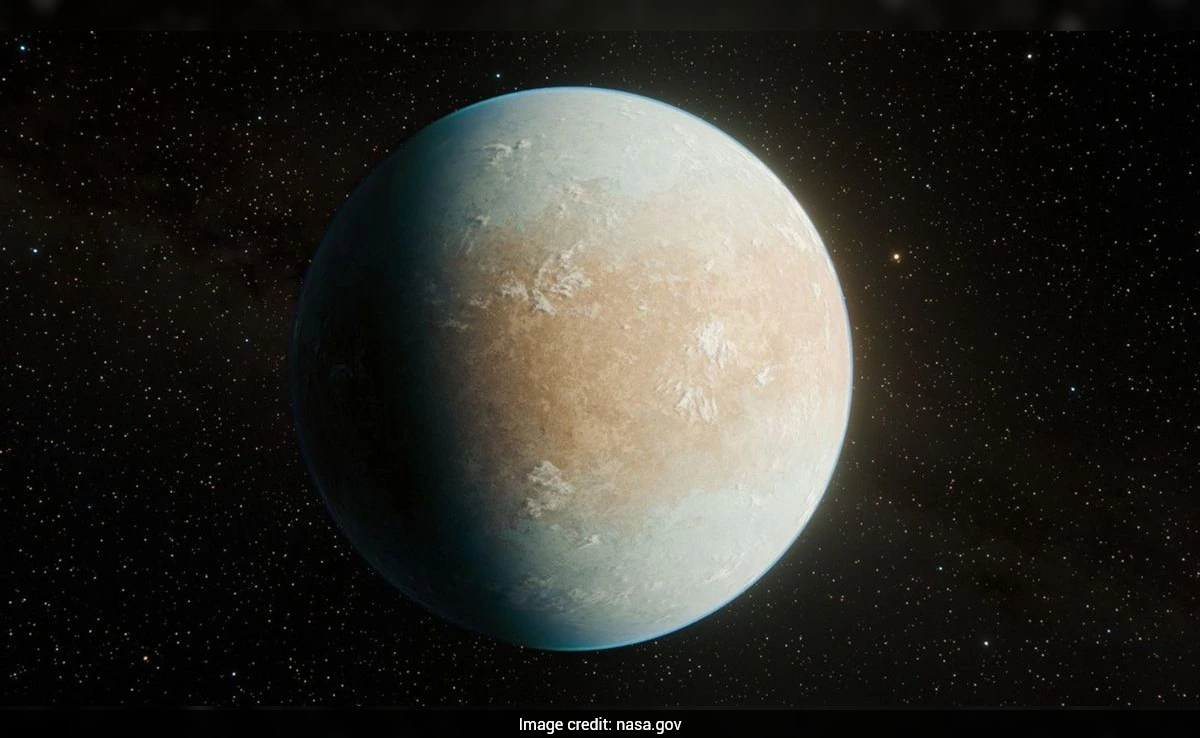
Kepler Space Telescope, a mission which was designed to survey a portion of the Milky Way galaxy, retired in 2018, but its data continues to surprise the scientists. Recently, astronomers in Australia have identified a potentially habitable Earth-sized planet candidate, HD 137010 b.
It is located approximately 150 light-years from Earth. This planet orbits a Sun-like star and is about six per cent larger than Earth, earning it the nickname "where Earth meets Mars" due to its size and distance from its host star. Although it is quite similar to Earth, scientists believe that it could be colder than perpetually frozen Mars.
Also read | NASA Attempts To Connect With MAVEN Spacecraft, Mysteriously Lost Since December
The findings of the study, conducted by a team led by Australia's University of Southern Queensland (UniSQ), were published on Tuesday (January 27) in the Astrophysical Journal Letters. In the paper, the scientists called it a "planet candidate" because they still need at least one more observation to label it as a planet.
As quoted by ABC News, UniSQ researcher Chelsea Huang, who is one of the authors, said that the discovery was a "really exciting" kind of exoplanet.
An exoplanet is a planet that orbits a star outside our solar system. "Since the discovery of the first exoplanet 30 years ago, we've always tried to find Earth's twin," Dr Huang added.
Also read | NASA's New High-Resolution Map Shows Dark Matter In "Stunning Detail"
Here's Why It Is Significant Discovery
If confirmed, HD 137010 b would be the only known rocky world in the habitable zone of a Sun-like star, making it a significant discovery in the search for extraterrestrial life.
According to the media outlet, Alex Venner, who is the lead author, said there was a 50 per cent chance that HD 137010 b was habitable.
"The definition of a habitable zone, which astronomers use, is the area around the star where water could exist in liquid form," Dr Venner said as quoted. "This planet candidate is really at the limits of what we think might be possible in terms of potential habitability."
The findings are exciting for numerous reasons, but further observations are required to have a better understanding of the exoplanet's mass and atmospheric conditions.
Track Latest News Live on NDTV.com and get news updates from India and around the world

