





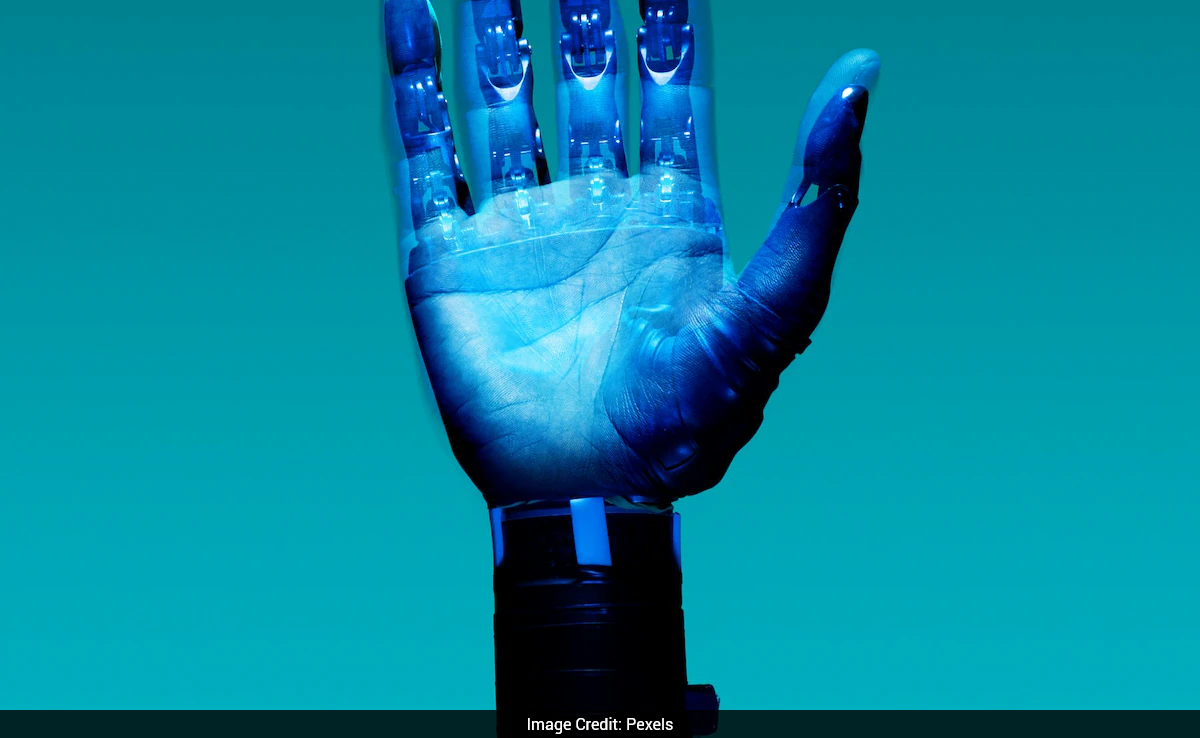
Imagine touching a hot stove at a family gathering. Your hand pulls back instantly, even before you clearly realise what happened. This quick action happens because pain sensors in your skin send signals to your spine, which triggers a reflex without waiting for the brain. Now, scientists are developing similar abilities for robots by giving them advanced artificial skin that can sense touch and pain and react immediately. Researchers at the City University of Hong Kong say most current robotic electronic skins are simple and can only perform basic tasks such as sensing pressure.
According to the researchers, their new neuromorphic robotic e-skin is based on a structure inspired by the human nervous system. This allows it to sense even the slightest touch, identify pain and injury, provide immediate local reflex responses, and enable rapid repair through modular components.
In simpler terms, this new robotic skin functions much like human skin. It can detect both light touches and more forceful, potentially dangerous contact, which the robot interprets as pain. Thanks to its local reflex system, the robot can quickly withdraw from danger without needing instructions from its main computer.
This technology is quite different from the workings of most robots used today. Many robots lack the ability to sense touch at all, and those that do can usually only detect simple pressure. Such robots lack self-protective reflexes.
In these systems, touch information first travels to the software, where it is analysed step-by-step before a response is determined. This process might be acceptable for robots working within safety enclosures in factories, but it's insufficient for humanoid robots working in close proximity to humans.
Unlike humans, robots cannot heal themselves. However, scientists say the best alternative is quick and easy repair. According to them, the new skin converts touch signals into neural-like pulses and activates protective reflexes upon detecting pain. The skin can also detect damage, and thanks to its modular design, damaged sections can be quickly replaced.
This means the robot receives immediate feedback that its skin has been damaged, just as a human feels a cut or injury. Each small module of the skin sends a low-frequency signal to indicate that it is functioning correctly. If a section of the skin is cut, torn, or damaged, the signal is interrupted, and the robot immediately knows where the damage has occurred.
Track Latest News Live on NDTV.com and get news updates from India and around the world

