





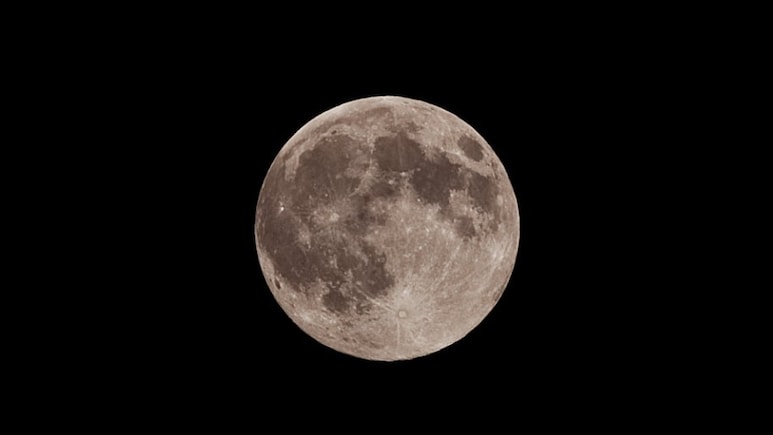
- Blue Micromoon occurs May 31, 2026, combining a Blue Moon and Micromoon event
- The Moon will be 252,360 miles from Earth, appearing 6% smaller and 10% dimmer
- Blue Moons happen every 2-3 years as lunar cycles don't align with calendar months
Skywatchers are in for a rare celestial event this weekend as a Blue Micromoon lights up the night sky. The event combines two lunar occurrences in a single full moon. A "Blue Moon" refers to the second full moon in a calendar month, while a "Micromoon" happens when the Moon reaches full phase near apogee, the farthest point in its orbit from Earth, Science Alert reported. Together, the result is the smallest and most distant-looking full moon of the year.
The upcoming full moon will peak at 8:45 UTC on May 31, 2026. At that time, the Moon will be about 252,360 miles from Earth, making it appear slightly smaller and dimmer than a typical full moon. Astronomers say the difference is subtle, with the Moon appearing roughly 6% smaller and 10% dimmer than average.
Blue Moons typically occur once every two or three years because the lunar cycle lasts around 29.5 days, which does not perfectly align with calendar months.
What to Expect
- Despite its name, the moon will not appear turquoise or sapphire. It looks like a standard pale white or golden-orange moon depending on where it sits on the horizon.
- The moon will appear roughly 10% dimmer and about 5% to 10% smaller in diameter compared to a typical full moon and up to 14% smaller than a "supermoon."
- The spectacle may be even more striking in parts of the Southern Hemisphere and across the Pacific, where the Moon is expected to pass in front of Antares, the bright red star in the constellation Scorpius. In the Northern Hemisphere, observers will still be able to see the Moon shining close to the star.
Astronomer Gianluca Masi of the Virtual Telescope Project, which will livestream the event from Italy, said most people may not immediately notice the Moon's slightly smaller size without a direct comparison to a normal full moon.
How to Track and View It
- When to look: The best time to catch a glimpse of the Blue Micromoon will depend on where you're located. The best viewing window is just after moonrise or in the late evening hours.
- No gear needed: You don't need a telescope to see it, though binoculars can help you spot details on the lunar surface.
- Photography tips: To actually perceive the smaller size, astrophotographers often take pictures to compare the micromoon with a future supermoon.
Track Latest News Live on NDTV.com and get news updates from India and around the world

