




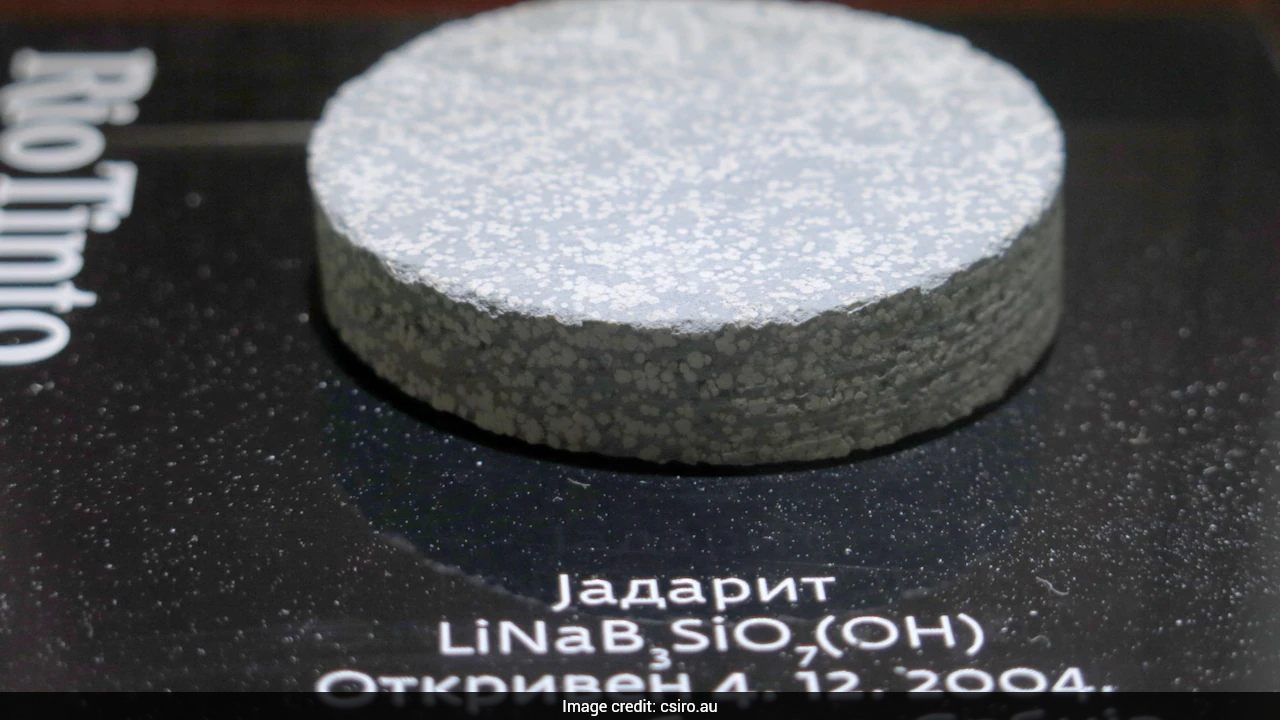
Every Superman fan knows that the only thing that can stop him is Kryptonite - a piece of his home planet Krypton (Superman is an alien on Earth). It makes the Man of Steel weak and he starts bleeding after coming in contact with the mineral. The story was fiction, but in Serbia, the discovery of a rock stunned scientists as it had a potential superpower of its own. Called jadarite, the rare mineral was discovered in Serbia's Jadar Valley in 2004 by geologists working for mining giant Rio Tinto. It was officially recognised as a new mineral in 2006 after analysis by scientists.
Jadarite attracted attention not just because of its unusual composition but also because of its striking resemblance to the fictional Kryptonite featured in Superman stories.
What Is Jadarite? Why Is It Called Real-Life Kryptonite?
Jadarite was categorized as "sodium lithium boron silicate hydroxide" mineral - a chemical composition is remarkably similar to the description of Kryptonite in the 2006 film 'Superman Returns'. In the movie, the fictional mineral's scientific name is displayed on a case containing Kryptonite stolen by Lex Luthor from a museum.
There are, however, some important differences.
Unlike the glowing green Kryptonite seen in Superman films, real-life jadarite is dull white. It does not weaken superheroes, but offers immense potential for Earth's energy transition away from fossil fuels.
Why Is Jadarite Important?
"While lacking any supernatural powers the real jadarite has great potential as an important source of lithium and boron," Michael Page, a scientist with Australia's Nuclear Science and Technology Organisation (ANSTO) told Science Daily.
Lithium is a key component of rechargeable batteries used in electric vehicles and energy storage systems. As countries look to reduce their dependence on fossil fuels, demand for lithium has grown because of its role in the transition to cleaner energy.
Boron, meanwhile, is used in several industrial applications, including glass, ceramics and other advanced materials.
The mineral could therefore become an important resource for industries looking to secure supplies of critical raw materials.
What Happened With The Jadarite Deposit?
The potential of jadarite lies in its ability to provide lithium and boron, two elements with significant industrial value.
Realising this, Rio Tinto planned a massive underground mining and processing operation to tap jadarite's deposit. However, local farming communities and environmental activists raised alarm over severe risks of water contamination, soil destruction and habitat loss.
Following widespread mass protests across Serbia, the Serbian government officially revoked the project's spatial plan and cancelled the licenses in January 2022.
Track Latest News Live on NDTV.com and get news updates from India and around the world

