





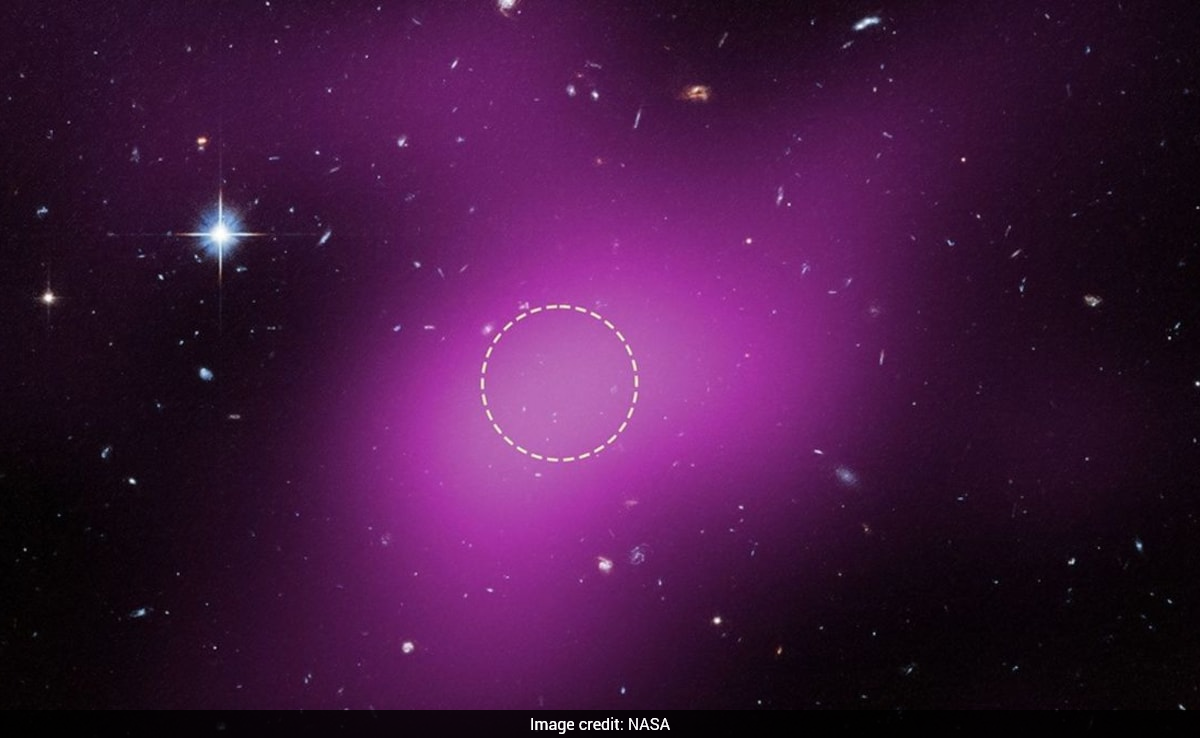
NASA's Hubble Space Telescope has uncovered a new type of astronomical object nicknamed Cloud-9, which is apparently a starless, gas-rich, dark-matter cloud. This object is considered a "relic" or remnant of early galaxy formation and is located 14 million light-years from Earth near the spiral galaxy Messier 94 (M94). The object, Cloud-9, is called a Reionization-Limited H I Cloud (RELHIC), which is composed of neutral hydrogen and dominated by dark matter.
Also read | Don't Miss Jupiter's Spectacular Show On January 10, NASA Shares Skywatching Tips
The term "H I" refers to neutral hydrogen, which spans approximately 4,900 light-years, with a mass of about 1 million times that of the Sun. As per the calculations done by the researchers, Cloud-9's dark matter must be about five billion solar masses.
"'RELHIC' describes a natal hydrogen cloud from the universe's early days, a fossil leftover that has not formed stars," NASA noted.
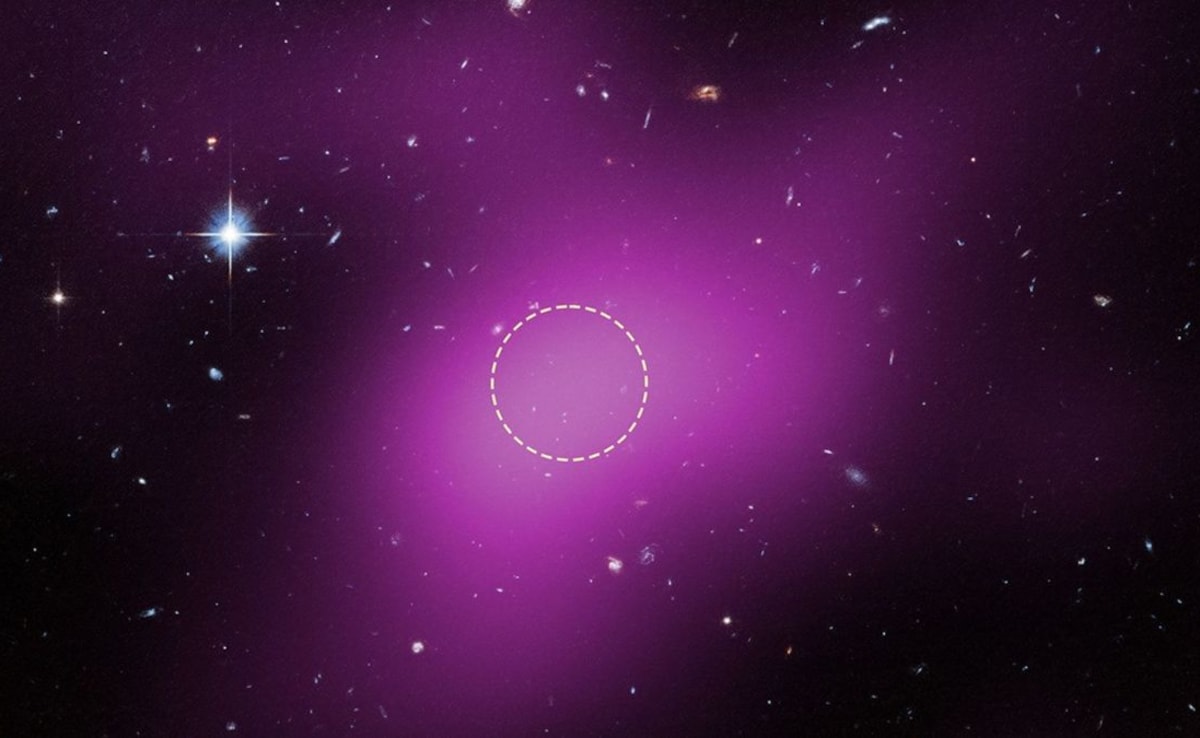
Photo Credit: NASA, ESA, VLA, Gagandeep Anand (STScI), Alejandro Benitez-Llambay (University of Milano-Bicocca); Image Processing: Joseph DePasquale (STScI).
"This is a tale of a failed galaxy," the programme's principal investigator, Alejandro Benitez-Llambay of the Milano-Bicocca University in Milan, Italy, said as quoted by NASA's blog post.
"In science, we usually learn more from the failures than from the successes. In this case, seeing no stars is what proves the theory right. It tells us that we have found in the local universe a primordial building block of a galaxy that hasn't formed."
Also read | Giant Planet Jupiter Set To Come Closest To Earth This Week Offering An Unmissable Sky View
The results were published in The Astrophysical Journal Letters and were also presented at a press conference on Monday in Phoenix.
"This cloud is a window into the dark universe," team member Andrew Fox of the Association of Universities for Research in Astronomy/Space Telescope Science Institute (AURA/STScI) for the European Space Agency, said as quoted.
"We know from theory that most of the mass in the universe is expected to be dark matter, but it's difficult to detect this dark material because it doesn't emit light. Cloud-9 gives us a rare look at a dark-matter-dominated cloud."
Track Latest News Live on NDTV.com and get news updates from India and around the world

