





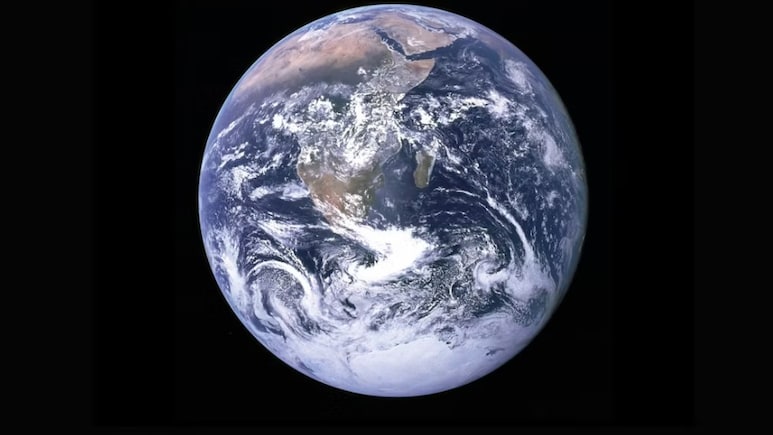
The notion that Earth's 24-hour day might not be permanent sounds like science fiction, but scientists confirm it's happening. The planet's rotation is indeed slowing down, meaning days will get longer, but it's not exactly something to lose sleep over. On the internet, several viral posts are wording the long‑term scientific concept as if it might happen soon, leading to confusion and curiosity. However, this is a super slow process, imperceptible to humans on a day-to-day basis. This change would take hundreds of millions of years and has no impact on our current clocks or calendars.
What does this mean for the planet long-term?
Earth's rotation is slowing down, meaning the 24-hour day will eventually be replaced by a 25-hour day, but not for roughly another 200 million years. The rotation is slowing down due to tidal friction from the Moon, lengthening the day by approximately 1.7 milliseconds per century.
While the long-term trend is slowing, shorter-term fluctuations caused by atmospheric conditions or melting ice can slightly alter the spin speed.
Notably, Earth's spin is slowing down due to a combination of factors:
- Lunar tides: The Moon's gravitational pull on Earth's oceans causes friction, which slows the planet's spin while gradually pushing the Moon farther away.
- Core and mantle movements: Shifting molten iron in the outer core and changes in the mantle redistribute Earth's mass, subtly altering its rotation.
- Glaciers and sea levels: As ice melts or accumulates, the redistribution of weight between land and sea slightly changes how fast Earth spins.
- Atmosphere and winds: Large-scale wind patterns and climate systems exchange angular momentum between the atmosphere and the planet's surface, influencing rotational speed.
These forces add up over billions of years, lengthening our days. In fact, days used to be much shorter. In the era of dinosaurs, a day was only about 23 hours long.
Impact of 25-Hour Days On Humans
If a day suddenly became 25 hours, we would need to rethink our entire timekeeping system. It would also mess with our internal clocks. Our bodies and pretty much every living thing run on a 24-hour circadian rhythm that dictates our sleep patterns, hormones, and much more.
Circadian rhythms evolved to align with a 24-hour day, so any shift in day length can push biological systems out of sync.
Research shows that disruptions like night shifts, jet lag, or inconsistent sleep patterns can throw off these internal clocks, increasing the risk of metabolic disorders, mood issues, and heart-related problems. If Earth's day were to significantly lengthen, living organisms would likely adapt over time through evolutionary changes, but the adjustment would be gradual and challenging.
Track Latest News Live on NDTV.com and get news updates from India and around the world

