





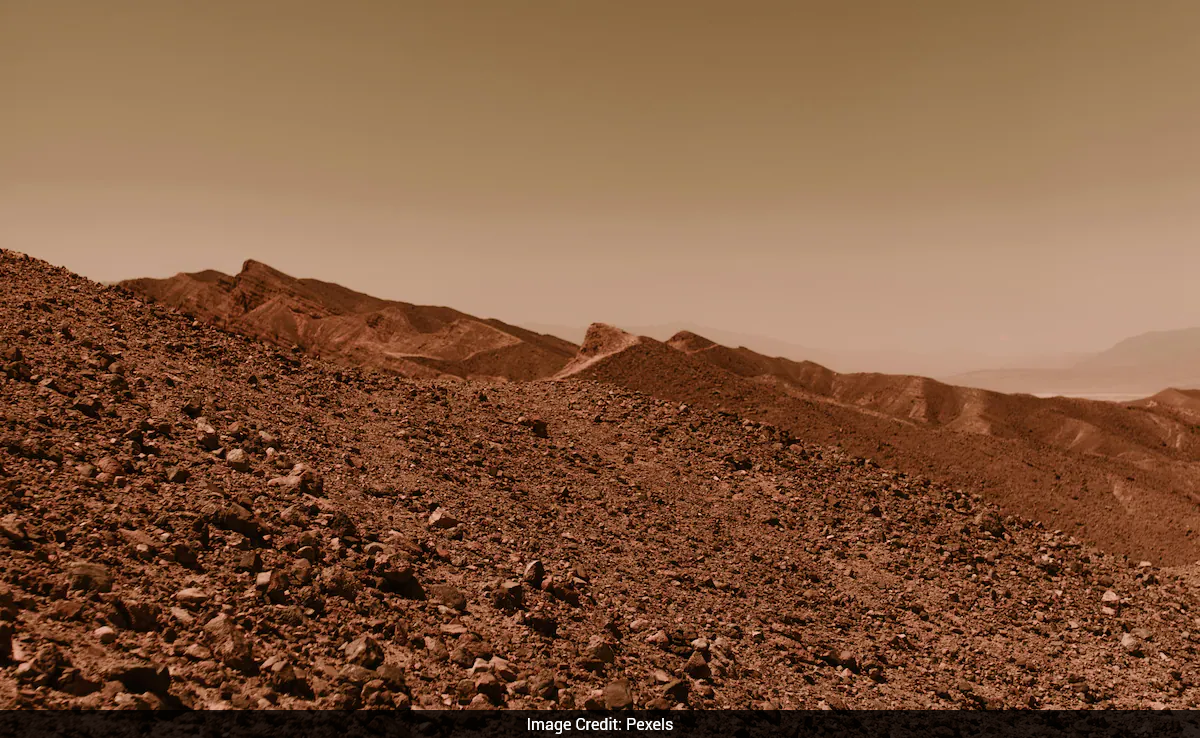
- Future Mars missions should prioritize the search for life as their main scientific goal
- The report outlines 11 key scientific objectives for human Mars exploration by NASA
- Highest priority is searching for life, pre-life chemistry, and Mars' overall habitability
A new detailed report says that the first astronauts to walk on Mars should actively search for signs of life while exploring the planet. The report was released on December 9 by the US National Academies of Sciences, Engineering, and Medicine, reported Space.com.
The report clarifies that the primary scientific objective of future human missions to Mars should be the search for life. It states that experts from various fields agree that identifying life is the highest priority. The 240-page report is titled "A Science Strategy for the Human Exploration of Mars."
The report was prepared for NASA by the National Academies. NASA aims to send astronauts to Mars by the mid-2030s. The document outlines how NASA can maximize the benefits of scientific research by sending humans to the Red Planet.
The report outlines 11 key scientific objectives for human exploration of Mars. At the top of the list are searching for signs of life on Mars, understanding pre-life chemical processes, and evaluating the planet's overall habitability.
Other lower-priority goals include studying Mars' water and carbon dioxide cycles, detailed mapping of its topography, and understanding how the Martian atmosphere affects astronauts' physical and mental health.
Objectives also include identifying the causes of dust storms, discovering resources useful for sustainable human settlement, and understanding the effects of Martian conditions on DNA, fertility, and microorganisms.
The report also emphasises the need to study how Martian dust and radiation affect astronauts, their equipment, and plants, animals, or microorganisms brought back from Earth.
The document proposes four possible mission campaigns, each consisting of three missions. The highest-ranked plan is said to be capable of accomplishing all 11 scientific goals.
This plan proposes sending astronauts to regions of Mars in low to middle latitudes, where surface ice and diverse topography are present. The search for life will focus on areas that may have been habitable in the recent geological past or are located within layered ice.
Another plan focuses on exploring areas deep within Mars. This will involve drilling 2 to 5 kilometers below the surface, where liquid water is believed to be present. These missions would first include a 30-sol human mission, followed by an uncrewed cargo mission, and then a 300-sol long human mission. A sol is a Martian day, approximately 24 hours and 40 minutes long.
A fourth option suggests sending three short human missions to three different locations on Mars.
According to the report, regardless of the strategy NASA adopts, a scientific laboratory should be established on the surface of Mars. Additionally, it recommends bringing Mars samples back to Earth from each human mission and holding a "Mars Human-Agent Teaming Summit."
The aim is to establish better coordination between astronauts, robotic missions, and artificial intelligence.
The report also states that adherence to planetary protection regulations will be mandatory during the search for life on Mars. These regulations are intended to protect Mars from contamination by Earth's microorganisms and to protect Earth from potential alien life.
With these limitations in mind, the report suggests that NASA should continue to work with other agencies to develop necessary changes to these regulations. This aims to ensure that astronauts can safely study areas where life is likely to exist or where life may exist.
The report sends a clear message that the direction of human exploration of Mars in the coming years should be determined by the search for life.
Track Latest News Live on NDTV.com and get news updates from India and around the world

