





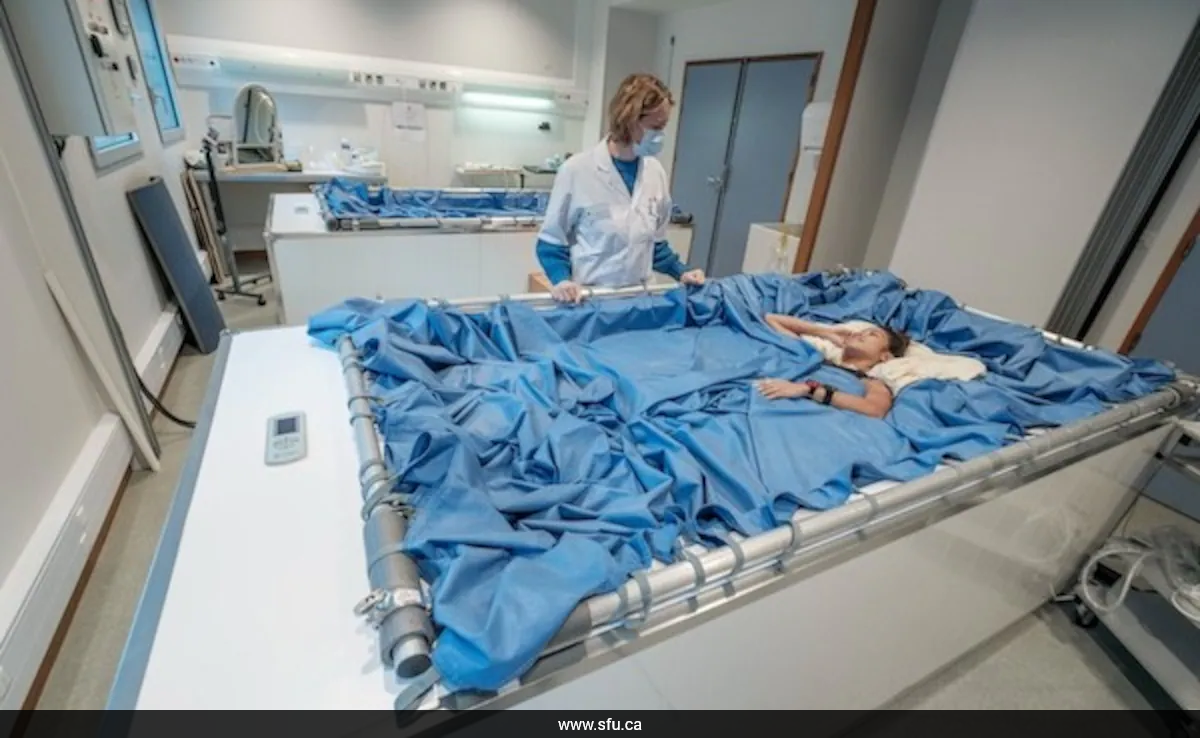
A new study suggests that female astronauts may face a hidden risk of developing blood clots during space missions, highlighting the need for more gender-specific research in space medicine.
Scientists from Simon Fraser University conducted the research through its Aerospace Physiology Laboratory in collaboration with the Canadian Space Agency. The findings were published in the journal Acta Astronautica.
Space travel is already known to affect the human body in several ways. Astronauts often experience muscle loss, reduced bone density, and changes in the cardiovascular and nervous systems because of prolonged exposure to microgravity. However, the latest research indicates that women may also have an increased risk of blood clot formation in such conditions.
Five-day microgravity simulation experiment
The study involved 18 healthy female volunteers who took part in a five-day "dry immersion" experiment designed to simulate weightlessness. In this test, participants floated in a water bath while remaining dry through a waterproof barrier, allowing researchers to replicate the effects of microgravity on the body.
Scientists monitored how quickly blood clots formed using a technique known as rotational thromboelastometry, which measures the speed and strength of clotting in real time.
The results showed that although blood took longer to begin clotting in the simulated microgravity environment, once clotting started it occurred faster and produced stronger and more stable clots. These clots may also be harder for the body to break down.
Implications for future space missions
On Earth, blood clots typically develop in the legs due to gravity and can sometimes travel to the lungs, causing a potentially fatal pulmonary embolism. In space, however, blood can shift towards the head and neck, increasing the likelihood of clots forming in the jugular vein.
The issue gained attention after a female astronaut aboard the International Space Station was found to have a jugular vein clot in 2020.
Researchers say the findings are not alarming for short missions but could become significant during long-duration journeys, such as those planned under Artemis Program and future missions to Mars.
Further studies are now being conducted to compare clotting responses between men and women in microgravity conditions.
Track Latest News Live on NDTV.com and get news updates from India and around the world

