





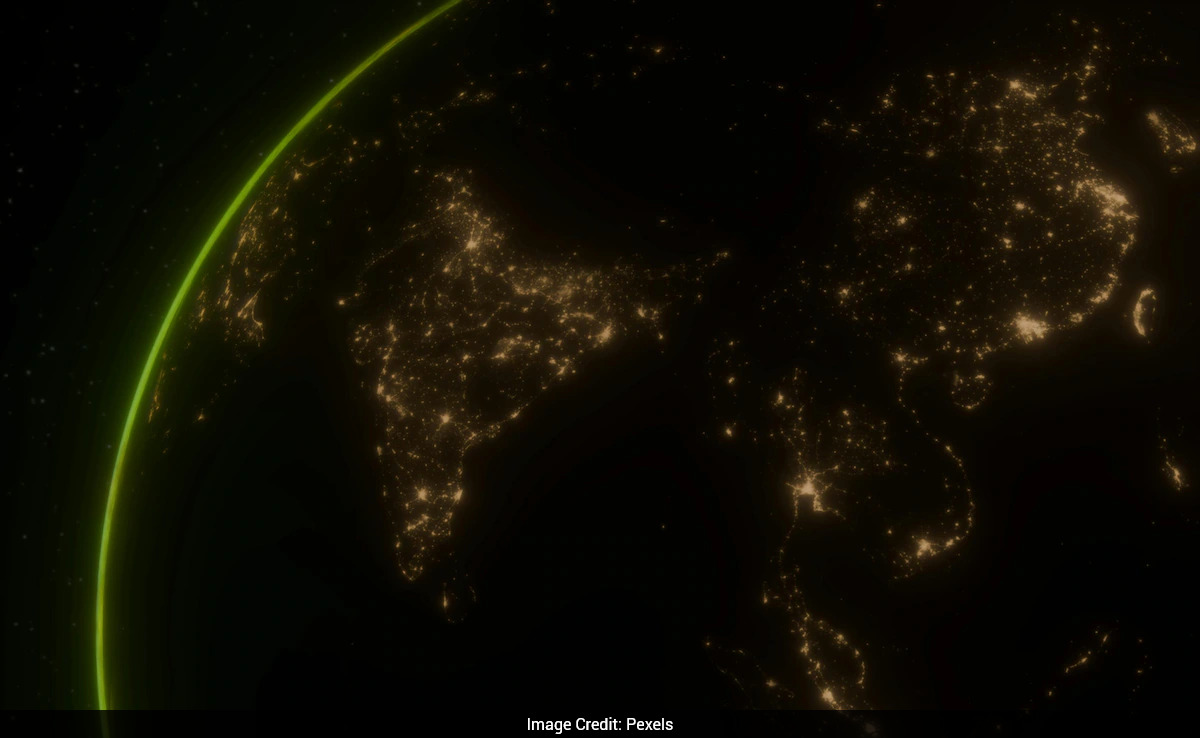
- Earth's artificial light increased by 16% from 2014 to 2022, per NASA-funded study
- Some regions, including parts of Europe and Venezuela, saw decreases in nighttime brightness
- Asia had the largest rise in artificial light due to urbanization in China and northern India
The Earth is becoming brighter every year due to increasing artificial light, according to a new study. However, researchers say the pattern is not steady, as some regions are getting dimmer while others are becoming brighter, reported the Guardian.
Researchers funded by NASA at the University of Connecticut studied more than 1.1 million satellite images collected over nine years. Their findings show that artificial light on Earth increased by 16% between 2014 and 2022.
This result is similar to an earlier 2017 study, which found that artificially lit outdoor areas were growing by about 2% each year, with light pollution spreading to most parts of the planet.
Uneven Changes Across Regions
The latest study, published in the journal Nature, found that while overall brightness increased, some areas became dimmer. This helped balance a larger 34% rise in global radiance.
Europe recorded a noticeable decrease in brightness due to energy efficiency regulations. Venezuela also saw a drop of more than 26% in night-time light, linked to its economic crisis.
According to the researchers, the COVID-19 pandemic impacted lighting patterns in many regions. Lockdowns, slowing industries, and a decline in tourism led to reduced lighting in the early years of the decade.
The recent impact of the Russia-Ukraine war has also been evident in nighttime lighting in that region.
Asia experienced the largest increase in lighting. Urbanization in areas like China and northern India has led to increased nighttime lighting.
On the other hand, some areas in Europe, such as Paris and other parts of France, saw a decrease in light pollution due to energy-saving measures.
The team, led by lead researcher Tian Li and co-author Zhe Zhu, studied nearly 1.16 million satellite images. They analyzed only actual changes in artificial lighting, removing moonlight, clouds, and atmospheric effects.
Zhu described these results as a changing picture of human activities. They argued that the Earth isn't just constantly brightening, but also experiencing constant fluctuations. They compared this process to observing the planet's heartbeat.
With the growing population in the US, cities on the West Coast have become brighter, while parts of the East Coast have become less bright. Researchers attributed this to the increasing use of energy-efficient LEDs and economic changes.
In Europe, countries like the United Kingdom and the Netherlands also experienced a decline in brightness. This decline accelerated during the energy crisis in 2022 following the Russia-Ukraine war.
The study also highlighted gas flaring activities in the US. Satellite images revealed intense gas flaring activity in areas like the Permian Basin in Texas and the Bakken Formation in North Dakota.
Experts believe that such data can be crucial in understanding energy use and reducing waste. It also helps inform decisions related to economic and environmental security.
Track Latest News Live on NDTV.com and get news updates from India and around the world

