





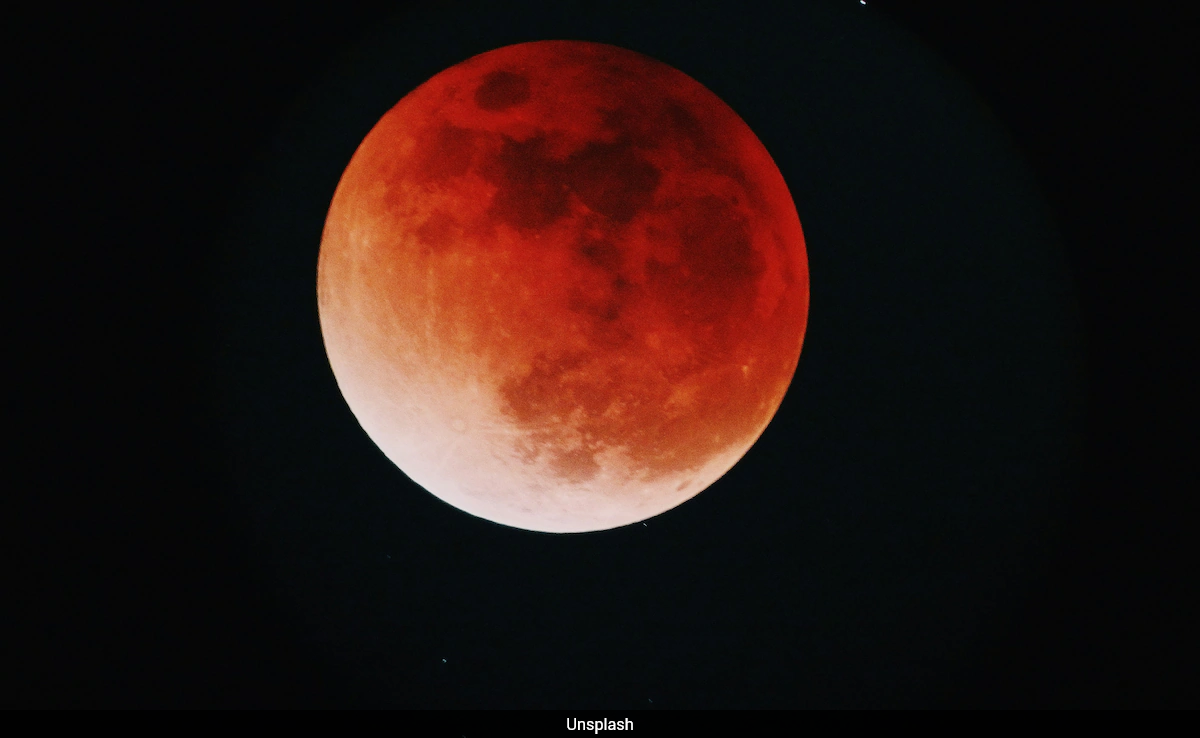
Skywatchers will witness the first lunar eclipse of 2026 in the early hours of March 3, when the Moon will turn a striking copper-red colour, commonly known as a "blood moon". A total lunar eclipse happens when the Earth moves directly between the Sun and the Moon. As the Moon passes into Earth's shadow, sunlight filtering through the Earth's atmosphere casts a reddish glow on its surface. This is why it appears red during totality.
Best Places to Watch
The eclipse will be visible across the night side of Earth, but the clearest and longest views are expected from the western half of North America, Australia and parts of the Pacific region.
Totality - when the Moon is completely covered by Earth's shadow - will last for 58 minutes, from 6:04am to 7:02am Eastern Standard Time (1104 GMT to 1202 GMT).
In cities such as New York, viewers will see the Moon turn red, but the deepest part of the eclipse will occur after moonset, meaning it will not be fully visible there.
Astronomers advise watching the event from a dark location with clear skies for the best experience. Unlike solar eclipses, lunar eclipses are completely safe to view with the naked eye.
During the eclipse, the bright silver Moon will slowly darken and then glow red, offering a rare and dramatic celestial display.
How does a lunar eclipse work?
According to NASA, lunar eclipse occurs when Earth passes directly between the Sun and Moon, casting a gigantic shadow across the lunar surface and turning the Moon a deep reddish-orange. This alignment can only occur during a full Moon phase.
How can I observe the eclipse?
You can observe a lunar eclipse without any special equipment. All you need is a line of sight to the Moon! For a more dramatic observing experience, seek a dark environment away from bright lights. Binoculars or a telescope can also enhance your view.
On March 3, totality will be visible in the evening from eastern Asia and Australia, throughout the night in the Pacific, and in the early morning in North and Central America and far western South America. The eclipse is partial in central Asia and much of South America. No eclipse is visible in Africa or Europe.
Track Latest News Live on NDTV.com and get news updates from India and around the world

