





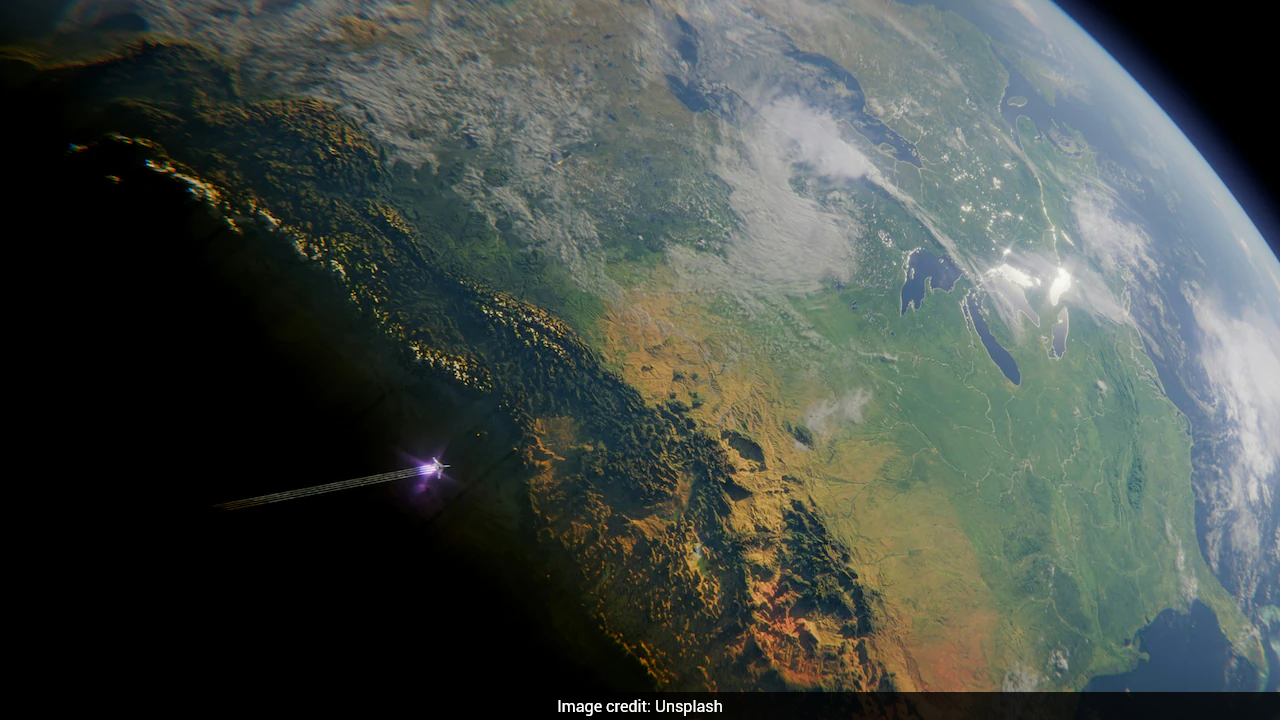
A tiny space object, designation 2026 RW1, entered Earth's atmosphere off the coast of northwestern Australia on September 6, 2026. It burned up over the Indian Ocean. According to EarthSky, it was only the 13th time that scientists discovered an asteroid before impact. While small meteors hit Earth's atmosphere regularly, what makes this event special is the timing.
The incident was also confirmed by Richard Moissl, head of Planetary Defense for the European Space Agency (ESA). "INCOMING! Our systems have calculated an atmospheric entry in the timeframe between 16:00-16:30 UTC of a harmless object discovered by Mt Lemmon survey with a diameter of around 0.8 m northwest of Australia over the ocean. The impact will likely cause a bright meteor," he wrote.
☄️🎇INCOMING! Our systems have calculated an atmospheric entry in the timeframe between 16:00-16:30 UTC of a harmless object discovered by Mt Lemmon survey with a diameter of ~0.8 m northwest of Australia over the ocean. The impact will likely cause a bright meteor @esaoperations pic.twitter.com/3xkXbCHqSo
— Richard Moissl (@Richard_M_F) September 6, 2026
The asteroid was estimated at about 0.8 meters, and it posed zero threat to people or infrastructure on the ground. NASA's Planetary Defense Coordination Office explained that objects under 25 meters almost always disintegrate long before reaching the surface. At most, tiny pebble-sized bits might fall harmlessly into the ocean, leaving behind nothing more than a momentary fireball.
"A small natural object 1.5-5 feet (0.5-1.5m) is predicted to impact Earth's atmosphere just northwest of Australia and safely disintegrate today, Sept. 6, 12:14 p.m. EDT. While not a hazard, scenarios like this provide an invaluable test of our planetary defense capabilities to monitor for larger objects and predict impact threats," NASA noted.
"The object was first reported to the Minor Planet Center by the Catalina Sky Survey, with earlier detections by Pan-STARRS, and the Center for Near-Earth Object Studies @NASAJPL calculated its trajectory and impact location - all funded by NASA's Planetary Defense Coordination Office."
"This is only the 13th small object that has been detected in space prior to impact, most from @NASA's routine planetary defense monitoring."
A small natural object 1.5-5 feet (0.5-1.5m) is predicted to impact Earth's atmosphere just northwest of Australia and safely disintegrate today, Sept. 6, 12:14 p.m. EDT. While not a hazard, scenarios like this provide an invaluable test of our planetary defense capabilities to…
— NASA Space Alerts (@NASASpaceAlerts) September 6, 2026
Even though the asteroid itself was harmless, events like this give scientists a rare real-world test for global early-warning networks.
NASA noted that while this rock was no danger, treating these moments as live fire drills helps refine automated tracking tools, speed up orbit calculations, and test communication protocols.
Being able to spot a tiny 3-foot rock hours before it hits proves that asteroid monitoring technology is getting sharper-meaning if a truly dangerous, larger asteroid ever heads our way, ground teams will be ready to detect it early.
Track Latest News Live on NDTV.com and get news updates from India and around the world

