





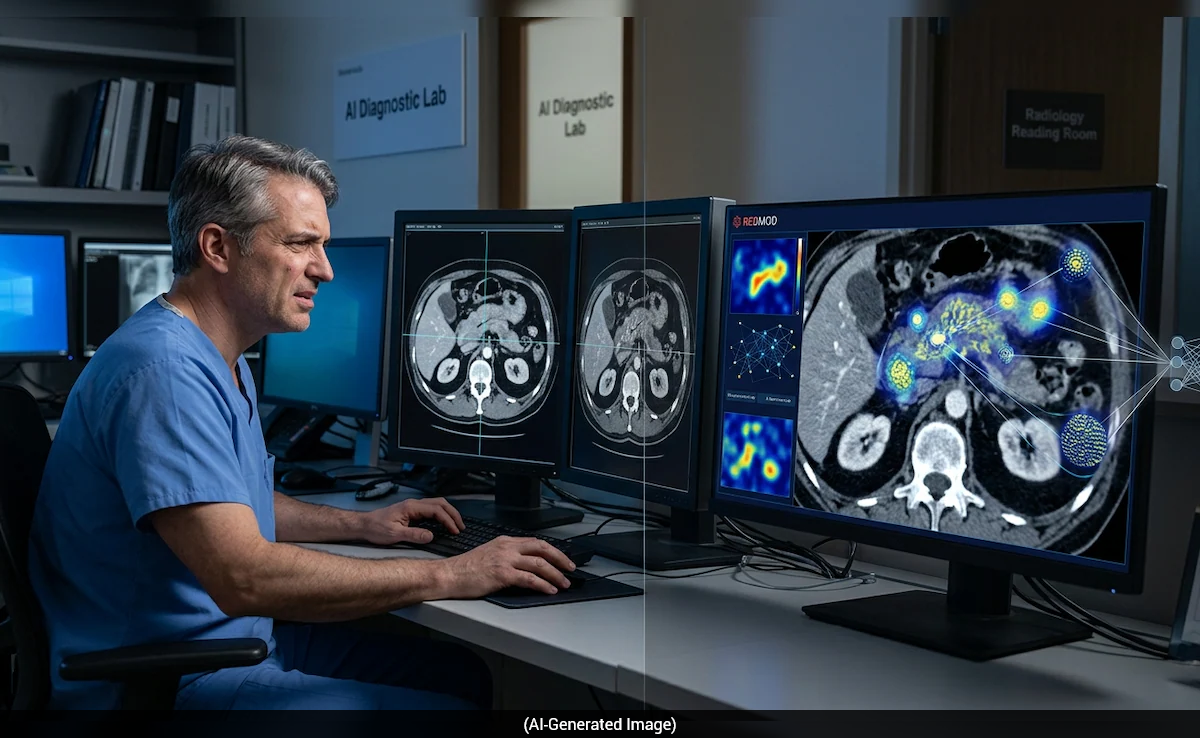
Scientists in the United States have developed an artificial intelligence system that may be able to spot pancreatic cancer up to three years before a formal diagnosis, offering fresh hope for one of the most difficult cancers to treat. The tool, known as REDMOD, was created by researchers at the Mayo Clinic and the University of Texas MD Anderson Cancer Center. It analyses CT scans for tiny changes in tissue texture and structure that are typically invisible to the human eye.
In tests, REDMOD correctly identified signs of the most common form of pancreatic cancer in nearly three quarters of cases, doing so an average of 16 months before patients received their diagnosis. That figure is roughly double the detection rate achieved by specialist doctors reviewing the same scans without AI support. In some instances, the system flagged suspicious patterns more than two years before diagnosis.
The AI was trained on 969 CT scans and then tested on a separate set of images, including 63 scans from patients who later developed cancer but had previously been given the all-clear by human radiologists. REDMOD correctly identified 46 of those 63 cases as suspicious.
Out of 430 healthy participants, 81 were incorrectly flagged, meaning those individuals could have been called in for additional tests before being cleared.
Radiologist Ajit Goenka from the Mayo Clinic said the system could identify "the signature of cancer from a normal-appearing pancreas" reliably across different clinical settings.
Pancreatic cancer is expected to become the second leading cause of cancer death in the United States by 2030, largely because 85 per cent of cases are not caught until the disease has already spread. Earlier detection could make curative treatment possible in many more patients.
The researchers say further testing across larger and more diverse groups of people is needed before the tool can be used in routine clinical practice. The findings have been published in the journal Gut.
Track Latest News Live on NDTV.com and get news updates from India and around the world

