





- Six planets will align before sunrise on August 12, visible across the sky from east to west
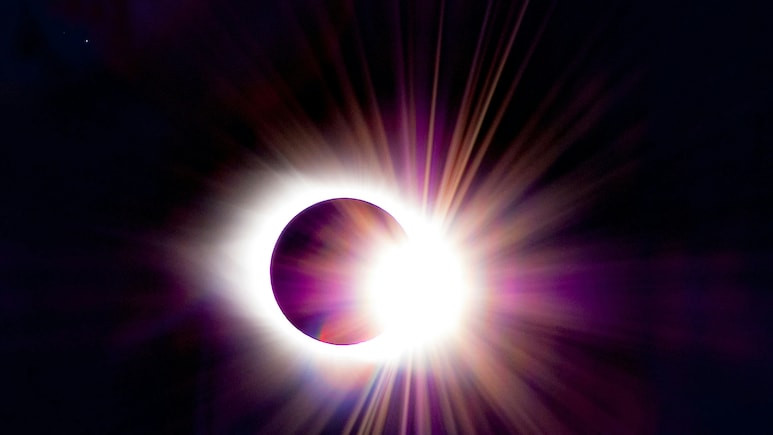
- A total solar eclipse will occur over Greenland, Iceland, and Spain, turning day into night briefly
- Millions in Europe, Africa, and North America will witness a partial solar eclipse on the same day
Skywatchers across the world are in for an extraordinary spectacle on August 12 as four separate astronomical phenomena unfold within the same 24-hour window. While each of these events occurs periodically on its own calendar, having all four take place on a single day is a truly remarkable coincidence.
Six-planet parade
The day begins before sunrise with an impressive planetary alignment. As per USA Today, six planets, Jupiter, Mercury, Mars, Saturn, Uranus, and Neptune, will appear stretched across the sky from east to west.
While planets like Mars and Saturn will be easily visible with the naked eye, observers using binoculars or telescopes will get a clear view of distant worlds like Uranus and Neptune.
People often wonder what the meaning of the term planetary parade. Andrew Fazekas, the communications manager for Astronomers Without Borders, previously told the media outlet that it's "not an official astronomical one". "It just simply means that the planets are visible in, generally, the same area of the sky," Fazekas added.
Also read | How NASA Is Keeping The Historic Voyager 2 Alive In Deep Space
A dramatic Total Solar Eclipse
Later in the day, the Moon will pass directly between Earth and the Sun. Observers situated along the path of totality, stretching across Greenland, Iceland, and Spain, will witness a full total solar eclipse, briefly turning day into night.
Meanwhile, millions of viewers across Europe, Africa, and North America will be able to observe a partial eclipse.
This stunning eclipse will not be visible in India. This is because in Indian Standard Time (IST), the eclipse window runs approximately from 9:45 PM on August 12 to 2:15 AM on August 13.
As the Sun will be well below the horizon during these nighttime hours, the event cannot be seen anywhere across the country.
The New Moon phase
The solar eclipse occurs because the Moon reaches its exact "New Moon" phase.
During this phase, the side of the Moon facing Earth is completely unilluminated by sunlight, leaving the night sky exceptionally dark.
Also read | Total Solar Eclipse On August 12: NASA-Approved Safety Tips For Safe Viewing
Peak of the Perseid Meteor Shower
This pitch-black sky sets up the perfect backdrop for the fourth event, which is the annual peak of the Perseid meteor shower.
Without moonlight to interfere, stargazers can expect to see up to 100 meteors per hour shooting across the night sky, complete with brilliant fireballs and glowing dust trails.
As per BBC Sky at Night Magazine, the best time to view it will be during the early morning hours of August 12, 13 and 14, before sunrise.
Track Latest News Live on NDTV.com and get news updates from India and around the world

