






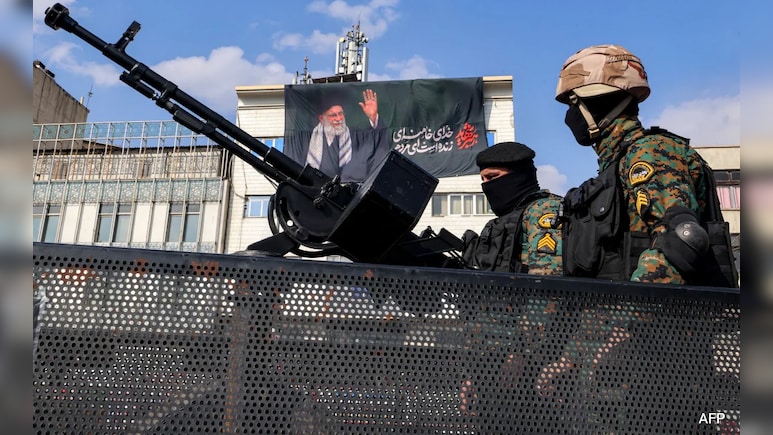
The current phase of the conflict involving Iran may ultimately be remembered less for its military operations than for what it reveals about the changing nature of warfare. Despite the employment of sophisticated intelligence, precision strikes, overwhelming air power and sustained economic pressure, the conflict has yet to produce a decisive political outcome. Instead, it has settled into a pattern of calibrated escalation, deterrence, diplomacy and strategic signalling.
Far from being an anomaly, the conflict appears to reinforce one of the defining strategic realities of the twenty-first century: overwhelming military superiority no longer guarantees decisive political victory.
To understand why, it is necessary to look back to the Second World War.
That conflict represented the culmination of the age of industrial warfare. Leaders such as Winston Churchill and Franklin D. Roosevelt fought in circumstances where national survival was at stake. Victory demanded the mobilisation of entire societies, economies and industries. Strategic bombing, naval blockades, prolonged campaigns of attrition and the full commitment of national resources were regarded as necessary instruments of war.
The human cost was unprecedented. An estimated 70 to 85 million people lost their lives. Entire cities were devastated, and civilians became part of the battlefield itself. Wartime famines, including the Bengal famine of 1943, illustrated how conflict, disrupted supply chains and policy decisions could combine to produce catastrophic humanitarian consequences. Such immense suffering was endured because the war was perceived as existential. Defeat was simply not an option.
Paradoxically, that devastation also created the foundations of a new international order.
Germany and Japan were comprehensively defeated. Their political systems were reconstructed. Under General Douglas MacArthur, Japan underwent sweeping constitutional and economic reforms. Europe was rebuilt through the Marshall Plan. At the global level, the victorious Allies laid the foundations of the United Nations and the Bretton Woods institutions, creating a political and economic framework that would underpin decades of relative stability and unprecedented global growth.
This post-war order was possible because three exceptional conditions existed simultaneously: decisive military victory, the collapse of defeated states and unparalleled American economic and strategic dominance.
Those conditions no longer exist.
Today's conflicts unfold in a fundamentally different environment. Nuclear weapons impose limits on escalation that did not exist in 1945. Modern societies are far less willing to accept large-scale military or civilian casualties. International humanitarian law has evolved significantly, while instant global communications ensure that civilian suffering is visible around the world in real time. Economic interdependence means that prolonged wars rapidly disrupt energy markets, trade, finance and supply chains far beyond the immediate theatre of conflict.
Military force remains indispensable, but it now operates alongside cyber operations, economic sanctions, technological competition, intelligence, information campaigns and proxy conflicts. The traditional distinction between war and peace has become increasingly blurred, replaced by continuous strategic competition across multiple domains. The objective is no longer the unconditional surrender of an adversary but the management of escalation while preserving strategic advantage.
The experiences of Iraq and Afghanistan demonstrated that battlefield success does not necessarily translate into durable political settlements. The current conflict involving Iran appears to reinforce the same lesson. Military operations can impose costs, degrade capabilities and strengthen deterrence. They cannot, by themselves, guarantee the political transformation that followed the Allied victories in 1945.
For India, this transformation carries important strategic implications.
India's future security will depend not only on military capability but also on economic resilience, technological innovation, industrial capacity and institutional strength. Maritime security in the Indian Ocean, energy resilience, secure supply chains, cyber capability and technological self-reliance are becoming integral components of national power.
Equally important, India operates in a world where another 1945 moment is unlikely. No single power today possesses the authority or dominance to reshape the international system as the United States and its allies did after the Second World War, when they established the United Nations, created the Bretton Woods institutions and led the reconstruction of major economies. The emerging international order will instead be shaped through continuous competition, shifting partnerships and negotiated accommodation among multiple centres of power.
In such an environment, India's long-standing commitment to strategic autonomy becomes not merely a diplomatic preference but a strategic necessity. The ability to engage constructively with competing powers while preserving independent decision-making may prove one of India's greatest strategic advantages.
The enduring legacy of Churchill and Roosevelt therefore lies less in the methods by which they fought the Second World War-many of which would be politically and morally unacceptable today-than in their understanding that national power rests upon resilience, industrial capacity, strong alliances and the ability to sustain public resolve during prolonged strategic competition.
Their generation mastered the art of winning the last great industrial war.
The challenge before today's leaders is fundamentally different. It is not to recreate the victories of 1945, but to secure national interests in an era where wars rarely end decisively, peace is increasingly contested, and strategic competition has become a permanent condition of international politics.
If the current Iran conflict leaves one enduring strategic lesson, it is this: the age of total war has given way to an era of constrained, multidomain competition. For countries such as India, understanding that transformation-and adapting to its continuing evolution-may prove as important as preparing for the next conflict itself.
(Milinda Moragoda is a former Cabinet Minister and diplomat from Sri Lanka and founder of the Pathfinder Foundation, a strategic affairs think tank)
Disclaimer: These are the personal opinions of the author

