






'Welcome to 2026, and under President Trump, America is back': These words by US Secretary of War Pete Hegseth best encapsulate the impact of 'Operation Absolute Resolve,' which resulted in the capture of Venezuelan socialist leader Nicolas Maduro. America is certainly back, in news headlines, as a dominating force in geopolitics, reclaiming influence in Latin America, and perhaps also back to its old ways as an architect of regime change.
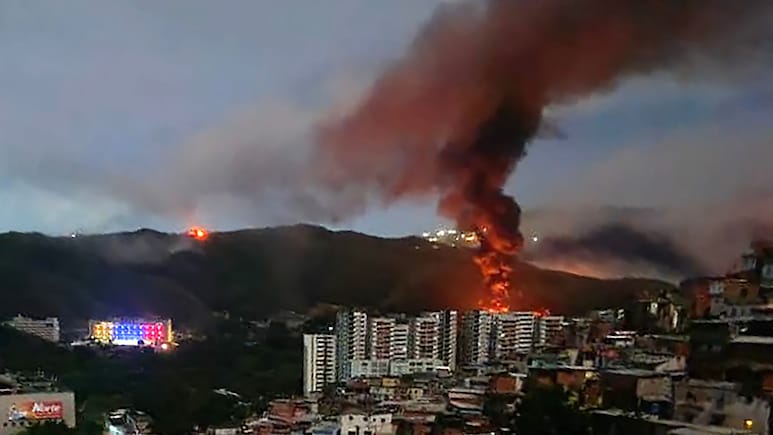
The operation was audacious: an integrated effort by the US Navy, Air Force, Army, Marine Corps, and the Central Intelligence Agency (CIA), 150 military aircraft from 20 different bases launched military strikes across Venezuela in the early hours of January 3. Turning off the electricity grid in Caracas, US forces entered Maduro's compound at 2:01 am local time - with the help of a confidential source who tracked Maduro's exact location. In a matter of minutes, Maduro was captured.
This should come as no surprise: the US deployed more than a dozen warships and military aircraft off the coast of Venezuela since August 2025. Yet, Venezuela was never going to be an easy target. A country twice the size of Iraq, Venezuela has a population of 28 million and more than 130,000 active military personnel, 300,000 paramilitary, 229 military aircraft, a naval fleet of 34 vessels, 172 tanks, and 8,802 armoured vehicles. Conducting an operation on Venezuelan soil without any loss of US life and capturing the country's leader is no small feat.
The drivers for a military attack in Venezuela
A combination of factors contributed to Washington's decision to attack Venezuela and capture Maduro. First and foremost is oil. Venezuela is home to the world's largest oil reserves, at more than 300 billion barrels. In his recent press conference, Trump made no qualms about the US's interests in Venezuela's oil resources, stating that "very large United States oil companies, the biggest anywhere in the world, [will] go in, spend billions of dollars, fix the badly broken infrastructure, the oil infrastructure, and start making money for the country." He even mentioned that the 'reconstruction' of Venezuela will be done with the support of and be paid for by US oil companies.
The second driver is that Maduro is a dictator, and a socialist one at that. The 2024 and 2018 elections in Venezuela have been widely acknowledged to be fraudulent, and some even question the legitimacy of the 2013 elections that first brought Maduro into power. This is reinforced by Maduro's political lineage as the ideological successor to late Venezuelan socialist Hugo Chavez, who ruled Venezuela from 1999 until he died in 2013. Washington's attack in Venezuela falls in line with the "Trump Corollary" to the Monroe Doctrine, outlined in the White House's National Security Strategy document as a "potent restoration of American power and priorities, consistent with American security interests." This also sends a message to other Latin American leaders that Washington considers troublesome, such as Nicaragua's Daniel Ortega, whose saving grace may be the fact that his country has no oil reserves whatsoever. In case this was intended to win more influence in Latin America, it may instead make the region more wary of Washington, even if some Trump allies cheer the US's military exploits.
The US military operation in Venezuela has immediate and long-term repercussions, both domestically and internationally. From a domestic standpoint, this will likely increase support for the Republican Party amongst Latinos in the US and will be projected as a major win for Trump's support base.
Internationally, it is a show of force: a highly coordinated operation in a large foreign country, with no US lives lost, and the chief objective met within minutes. It shows that Washington, Langley, and the Pentagon are ready to conduct sophisticated military and covert operations on foreign soil, even if it may violate international law - as leaders from Spain, Italy, Germany, and even Senators within the US have claimed. Countries and territories that Trump has so far threatened with military force, including Iran, Nigeria, North Korea, or even Panama, will now pay much closer attention; whether Washington follows through or not, though, is anybody's guess. China and Russia, staunch allies of Maduro and providers of military and economic support to Venezuela for more than a decade, will also keep a close watch on Caracas.
Although India engaged with high-level officials from Maduro's regime, India's relationship with Venezuela has remained mostly limited to the oil trade. This is also evidenced by the fact that Maduro has never had a bilateral meeting with Prime Minister Narendra Modi. Between 2007 and 2019, India imported copious amounts of oil from Venezuela, and Indian companies like ONGC Videsh also invested billions in Venezuelan oil fields. After US secondary sanctions were imposed on Venezuela in 2019 and 2020, India's oil imports from the Andean nation reduced dramatically. Now, with the US attempting to exert more influence in Venezuela's local production, India's oil firms may have to wait in line behind Western firms.
What next for Venezuela?
Trump stated his intention to 'run the country' until Washington can be assured of a 'safe, proper and judicious transition' in Venezuela. Yet, amidst the noise of the US military operation, we should remember that Venezuela has not yet undergone a regime change. The regime in question is the United Socialist Party of Venezuela (PSUV in Spanish), and it remains entrenched in power, at least for the time being. Delcy Rodriguez, the country's vice president, addressed Venezuelans on Saturday afternoon, calling Maduro's capture illegal and against all tenets of international law.
This would be an ideal time for the Venezuelan opposition to stand united against the PSUV's illegitimate rule, but this is not the case - the opposition is fractured and divided, with many people vying for influence. Even Maria Corina Machado, who was recently awarded the Nobel Peace Prize, was put out of the equation by Trump, stating that she "doesn't have the support or respect" amongst Venezuelans.
There is little clarity on Venezuela's path forward, in Washington, within the Venezuelan political opposition, and also among the PSUV. A political vacuum in Venezuela risks more uncertainty and could potentially lead to violence. The road ahead appears unclear and murky, but this entire exercise is a reminder of the real and present danger of the resource curse: Venezuela has been plundered for its oil for many decades by corrupt politicians and now risks falling into foreign hands. The Venezuelan people are all the poorer for it, battling rising violence, skyrocketing inflation, a shortage of basic goods, and lack of employment, in a country where there is enough oil to sustain all the world's appetite.
Hari Seshasayee is co-founder of Consilium Group and a visiting fellow of the Observer Research Foundation (ORF).
Disclaimer: These are the personal opinions of the author

