




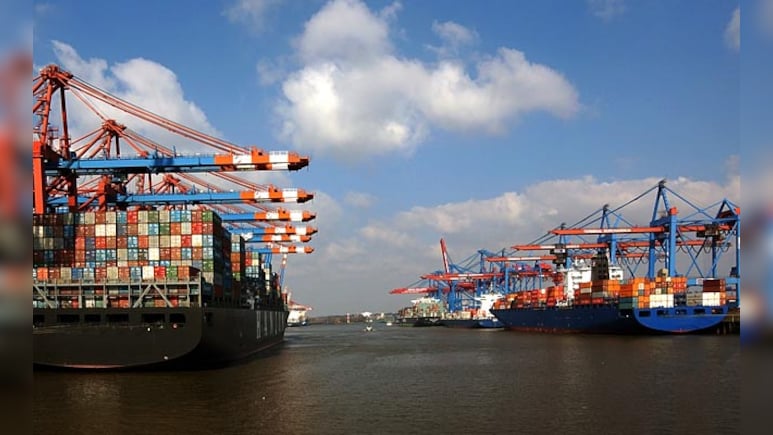
It is a season of tariffs, and countries are forced to change their economic policies, often reeling under the strain of American economic policies, either owing to economic foresight or to readjust their own position apropos the great power competition and its repercussions on trade. Mexico is the latest example of a country that has chosen to go the extreme path, increasing tariff policy dramatically. Mexico's Senate approved new duties of up to 50% on imports, applicable to certain items from January 2026. While the majority of items will see a hike of up to 35%, some could go much higher. The new duties will be applicable to China, India and a host of other Asian countries, including South Korea, Thailand and Indonesia, which do not have a Free Trade Agreement (FTA) with Mexico.
Mexico has moved to the forefront of the evolving trade confrontation with the US, primarily because it is America's largest trading partner. Within Washington, particularly under the Trump administration's renewed protectionist lens, there is intensified concern that Mexico has increasingly functioned as a dumping ground for Chinese goods and as a convenient trans-shipment hub for Asian exporters. US policymakers argue that Chinese firms, alongside other large Asian exporters, have exploited Mexico's extensive free trade architecture, particularly the United States-Mexico-Canada trade agreement (USMCA), to route goods into the US market while circumventing tariffs and trade restrictions imposed directly on China. This has been especially evident in sectors such as steel, aluminium, automotive components, electronics, and renewable energy equipment, where value addition within Mexico is often minimal but sufficient to meet rules-of-origin criteria. Mexico also wants to project fair play ahead of the review of the USMCA.
Mexico's recent decision to impose higher import tariffs on select Asian countries reflects both economic and geopolitical recalibration. On the one hand, it signals an attempt to protect domestic manufacturing and address growing trade imbalances, while on the other, it represents a strategic effort to reassure Washington that Mexico is not enabling tariff evasion or undermining US trade enforcement. At a broader level, these measures underscore the convergence between US trade strategy and Mexico's industrial policy. However, Mexico's own complicated relationship with the US has exposed the limits of nearshoring as a friction-free alternative to China-centric supply chains.
Mexico's president, Claudia Sheinbaum, has shown remarkable deftness in avoiding confrontation with the Trump administration even as Mexico's actions suggest an awareness that sustained access to the US market now comes with heightened scrutiny, stricter compliance expectations, and an implicit demand for alignment with American economic security priorities. Mexico has been internally debating the issues and initially mulled a much wider spectrum of imported goods for imposing tariffs. It has faced criticism from its own business groups for imposing the new tariffs, which the government has defended on grounds of protecting local industries, addressing trade imbalance and boosting employment.
Mexico's economy was hit hard by the pandemic, but it has rebounded strongly now. India is an emerging trade partner of Mexico with exports worth $8.9 billion and imports standing at $2.8 billion in 2024, resulting in what is a strong trade surplus for India. Major sectors in bilateral trade include automobiles and auto parts and components, petroleum (crude oil), engineering goods and electronics, chemicals and fertilizers, pharmaceuticals and healthcare, metals, gems and jewellery and agricultural products. Indian investments in Mexico are a rapidly growing sector with over 250 Indian companies and a cumulative value of planned and invested equity at $4 billion as of early 2025. Given the expanding economic linkages between Mexico and India, the tariffs announced do not augur well for India's trade relationship with Mexico and its overall business sentiment. For India, it is estimated that exports worth $2 billion in sectors such as automobiles, auto parts, textiles, steel and iron could be affected.
Mexico's tariff recalibration offers lessons for India. As US-China economic tensions persist and intensify across select geographies, middle powers are increasingly adjusting trade policies to avoid direct confrontation with Washington, often generating unintended second and third-order effects for their trading partners. For India, this underscores a central challenge in its trade diversification into regions such as Latin America and Southeast Asia, something that is key to hedging against US tariff volatility. These recalibrations are likely to unfold within a more politicised and compliance-driven trade environment. Market access will be shaped less by multilateral norms and more by strategic alignment, demanding adaptive trade diplomacy from New Delhi.
Disclaimer: These are the personal opinions of the author

