





Are national memories short, or selective, or both? What explains India and Bangladesh's recent political behaviour? Non-business visa services on both sides remain suspended. Bangladeshi cricketer Mustafizur Rahman signing up for the Pakistan Super League after being removed from the ICC following the Indian cricket board's directives would point to that. That this came soon after the Indian Foreign Minister's Dhaka visit to attend former Prime Minister Khaleda Zia's funeral appears even more unpropitious. Bangladesh reacted predictably, with a request for shifting the IPL T20 series away from India, voicing a security threat for their players.
India and Bangladesh seem to have forgotten the 1971 Liberation War they fought together. Bangladesh, for one, seem to definitely have moved on from the memories of rampage, genocide and the political injustice they faced at the hands of Pakistani leaders, which forced East Pakistan to seek an independent state away from Pakistan.
The Growing Ties With Pak
India and Bangladesh have been on a sticky wicket ever since Sheikh Hasina, India's trusted Bangladeshi leader, had to step down in face of popular protests in August 2024. Since then, Pakistan has made significant inroads into the country. In the recent past, they offered the use of Karachi port when India banned import of a number of jute products and textile products through its land routes. Talks of buying Pakistani fighter jets are being heard. Dhaka and Karachi will soon have direct flights. Sheikh Hasina often referred to restoring the pre-1965 connectivity ties between India and Bangladesh; now, Islamabad is attempting to restore the erstwhile Bangladesh and Pakistani ties.
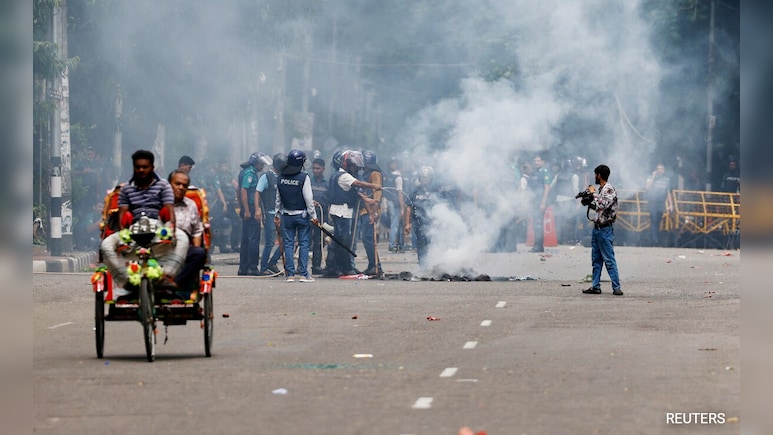
The violence against minorities in Bangladesh is the latest trigger for India. The death of Bangladeshi youth leader Osman Sharif Hadi saw angry mobs attacking secular institutions, torching media houses and brutally attacking Hindus. His killing was an opportune moment for a particular section to push their agenda effectively. The initial inaction of the interim Mohammed Yunus government during this latest round of violence also added to the escalation.
Violence against Hindus is not new in Bangladesh. Can a political message from India deter such disruptive behaviour or ensure minorities' safety? In October 2001, Bangladesh saw the worst attack in a single day on the largest number of Hindus in a post-electoral win for the BNP. India immediately sent an emissary, and while the two countries did not enjoy strong political ties during those five years, the scale of violence against minorities certainly ebbed through quiet diplomacy. There exists a general understanding that post-2009, given the close association of minorities with the Awami League (AL) party, their lives seemed safer. Particularly, Hasina ensured that minorities were present within the police forces, and this mitigated fears for Hindus, especially in rural areas. Even so, according to one study, over 600 Hindus have been leaving Bangladesh annually for over the last several decades, including during Hasina's rule.
India's Political Message
Given the present impasse that exists between the neighbours, can the hardening on both sides ensure the safety of minorities? Expecting the interim government - which seems to be in an exit mode now that the Jatiya Sangsad elections are only a few weeks away - to take strong security measures is a futile exercise. Declaring Bangladesh a non-family posting in anticipation of violence is a sharp political message. India securitising Bangladesh means feeding the hardliners on both sides. The section that desires to postpone elections and change the political landscape of the country to revoke plurality and democratic norms is finding a greater space in this sharp, distanced bilateral environment.
The election campaign for Bangladesh started yesterday, as notified by the Election Commission. While the BNP had suggested that they were in favour of AL joining the elections, under the students' pressure, the interim government preferred to ban AL's political activities. India has been calling for inclusive elections (read elections that include AL) for long. In Sheikh Hasina's years, too, allegations of one-sided elections surfaced every now and then. But India distanced itself from these, terming them Bangladesh's 'internal matter'.
There is also the question of the return last month of Tariq Rahman, Khaleda's successor who will subsequently assume the BNP chairmanship. That is expected to give a boost to the BNP's electoral fate, though given his prolonged absence, his grip over Bangladeshi political intrigues remains moot.
Interestingly also, as per a few recent polls, the Jamaat-e-Islami seems to be gaining popularity. Their student wing swept the elections to the critical university student unions. The newest political party, the National Citizen Party, which arose from the July movement, has decided to forge an electoral alliance with the Jamaat. A move likely to cost their political future, this decision was a hotly contested issue that ultimately led to several women NCP leaders positioning themselves as independent candidates.
Swing Voters
Ever since 1991, given the nature of bipartisan Bangladeshi politics, nearly an equal percentage of voters are seen favouring AL and BNP. This time, however, the absence of Hasina and Khaleda, who have dominated the Bangladeshi electoral space for over three decades, might give way to swing voters, making it a rather unpredictable contest. This election will see voters in the age group of 18-38 years - almost 40% of the electorate - influencing the final electoral verdict. The anti-India mood seems to prevail strongly; Hasina is a critical factor, and now sports has also been sucked into the political imbroglio. Hasina's various media interviews from her hideout in Delhi, predictably questioning the fate of Bangladesh, has aggravated the current bilateral situation. India allowing Awami Leaders to hold public meetings here has also added to the anti-India sentiment in Dhaka.
The Indian disenchantment with Bangladesh began with the takeover of the interim government led by Yunus. The breakdown in law and order and the persistent violence in Bangladesh post-August 2024 only reinforced India's opinion. For every bilateral step forward, there have been two steps backwards over the last 16 months. The connectivity corridors that both sides painstakingly built over the years have been withdrawn through various measures undertaken by both sides. Similarly, bilateral trade, which had substantially grown to reach nearly USD 20 billion, has plummeted sharply. The 15 lakh-odd visas that India annually issued till 2023 benefited many who received Indian medical treatment, apart from the merchandise that they took back with them.
In the past, too, India and Bangladesh had had their issues despite the close proximity they shared. But the wrinkles would get ironed out as the intention was to make the relationship work. Evidently, that has changed now. The present bilateral disengagement can lead to disastrous consequences, ones that would be difficult to undo. Large sections of Bangladeshis and Indians prefer to walk the middle path. Alas, personalities and bias continue to drive state-to-state ties. And unfortunately, it's these sections that are dominating the narrative on both sides. Delhi and Dhaka need an appropriate lens so as not to lose sight of the woods for the trees.
(The author is Professor, Jindal School of International Affairs, O.P. Jindal Global University)
Disclaimer: These are the personal opinions of the author

