






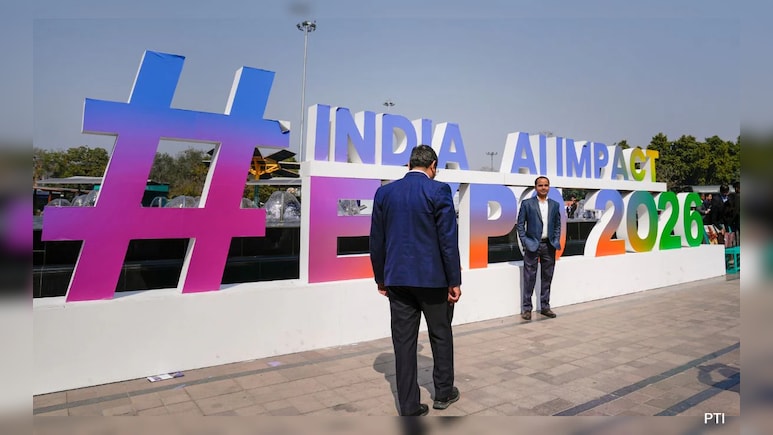
India's assumption of the BRICS presidency in 2026 coincides with a rare convergence of strategic opportunity and geopolitical strain. New Delhi will chair the grouping at a moment when the global order is fragmenting, technology is becoming a primary arena of power, and the Global South is demanding not merely representation but leadership. India's hosting of the AI Impact Summit 2026 and its intent to place a BRICS CBDC Bridge on the agenda signal an ambition to shape BRICS not as a reactive bloc but as a platform for rule-making in the digital age.
This presidency will unfold amid visible frictions within the BRICS itself. Strategic rivalry between India and China, divergent economic trajectories, and differing political systems among members risk reducing the forum to a lowest-common-denominator consensus. India's challenge, therefore, is not to paper over these differences, but to lead the BRICS toward a functional, credible agenda that delivers tangible value to its members and to the wider Global South.
At the core of India's approach lies a distinctive model of digital statecraft. Over the past decade, India has built Digital Public Infrastructure (DPI) at population scale - identity, payments, data exchange, and service delivery systems that are interoperable, low-cost, and publicly governed. This experience underpins India's framing of digital sovereignty not as isolationism or technological autarky but as the ability of states to govern data, platforms, and intelligence systems in line with democratic accountability, inclusion, and national priorities.
Positioning AI within this framework is central to India's 2026 agenda. Rather than competing in an arms race for frontier models alone, India is likely to emphasise "AI for scale and society": AI systems embedded in public infrastructure, delivering measurable outcomes in health, agriculture, education, climate adaptation, and public finance. For BRICS, this offers a shared narrative that resonates across development levels. That is of AI as an instrument of productivity and inclusion, not merely corporate concentration or geopolitical leverage.
The AI Impact Summit 2026 provides India with a convening platform to articulate this vision. Success will depend on translating abstract principles of trust, safety, inclusion, and accountability into practical cooperation. This could include shared AI governance templates, capacity-building programmes for public sector AI deployment, and common approaches to data stewardship that respect sovereignty while enabling cross-border collaboration among BRICS members.
Equally significant is India's intent to foreground a BRICS CBDC Bridge. In a world of weaponised finance, fragmented payment systems, and persistent dollar dependency, cross-border settlement infrastructure has become strategic. A BRICS CBDC Bridge, if approached pragmatically, could enhance trade efficiency, reduce transaction costs, and offer members optionality without demanding monetary convergence or political alignment. India's experience with real-time payments and financial inclusion positions it as a credible steward of such an initiative, provided it remains modular, voluntary, and technologically neutral.
Managing internal BRICS tensions will require diplomatic restraint and institutional design rather than ideological grandstanding. India is unlikely to push for a monolithic BRICS "digital bloc" aligned against the West or any single power. Instead, its comparative advantage lies in offering interoperable frameworks: systems that allow cooperation without coercion, and participation without dependence. This approach also enables India to maintain strategic autonomy, balancing partnerships across the G7, Global South, and emerging economies.
What, then, does success look like for India's BRICS presidency? First, agenda clarity. A focused set of deliverables, potentially grounded around AI governance cooperation, DPI-enabled development use cases, and a pilot-based CBDC bridge, will matter more than expansive declarations. Second, the institutionalisation of these initiatives into BRICS working mechanisms will ensure continuity beyond India's term and avoid one-off symbolism. Third, cementing the Global South's credibility. If India can demonstrate that the BRICS under its leadership produces public goods that smaller and developing economies can adopt, it will strengthen BRICS' relevance in a crowded geopolitical landscape. Finally, finding a strategic balance. Success will be measured not by confrontation but by India's ability to lead without polarising, to shape norms without enforcing blocs, and to anchor BRICS in practical cooperation despite internal frictions.
India's 2026 BRICS presidency is thus less about dominance and more about stewardship. In an era of technological disruption and geopolitical flux, India has the opportunity to reposition the BRICS as a platform for digital pluralism where sovereignty, trust, and inclusion are not slogans, but operating principles for a multipolar world.
(S. Yash Kalash is a senior fellow at CIGI and an expert in strategy, public policy, digital technology and financial services.)
Disclaimer: These are the personal opinions of the author

