






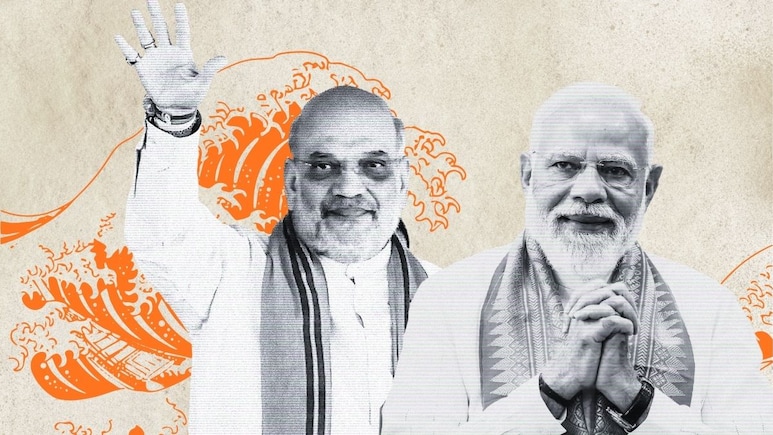
The phrase Anga-Banga-Kalinga is much more than a poetic reminder of ancient India. It evokes the memory of a vast civilisational belt that once connected the Gangetic plains, the Bengal delta, and the Bay of Bengal coast through trade, pilgrimage, culture, maritime enterprise, and political imagination. In contemporary geographical terms, this space broadly corresponds to Bihar, West Bengal, and Odisha - three regions that were never marginal to India's history. On the contrary, they were among the most vibrant centres of prosperity, knowledge, spirituality, and outward connectivity.
Anga, located in eastern Bihar, particularly the Champa region around present-day Bhagalpur and Munger, was an important political and commercial zone in ancient India. It was closely linked with the wider Gangetic world and functioned as an inland centre of economic and cultural activity. Banga, or Bengal, carried this eastern world further into the delta and towards the sea. Bengal's rivers were not merely natural features; they were living routes of movement, exchange, and settlement. The ancient port of Tamralipta, identified with present-day Tamluk, was one of eastern India's most significant maritime gateways. Through this port, Bengal was connected to Southeast Asia, China, and even the Roman world.
Kalinga, broadly corresponding to ancient Odisha, gave this eastern belt its strongest maritime character. Kalinga is remembered not only for the famous Kalinga War and Ashoka's moral transformation, but also for its powerful seafaring traditions. The people of Kalinga travelled across the Bay of Bengal and established commercial, religious, and cultural links with Ceylon, Burma, Java, Bali, Sumatra, Borneo, and other parts of Southeast Asia. In that sense, Kalinga represented the oceanic imagination of eastern India.
Taken together, Anga, Banga, and Kalinga formed a connected eastern system. Anga gave the region its inland Gangetic depth; Banga provided the deltaic and riverine gateway; and Kalinga opened the maritime horizon. The prosperity of this zone emerged from the interaction of rivers, ports, agriculture, crafts, pilgrimage routes, Buddhist and Hindu sacred geographies, and long-distance trade. Eastern India, therefore, was never a backward edge of the subcontinent. It was one of the great meeting points between India and the wider world.
In recent times, this historical memory has acquired renewed political meaning. For the BJP, developments across Bihar, West Bengal, and Odisha can be interpreted as the gradual completion of an eastern political corridor. In this reading, the party's presence across these three states is not merely an electoral achievement. It also provides an opportunity to present India's eastern flank as a single strategic, cultural, and economic zone.
The significance of such a corridor lies in its ability to combine politics with history. The BJP can argue that Bihar, Bengal, and Odisha are not isolated political units, but parts of a much older civilisational geography that needs to be reconnected. This allows the party to link electoral expansion to a broader narrative of cultural revival, infrastructure growth, and economic integration. The message is direct and powerful: eastern India must no longer be seen as a neglected periphery; it must be restored as a centre of prosperity, knowledge, spirituality, and maritime influence.
Within this political narrative, the idea of Purvodaya, or the rise of the east, becomes especially important. The development of eastern India has often been discussed in terms of highways, railways, ports, industrial corridors, inland waterways, human resources, and regional connectivity. Bihar, Bengal, and Odisha occupy a crucial place in this framework. Bihar offers the demographic and Gangetic hinterland; Bengal offers riverine, industrial, and port-based possibilities; Odisha offers mineral wealth, coastline, and maritime access. If these strengths are connected through infrastructure and economic planning, the region can become one of India's major growth engines.
The maritime dimension is particularly important. Ancient Anga-Banga-Kalinga was deeply connected to the Bay of Bengal. Today, that same maritime space is again central to India's strategic imagination. Ports such as Kolkata-Haldia, Paradip, Dhamra, and Gopalpur can be seen as modern counterparts of older maritime routes associated with Tamralipta and Kalinga. Through these ports, eastern India can connect not only with the rest of India, but also with Bangladesh, Myanmar, Southeast Asia, and the wider Indo-Pacific.
In this context, port-led development, coastal shipping, inland waterways, multimodal logistics, and industrial corridors are not merely technical projects. They carry historical resonance. They suggest reconnecting eastern India with the world through the same Bay of Bengal that once carried merchants, monks, artisans, sailors, and pilgrims across Asia. A modern eastern corridor can therefore combine trade, infrastructure, and strategic outreach.
Shifting focus to cultural aspects, cultural revival forms another important pillar of this imagination. The BJP has often used heritage as a political language, linking development with temples, sacred geography, civilisational pride, and regional identity.
In the Anga-Banga-Kalinga belt, this cultural geography is exceptionally rich. It includes Bodhgaya, Rajgir, Vaishali, Nalanda, Puri, Konark, Bhubaneswar, Tamluk, Tarapith, Mayapur, Gangasagar, and the Buddhist circuits of Odisha and Bengal. Each of these places carries multiple layers of memory - Buddhist, Hindu, Vaishnavite, Shakta, Shaiva, Tantric, folk, and maritime.
The legacy of Tantra gives this region an even deeper cultural significance. Bengal, Bihar, and Odisha were not only centres of temple worship or Buddhist scholarship. They were also major spaces of religious synthesis in South Asia. Shakta traditions, Shaiva practices, Buddhist Tantra, Vajrayana, folk rituals, and tribal spiritual systems interacted across this eastern zone for centuries. Sites such as Tarapith, Kalighat, Bakreshwar, Nalanda, Vikramashila, Odantapuri, and Puri reveal a sacred landscape where philosophy, ritual, devotion, and popular belief came together.
The Jagannath tradition of Odisha, the worship of Goddess Vimala at Puri, the Chausath Yogini temples, the Shakti traditions of Bengal, and the Vajrayana associations of Bihar all show that eastern India was never culturally passive. It was creative, experimental, and deeply plural. It produced new forms of worship, new philosophical syntheses, and new ways of linking the local with the universal. This Tantric and sacred geography allows the region to be presented not simply as a land of temples, but as a civilisational zone of knowledge, ritual power, spiritual experimentation, and cultural plurality.
Politically, this matters because heritage can become a language of regional pride. The BJP can frame the Anga-Banga-Kalinga belt as an ancient centre of learning, trade, spirituality, and maritime mobility. Such a narrative challenges the idea that eastern India is historically backward or dependent. Instead, it presents the region as a once-prosperous civilisational arc that can be revived through modern infrastructure, cultural recognition, and economic planning.
The deeper political importance of this idea lies in the combination of three narratives: civilisation, connectivity, and commerce. Civilisation gives emotional and cultural legitimacy. Connectivity gives an administrative and infrastructural purpose. Commerce gives economic credibility. If these three are brought together, the eastern corridor can become more than an election map. It can become a development imagination.
However, this idea will succeed only if it moves beyond symbolism. Eastern India is socially, culturally, and ecologically complex. Bihar, Bengal, and Odisha have distinct linguistic identities, caste structures, regional aspirations, borderland anxieties, agrarian distress, migration patterns, and environmental vulnerabilities. Bengal's delta, Bihar's floodplains, and Odisha's coastline require careful climate-sensitive planning. Port-led development must not displace coastal communities. Heritage revival must not become narrow cultural tokenism. Economic corridors must generate local employment, not merely serve as extractive routes for minerals, goods, and logistics.
The BJP's challenge, therefore, is not only to win elections. Its larger challenge is to translate this corridor imagination into inclusive governance. Infrastructure must benefit ordinary people. Cultural revival must respect local traditions. Maritime growth must protect coastal livelihoods. Regional development must not erase federal diversity. The success of the Anga-Banga-Kalinga idea will depend on whether it can combine historical pride with practical delivery.
Still, as a political and civilisational idea, Anga-Banga-Kalinga remains powerful. It gives eastern India a larger story. It allows the BJP to present its eastern expansion not as a series of separate electoral gains, but as the reassembly of an old historical geography. In that story, Bihar provides the Gangetic depth, Bengal provides the deltaic gateway, and Odisha provides the maritime horizon.
Together, these regions form an eastern flank that once connected India to the wider world. If reimagined with sensitivity, ambition, and institutional seriousness, this corridor can once again become a space of trade, culture, infrastructure, pilgrimage, maritime strategy, and regional prosperity. The promise of Anga-Banga-Kalinga lies precisely here: it transforms eastern India from a political battleground into a civilisational and developmental bridge between India's past and its future
(The writer is a professor in the department of International Relations at Jadavpur University, Kolkata)
Disclaimer: These are the personal opinions of the author

