






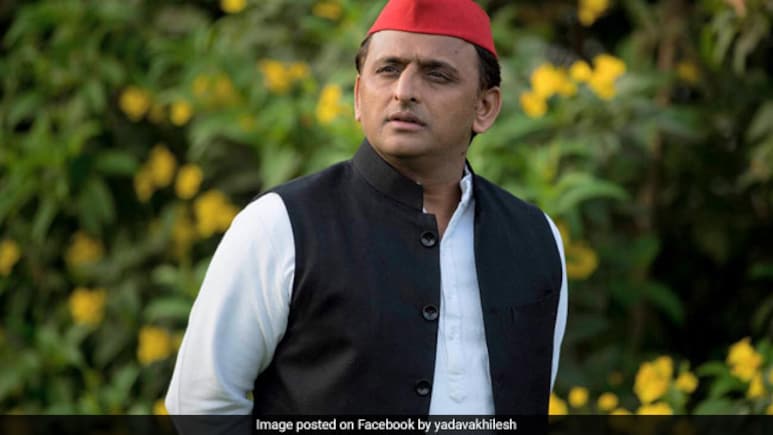
The Samajwadi Party will break the tradition of releasing a single manifesto for all of Uttar Pradesh ahead of the 2027 Uttar Pradesh assembly polls. Party chief Akhilesh Yadav has put his stamp on a new mantra - "75 manifestos for UP's 75 districts".
Virtually taking a leaf out of the UP government's "one district, one product" campaign, the party has created a plan to address the assessment that each district of Uttar Pradesh has different socio-economic equations, aspirations and challenges.
Party leaders say "The One District, One Manifesto" formula will help in creating exclusive micro-level promises ahead of the elections.
This is expected to help the Samajwadi Party align its candidates closely with what's driving the vote on the ground in each district. The template in each district will not be what the party promises to achieve across the state if voted to power. Instead, the focus will be on "how the party plans to transform the district".
The micro-zoned manifesto has a big political advantage for the Samajwadi Party. It will help in making promises aligned with the varying caste and community equations in each district, something which a single state level manifesto fails to do.

Since 2017, the SP has been contesting elections with big political players as allies. For the 2017 Uttar Pradesh assembly elections, the SP had allied with the Congress. On February 11, 2017, during a joint press conference, Akhilesh Yadav and Rahul Gandhi released a 10-point common minimum programme, outlining shared development goals if they came to power.
Later both parties released their own independent manifestos for the campaign.
Similarly in 2019, the SP tied up with the BSP. There was no joint manifesto. Both chose to issue their own set of promises. In the 2024 Lok Sabha polls in UP, the SP and Congress released their own individual manifestos. The Congress manifesto called the Nyay Patra was released on April 5, 2024, while the Samajwadi Party manifesto was released shortly after on April 10, 2024.
But in almost every election the manifestos didn't gain traction. Alliances meant that the party's statewide manifesto used to stay extremely invisible. Also, the allies campaigned on separate party documents but parties shared common opposition themes against the ruling BJP. Still their specific promises diverged on several issues - such as the Samajwadi Party promising the revival of the Old Pension Scheme, which didn't find mention in the Congress manifesto.
This time around, Akhilesh Yadav is trying to remove this deficiency to make the manifesto exercise truly count.
During a selection strategy meeting nearly two months ago with district level office bearers, Akhilesh Yadav had moved the idea. He had told the party men that the challenges faced by Poorvanchal, Paschimi, Awadh and Bundelkhand regions are poles apart.
"A common overarching manifesto for all of UP in the past used to miss the specific demands of people of different regions," he told party workers. Then party's state chief Shyam Lal Pal had issued the orders for its execution.
The Samajwadi Party's district level leaders have been asked to compile a comprehensive list of aspirations and challenges from each district. They have to put together a list of five key problems, projects which are lying dormant or neglected and what kind of employment opportunities already exist on the ground.
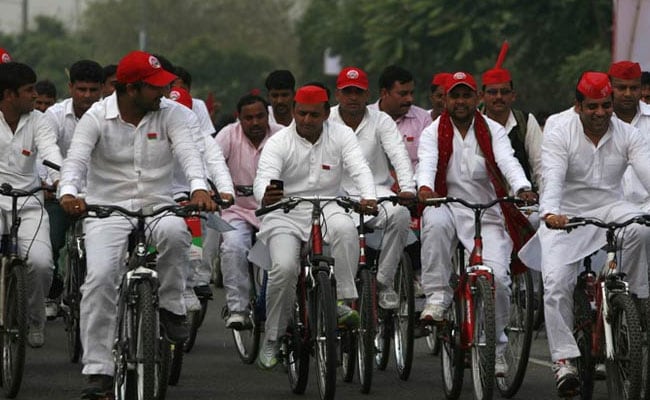
The five target areas identified include education and health, jobs and industry, farmers and other artisans, infrastructure and tourism.
A senior party leader said that the "think global act local" approach can help candidates contesting the assembly polls to reach out the voters with a clear roadmap. Akhilesh Yadav had first planned the idea at a party meeting in Agra on September 12, 2025. He had later posted on X that the party is planning to create "local district level manifestos".
"A manifesto for Noida in western UP can't be the same as the manifesto for Banda in Bundelkhand. Noida has urban infrastructure problems but it's an employment generating district. On the other hand in Banda infrastructure is poor and it's an employment seeking district," a leader said.
The other factor cited for micro-zoning the manifesto was the difference between Lok Sabha and assembly elections. "In Lok Sabha national issues come into play while in assembly polls people align with parties which flag basics like rozi-roti, bijli, sadak and paani," the leader said.

SP teams collecting feedback have been asked to specifically pick data on the expectations of Gen-Z and young voters in each district. Leaders have also been asked to prepare a list of the demands made during demonstrations staged over the last five years by various groups and entities and promises not met by the government led by Yogi Adityanath.
The SP proposes to create local manifestos beyond a list of mere promises. For example, if in a region roads and bridges are needed, the manifesto will link it to creation of jobs and setting up of industries.
To make the manifesto appealing for the Gen-Z and youth, specific measures to curb exam and government job entrance paper leaks will be proposed. Similarly, specific schemes for gig workers, BPO and contractual employees may find place in every district's manifesto.
During the last nine years, Akhilesh Yadav has targeted the UP government for neglecting initiatives and policies implemented by his government. Schools and colleges which have shut down in these years, setting up of new skill centres, IT hubs and revival of industry specific facilitation centres in ancient manufacturing areas like perfume in Kannauj, locks in Aligarh, brass in Moradabad and glass in Firozabad may find mention.
(The author is Consulting Editor, NDTV)
Disclaimer: These are the personal opinions of the author.

