



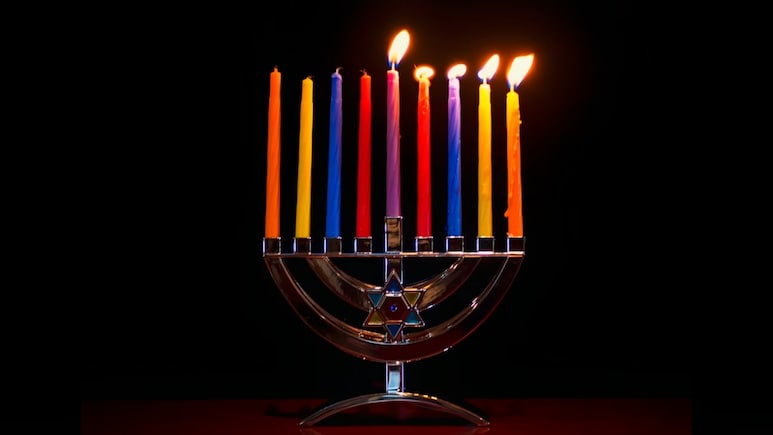
- Hanukkah 2025 begins at sundown on December 14 and ends at nightfall on December 22
- The holiday commemorates the Maccabees reclaiming the Second Temple and the oil miracle
- Jewish families light a nine-branched menorah each night, using the shamash candle
Hanukkah 2025: Hanukkah, also known as the 'Festival of Lights', is one of the most widely celebrated Jewish holidays across the world. In 2025, the eight-day Jewish holiday begins at sundown on Sunday, December 14, 2025 and ends with nightfall on Monday, December 22.
Though rooted in ancient history, Hanukkah has evolved into a joyful celebration of Jewish identity, resilience, and faith. In modern times, it also symbolises religious freedom and the triumph of light over darkness. In multicultural societies like the US, Hanukkah often gains prominence during the winter holiday season, giving Jewish families a chance to celebrate their heritage alongside others.
Origins and History
The story of Hanukkah dates back to the 2nd century BCE, during a time when the Jewish people were under the rule of the Seleucid Empire, a Hellenistic state. King Antiochus IV attempted to impose Greek culture and religion upon the Jews, even desecrating the Second Temple in Jerusalem. A small group of Jewish rebels known as the Maccabees, led by Judah Maccabee, rose up and successfully reclaimed the temple.
Upon reentering the temple, the Maccabees found only a small amount of purified oil - enough to keep the temple's menorah (sacred lamp) burning for one day. Miraculously, the oil lasted eight full days, giving them enough time to prepare more oil. This event is the foundation of the Hanukkah celebration.
Traditions and Customs
Lighting the Menorah: Each night of Hanukkah, Jewish families light the menorah, a nine-branched candelabrum. One branch, the shamash (helper candle), is used to light the other eight candles, one for each night of the holiday. Blessings are recited, and the menorah is usually displayed in a window to share the miracle with the world.
Dreidel Game: Children often play with a spinning top called a dreidel, which has four Hebrew letters: Nun, Gimel, Hei, and Shin. These letters stand for the phrase "Nes Gadol Haya Sham", meaning "A great miracle happened there." In Israel, the last letter is Pey, changing the meaning to "A great miracle happened here."
Traditional Foods: Hanukkah food is closely tied to the theme of oil. Popular dishes include latkes (crispy potato pancakes) and sufganiyot (jelly-filled doughnuts), both fried in oil. Dairy foods are also sometimes eaten in honour of the biblical heroine Judith, who played a role in Jewish resistance.
Gifts and Gelt: It has become customary, especially in the West, to give gifts during Hanukkah, often one per night. Hanukkah gelt (chocolate coins) is given to children, who may also receive small amounts of money.
Track Latest News Live on NDTV.com and get news updates from India and around the world

