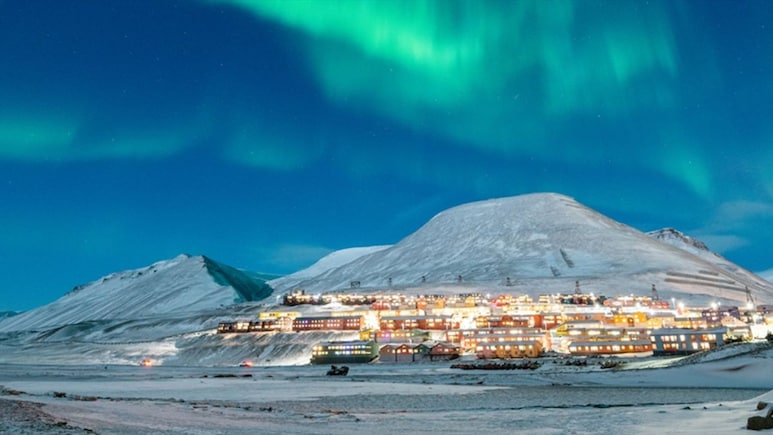
Have you heard of a place where births and burials are forbidden? Well! That's the rule in the last village of the world, Svalbard. Surrounded by snow-capped mountains, the village is located in the middle of the Arctic Ocean, around 930 km north of mainland Norway and only 650 km from the North Pole.
Due to its location, the village experiences the midnight sun 24/7 in the bright half of the year, and in the other half, it remains engulfed in darkness. But flickering Northern Lights keep adding a mesmerising touch to almost a pitch-dark sky.
Why Births And Burials Are Not Encouraged In Svalbard?
The place is inhabited by 2,400 residents, according to a May 2020 BBC report. However, these people can neither give birth nor die in the village.
The lowest temperature recorded in this place was -43°C in March 1986, and the highest temperature recorded was 21.7°C in July 2020. Svalbard usually experiences harsh weather conditions. Due to extreme cold, bodies cannot decompose; hence, people who are critically ill or even bedridden are required to leave the island and fly to mainland Norway.
Not just that, but Radhika Nomllers, a travel blogger, shared that there are no retirement homes in Svalbard. In fact, when residents can no longer work or live off their salaries, they must relocate. "It is built for the young, the working, and the resilient, not for retirement," read her caption.
When it comes to healthcare, the world's last village has limited medical facilities. Health professionals can only consult for basic health concerns. In case of pregnancy, complications can arise anytime during the delivery, which the facilities cannot handle. Therefore, expecting mothers often fly to Oslo or Tromso in Norway to give birth.
But if you can look beyond this rule, it is believed to be one of the safest places on Earth. Crimes are rare here, so much so, people hardly lock their doors and even leave their bikes outside.
Anyone Can Live And Work In Svalbard Without A Visa, But There Is A Catch
According to the Nordic Co-operation, Svalbard, despite geographically being a part of Europe, is not a part of the Schengen co-operation, and travellers, therefore, need neither a visa nor a work or residency permit to stay there. As long as you can prove your identity with a passport while flying or sailing in and out of the village, you can enter its premises.
The Norwegian Immigration Act does not apply to the northernmost settlement in the world because it has a special status in international law through the Svalbard Treaty of 1920. As long as you can support yourself and find work here, you will be welcomed with open arms and icy winds (depending on the weather).
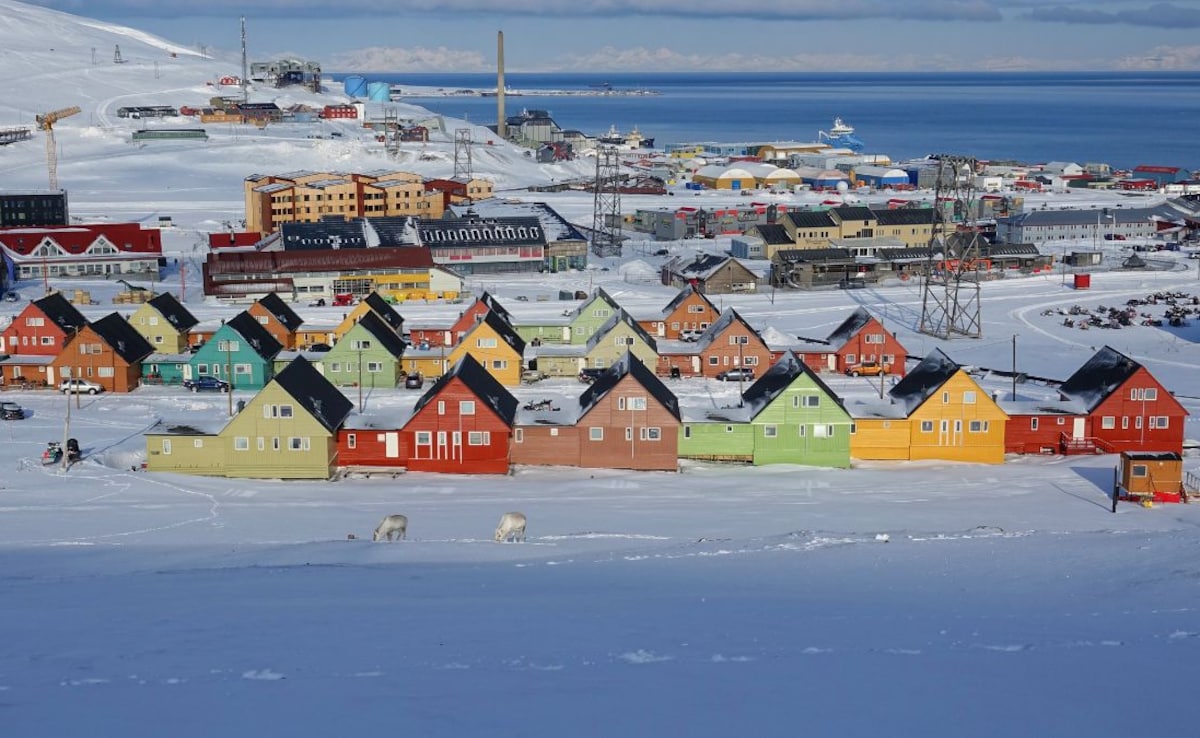
Svalbard is not a part of the Schengen co-operation, and travellers, therefore, need neither a visa nor a work or residency permit to stay there. Photo: Wikipedia
Sounds too good to be true, right? Well! There is a hook. There are no direct flights to Svalbard from anywhere, except for Oslo or Tromso in Norway. Hence, before you could fly to the world's last village, you had to make a stop in Norway, for which non-EU (European Union), EEA (European Economic Area), or Schengen citizens need a Schengen visa.
According to the Utlendingsdirektoratet Norwegian Directorate of Immigration, there are a few countries outside the EU/EEA groups, which do not require a visa to visit Norway because they have a visa-exemption agreement with the country. The list includes Japan, Korea, Mexico, the United Kingdom, Australia, Argentina, and more.
But India is not on that list. Hence, Indians need a Schengen visa to visit Svalbard. And since you need a visa, it must be valid for the round trip. You must have a valid permit for two entries in your visa, making it legal and hassle-free for you to return to the Schengen area (mainland of Norway) post spending time in Svalbard.
According to the official website of the Governor of Svalbard, foreign nationals staying and working in the village can submit applications for visas to the Schengen areas and Norway to the Governor, who also accepts applications for residence and citizenship.
Svalbard's Seed Vault For The End Of The World
Now that you know how to reach the world's last village, you should also know about Svalbard's Global Seed Vault that safeguards duplicates of 13,01,397 seed samples, according to the Crop Trust, a non-profit international organisation.
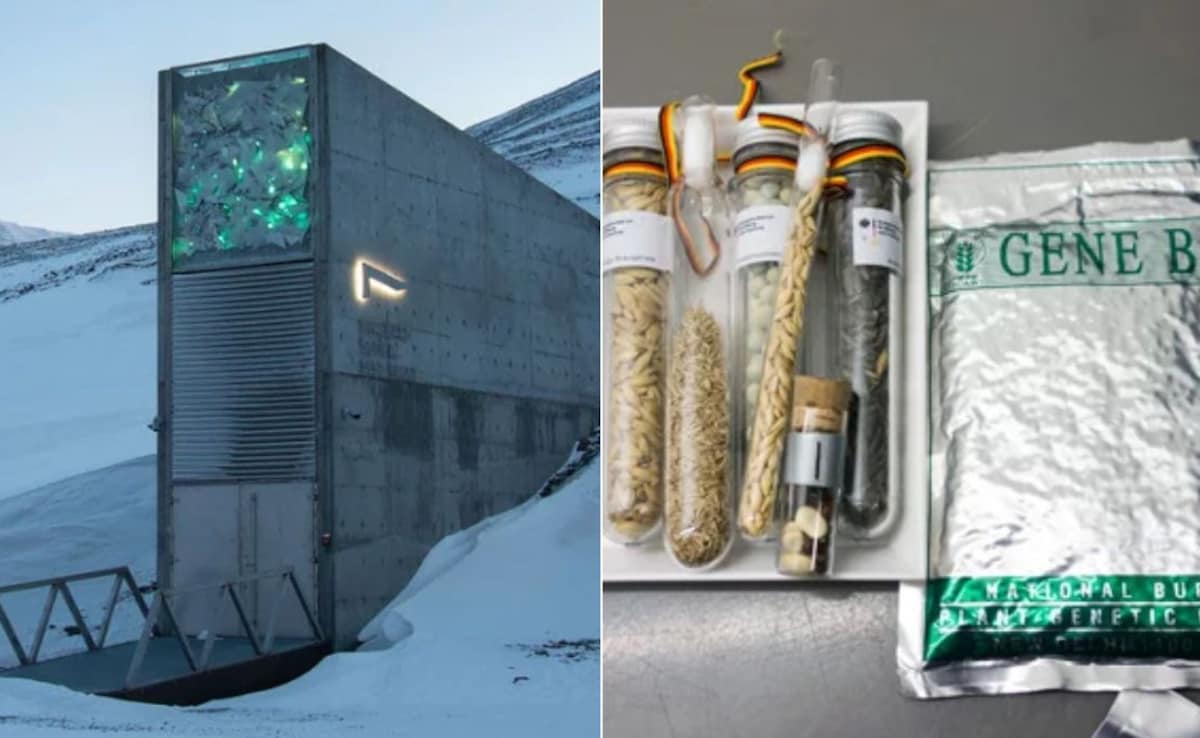
Svalbard's Global Seed Vault safeguards duplicates of 13,01,397 seed samples. Photo: Crop Trust
This is done to safeguard the years' worth of research against catastrophic loss or doomsday (end of the world scenario). The seeds are stored at -18°C in sealed custom-made three-ply foil packages.
"The Seed Vault is the ultimate insurance policy for the world's food supply, securing millions of seeds representing every important crop variety available across the globe today and offering options for future generations to overcome the challenges of climate change and population growth," read an excerpt on the official website.
Despite the harsh weather conditions, it is one of the most serene places on the planet that adventure enthusiasts can visit.
Also Read | Why This Island Country Asks Tourists To Sign A Passport Pledge On Arrival
Track Latest News Live on NDTV.com and get news updates from India and around the world
