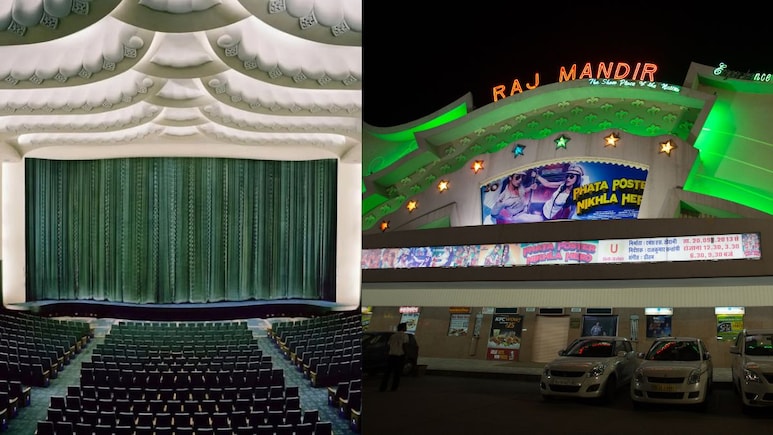
Fifty years ago, on June 1, 1976, Jaipur opened its doors to a cinema hall unlike any other in India.
With its sweeping Art Deco curves, grand chandeliers, carpeted interiors and gemstone-inspired seating sections, Raj Mandir was designed not merely as a place to watch films but as an experience in itself.
Half a century later, the iconic single-screen theatre remains one of Jaipur's most recognisable landmarks. Known as the "Pride of Asia" and affectionately called "Cinema Ka Mandir (temple)", it has survived the rise of television, multiplexes and streaming platforms, continuing to attract moviegoers and tourists alike.
As Raj Mandir marks its golden jubilee, let's have a look at how it turned going to the cinema into an event.
A Dream That Began In The 1960s
The origins of Raj Mandir can be traced back to the mid-1960s. The project was initially conceived by Mehtab Chand Golcha, the cinema entrepreneur behind the famous Golcha Cinema in Delhi and Maratha Mandir in Mumbai.
Golcha wanted to create a grand cinema in Jaipur that would rival the finest theatres in the country. The foundation for the project was laid during the 1960s, and architect WM Namjoshi, known for designing several celebrated cinema halls across India, was brought in to create the building.
However, the project faced difficulties and could not be completed as originally planned. In 1975, Jaipur jeweller Rajmal Surana acquired the unfinished property and took charge of turning the ambitious vision into reality.
The theatre eventually opened on June 1, 1976, inaugurated by Rajasthan Chief Minister Hari Dev Joshi. The first film screened was Charas, starring Dharmendra and Hema Malini.
Luxury Entered The Indian Cinema Hall
Today, features such as air-conditioning, carpeting and elegant lobbies are taken for granted in theatres. In the 1970s, however, they were far from common.
Kushal Chand Surana, the eldest son of Rajmal Surana, told TOI that the family wanted Raj Mandir to offer something completely different from the average cinema-going experience.
At a time when many theatres still relied on wooden seats and ceiling fans, Raj Mandir introduced wall-to-wall carpeting, air-conditioning, automatic curtains, fragrance-filled interiors and reception halls where visitors could wait comfortably before entering the auditorium.
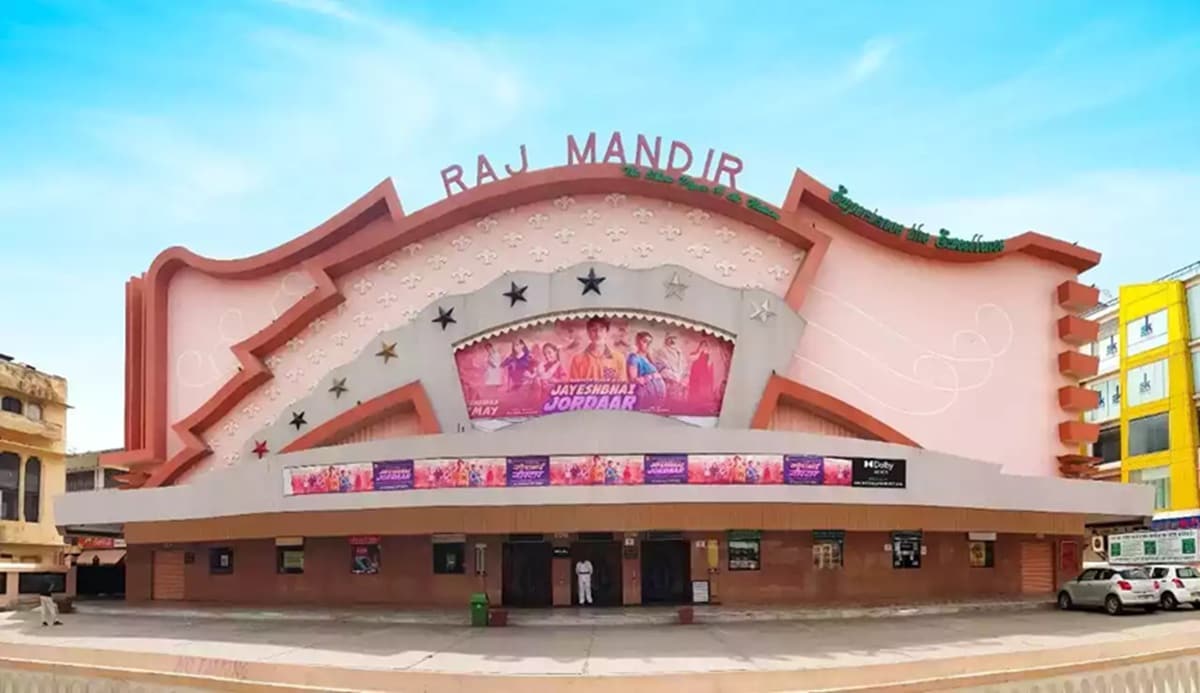
The theatre eventually opened on June 1, 1976, inaugurated by Rajasthan Chief Minister Hari Dev Joshi.
The theatre also became known for its attention to cleanliness. Washrooms were maintained to a high standard and even provided towels, a rarity for cinema halls of that era.
The Surana family, known for its jewellery business, brought its own influence into the design. Precious gemstones were incorporated into parts of the décor, while the seating sections were named after jewels such as Pearl, Ruby, Emerald and Diamond rather than the conventional balcony and upper-circle categories.
Nine stars placed on the exterior symbolised the nine precious gemstones of the Navratna tradition, reflecting the family's jewellery heritage.
A Theatre Designed Like A Palace
One of the biggest reasons for Raj Mandir's enduring fame is its architecture.
Designed in the Art Moderne style, the building combines classic Art Deco influences with elements inspired by Rajasthan's royal palaces. The theatre's most striking feature is its famous meringue-shaped ceiling, with flowing curves and soft contours that create a dreamlike atmosphere.
Inside, visitors are greeted by sweeping staircases, elaborate lighting fixtures, decorative mirrors, velvet drapes and jewel-toned interiors. Chandeliers hang from ornate ceilings while geometric Art Deco patterns blend seamlessly with Rajasthani motifs.
The result? A royal entertainment venue.
Located near Jaipur's MI Road and Albert Hall Museum, the theatre quickly became one of the city's architectural landmarks.
Winning Over Audiences Despite Early Losses
For all its grandeur, Raj Mandir was not an immediate financial success.
Many people questioned the decision to spend heavily on carpets and luxury interiors. There were concerns that audiences would damage the expensive fittings by smoking indoors or spitting on the carpets.
But Rajmal Surana remained committed to his vision.
The family believed that if visitors were offered a refined environment, they would respond with discipline and respect. Over time, that faith paid off.
As word spread about the unique viewing experience, Raj Mandir began drawing crowds from across Rajasthan and beyond.
The long awaited entertainment is finally here. Audience enjoying a film on big screen at Raj Mandir #Jaipur with all precautions. pic.twitter.com/865jJllqjP
— RAJ BANSAL (@rajbansal9) February 8, 2021
The theatre's reputation grew further when legendary filmmaker and actor Raj Kapoor visited and recorded his thoughts in the visitors' book.
"I wish other cinema exhibitors of India should learn from Raj Mandir how to exhibit a film," he wrote.
The Films That Turned Raj Mandir Into A Legend
A cinema hall is ultimately remembered for the films it screens, and Raj Mandir enjoyed a remarkable run during the golden age of Hindi cinema.
Trade circles credit distributor OP Bansal with helping bring some of the biggest Bollywood releases to Jaipur's most prestigious theatre.
Over the years, Raj Mandir screened major hits such as Deewar, Don, Naseeb, Sharaabi, Avtaar, Maine Pyar Kiya, Beta and Hum Aapke Hain Koun..!.
Among its biggest success stories was Ram Teri Ganga Maili, which ran for an extraordinary 74 weeks at the theatre.
During the 1970s and 1980s, when films regularly celebrated silver jubilees after completing 25 weeks in theatres, Raj Mandir became one of the most coveted venues in the country.
According to the Surana family, even though the theatre charged significantly higher rental rates than many competitors, producers and distributors were eager to have their films screened there.
Filmmakers such as Subhash Ghai, Yash Chopra and Yash Johar were among those whose films found a home at Raj Mandir.
Surviving The Multiplex Era
The arrival of multiplexes in the late 1990s and early 2000s proved fatal for many single-screen theatres across India. Numerous cinema halls that once dominated city skylines either shut down or were converted into commercial properties.
Raj Mandir, however, managed to endure.
Part of the reason lies in its status as a destination rather than merely a theatre. Visitors often include it on their Jaipur itineraries alongside historic attractions, and tourists frequently step inside simply to admire its architecture.
The theatre has also kept pace with changing technology. Today it features modern projection systems, Dolby Atmos sound and updated facilities while retaining the ambience that made it famous decades ago.
Its seating capacity of around 1,300 people continues to make it one of the largest and most celebrated single-screen cinemas in the country.
The Show Must Go On
The theatre is now overseen by the third generation of the Surana family, who say they remain committed to preserving the traditions established by their predecessors.
The carpets, chandeliers, décor and emphasis on cleanliness continue to be central to the Raj Mandir experience.
For many Jaipur residents, visiting the theatre remains a nostalgic ritual, while for younger audiences it offers a glimpse into an era when cinema halls were built to inspire awe.
Track Latest News Live on NDTV.com and get news updates from India and around the world
