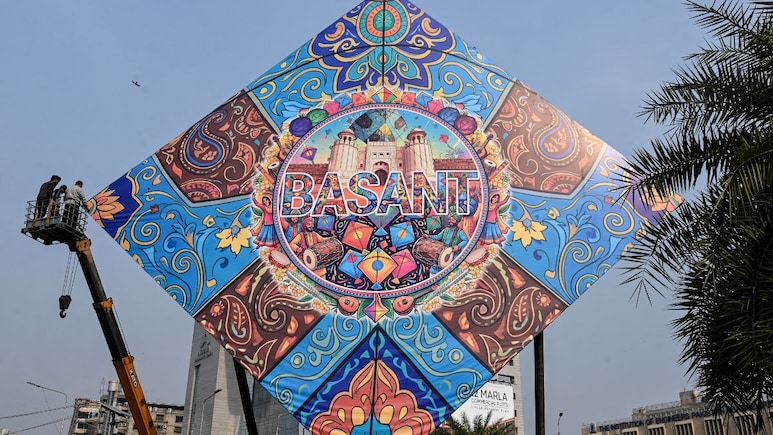
- Punjab government lifted the Basant kite festival ban after nearly 18 years in Lahore
- Basant will be celebrated from February 6 to 8 under strict safety regulations
- Only cotton kite strings allowed; metallic and glass-coated strings remain banned
After nearly 18 years, the Punjab government has lifted the ban on Basant, allowing the kite festival to return to Lahore this week. The decision brings back one of the city's most prominent cultural events, long suspended due to safety concerns, under strict regulations.
Details
Basant will be celebrated in Lahore from February 6 to 8, with strict safety measures in place, after the Punjab government ended the festival's long-running ban, Dawn reported.
Only cotton kite strings are permitted, while metallic and glass-coated threaremainns banned. Oversized kites are prohibited, and manufacturers must register through district authorities and the provincial e-Biz portal.
A report by Gulf News shared further details about the festival.
Excitement has swept through parts of central Lahore, with prime rooftops being rented for Rs 2.1 million to Rs 5.5 million for the three-day celebration. Areas such as Mochi Gate and Rang Mahal are among the most sought-after locations, according to The Express Tribune. Authorities have approved only large and structurally sound rooftops to prevent accidents.
The Gulf News report also noted that many rooftops have been brightly decorated with lights, colourful displays, food arrangements and searchlights to allow kite flying after sunset. Historic neighbourhoods are once again lively, with busy markets, yellow-painted walls, and homes transformed into festive spaces.
Families are using the occasion to reconnect, inviting relatives and friends after many years. Older residents are teaching children how to fly kites, with many youngsters experiencing Basant for the first time, having grown up during the ban.
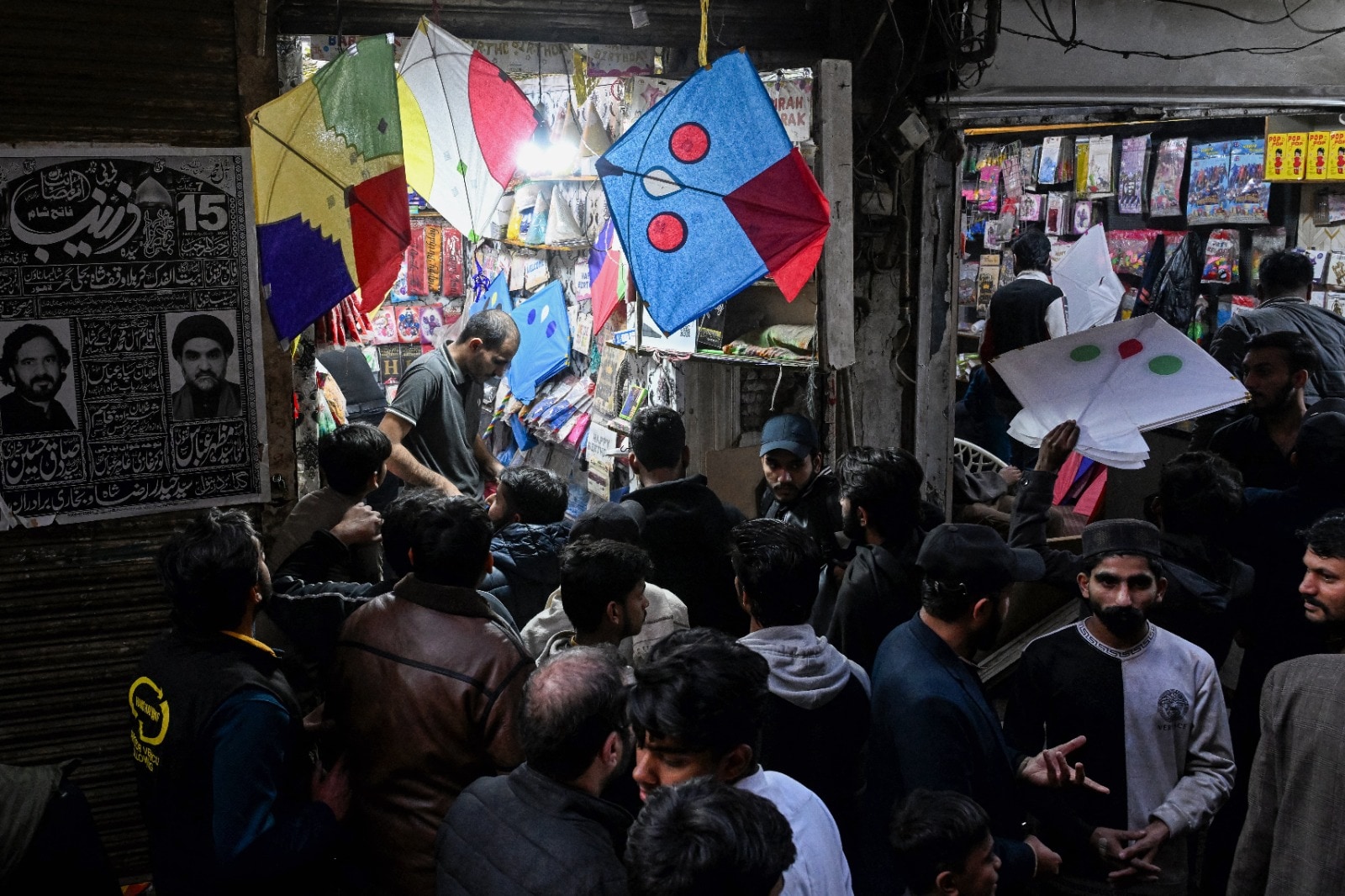
Excitement has swept through parts of central Lahore, with prime rooftops being rented for Rs 2.1 million to Rs 5.5 million for the three-day celebration.
Photo Credit: AFP
Livelihoods Take Flight Again
The report said the festival's return has brought relief to traditional kite makers, whose businesses had nearly disappeared during the long hiatus. Small food sellers across inner Lahore are also benefiting, staying open late to sell sweetssnacks,ks and cold drinks. Many households are preparing elaborate meals - including barbecue, malai boti and traditional sweets such as ladoos and gajrela - treating the three days like a major celebration.
For kite makers, the moment carries deep personal meaning. The ban almost erased an entire craft community - artisans whose bamboo frames, handmade paper, and intricate designs once symbolised Lahore's creativity. With Basant's return, their workshops are busy again.
Food vendors, sweet makers, and late-night snack sellers are also seeing renewed business, as the festival breathes life back into long-dormant local economies.
Despite sharply rising prices with high-quality kite string selling for up to Rs15,000 - enthusiasm remains strong.
Officials insist that safety remains the top priority. Unsafe rooftops have been barred, loud music and fireworks are prohibited, and kite flying is restricted near sensitive locations, including airports, as mentioned in the report. Police have been instructed to take action against violations, while in some neighbourhoods, residents have organised volunteer groups to help monitor rooftop safety.
Why It Took 18 Years
Basant's long absence was rooted in tragedy. In the early 2000s, the festival's popularity surged, transforming Lahore into a tourist magnet and a bustling economic hub. Alongside the celebrations, however, came a dangerous competition involving sharper strings and aggressive kite cutting.
The festival became linked to tragic incidents as metal-coated strings and unsafe kite-flying practices caused injuries, damageproperty,ty and, in some cases, led to deaths. The loss of life cast such a deep shadow that an outright ban became unavoidable. In 2007, the government formally banned Basant following a rise in deaths and serious injuries.
What followed was a cultural freeze. An entire generation in Lahore grew up without experiencing Basant firsthand - without the rooftop battles, the cries of "Bo kata!", or the city awash in yellow.
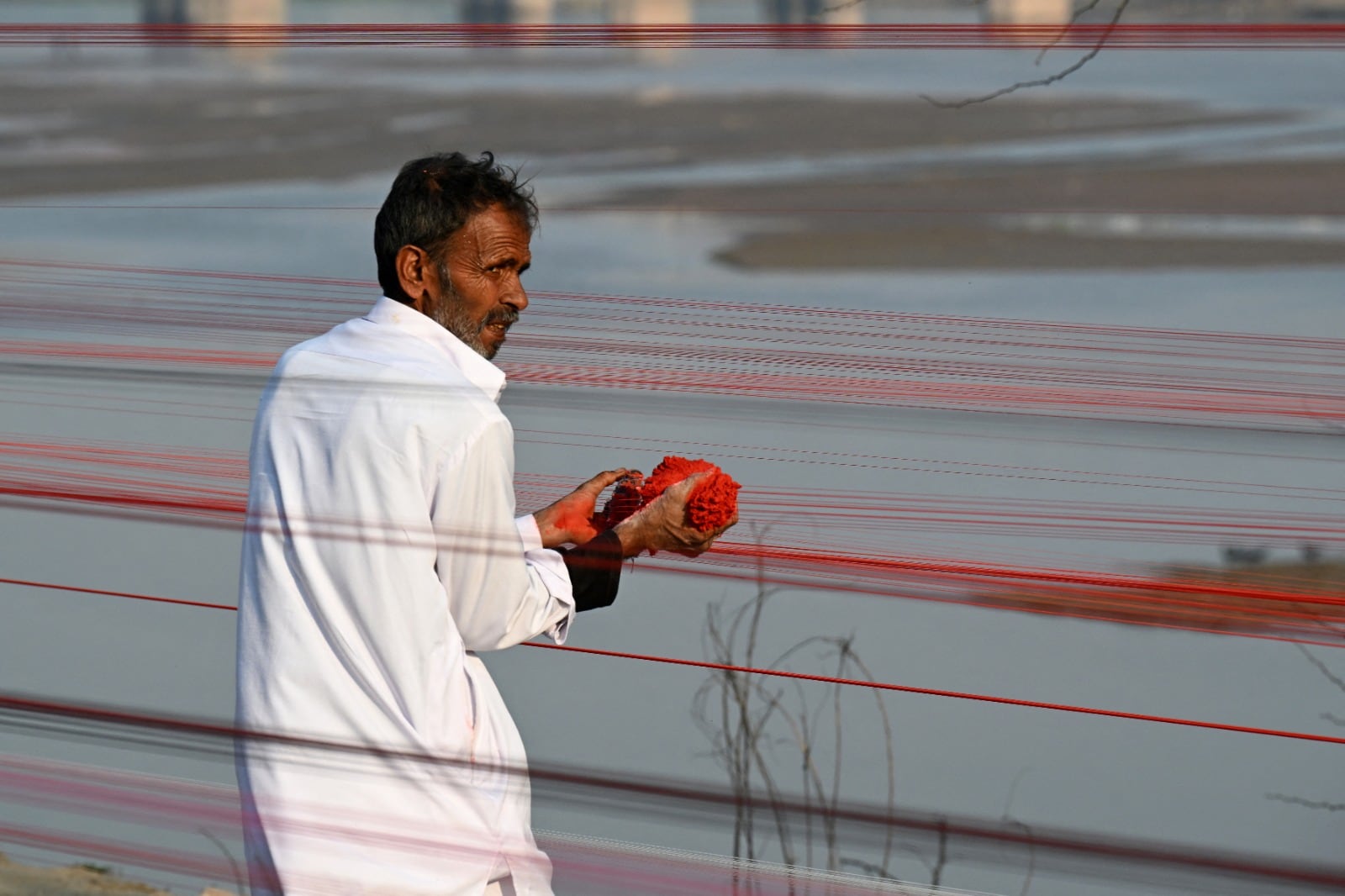
Kite makers, food vendors, sweet sellers and late-night snack vendors are seeing a revival in business.
Photo Credit: AFP
History
Basant's roots stretch far beyond modern borders. The festival descends from Vasant Panchami, an ancient spring celebration observed across the Indian subcontinent. Historically linked to Indian Punjab and northern India, it marked the arrival of spring, when mustard fields bloomed gold and learningmusic,ic and renewal were celebrated. Goddess Saraswati, associated with wisdom and the arts, was central to early observances.
In Lahore, however, Basant gradually evolved its own identity - less ritualistic, morexuberant,nt and unmistakably Punjabi. By the Mughal era, it had become a grand urban spectacle. Courts were decorated in saffron hues, kites soared above Lahore Fort, and poets such as Amir Khusrau celebrated Basant as a season of love and spiritual intoxication. Long before modern ideas of cultural pluralism, the festival brought the city together in a shared celebration.
How Basant Panchami Is Celebrated in India
Basant Panchami marks the beginning of the spring season in India and is observed across different regions with local traditions. The festival falls on the fifth day of the Hindu month of Magha, according to the Hindu calendar.
In eastern India, particularly in West Bengal and Bihar, the day is mainly celebrated as Saraswati Puja, with people offering prayers to the goddess associated with learning, music, and the arts. Educational institutions, homes, and cultural centres organise ceremonies, especially for students.
In northern India, especially in Punjab, Basant Panchami is popularly marked by kite flying, symbolising the arrival of spring. In Rajasthan, people traditionally wear jasmine garlands as part of the celebrations.
According to Hindu belief, the day is linked to the arrival of spring and renewal. Hindu mythology associates the festival with creation, with traditions stating that Lord Brahma created the universe on this day. In regions where Saraswati Puja is observed, the occasion is also linked to the belief that Goddess Saraswati was born on Basant Panchami.
Also Read: Dhurandhar Made Cheel Chowk In Pakistan's Karachi Famous. But That's Not An Eagle
Track Latest News Live on NDTV.com and get news updates from India and around the world
