He arrives in a black SUV, speaks in carefully rounded sentences, and believes the world's biggest problems can be solved over closed-door panels and oat-milk cappuccinos.
For decades now, "Davos Man" has been shorthand for a certain kind of global elite: powerful, polished, and permanently airborne. The phrase is often thrown around with a roll of the eyes, but it didn't emerge from satire alone.
To understand The Davos Man, you first have to understand Davos.
Davos 2026
The World Economic Forum's 2026 Annual Meeting is currently taking place this year in its usual alpine home, bringing together heads of state, central bankers, tech CEOs, billionaires, activists, academics, and the occasional celebrity and influencers.
Despite years of criticism, protests, and think pieces predicting its irrelevance, Davos remains one of the few places where political power, corporate money, and global ambition still sit in the same room.
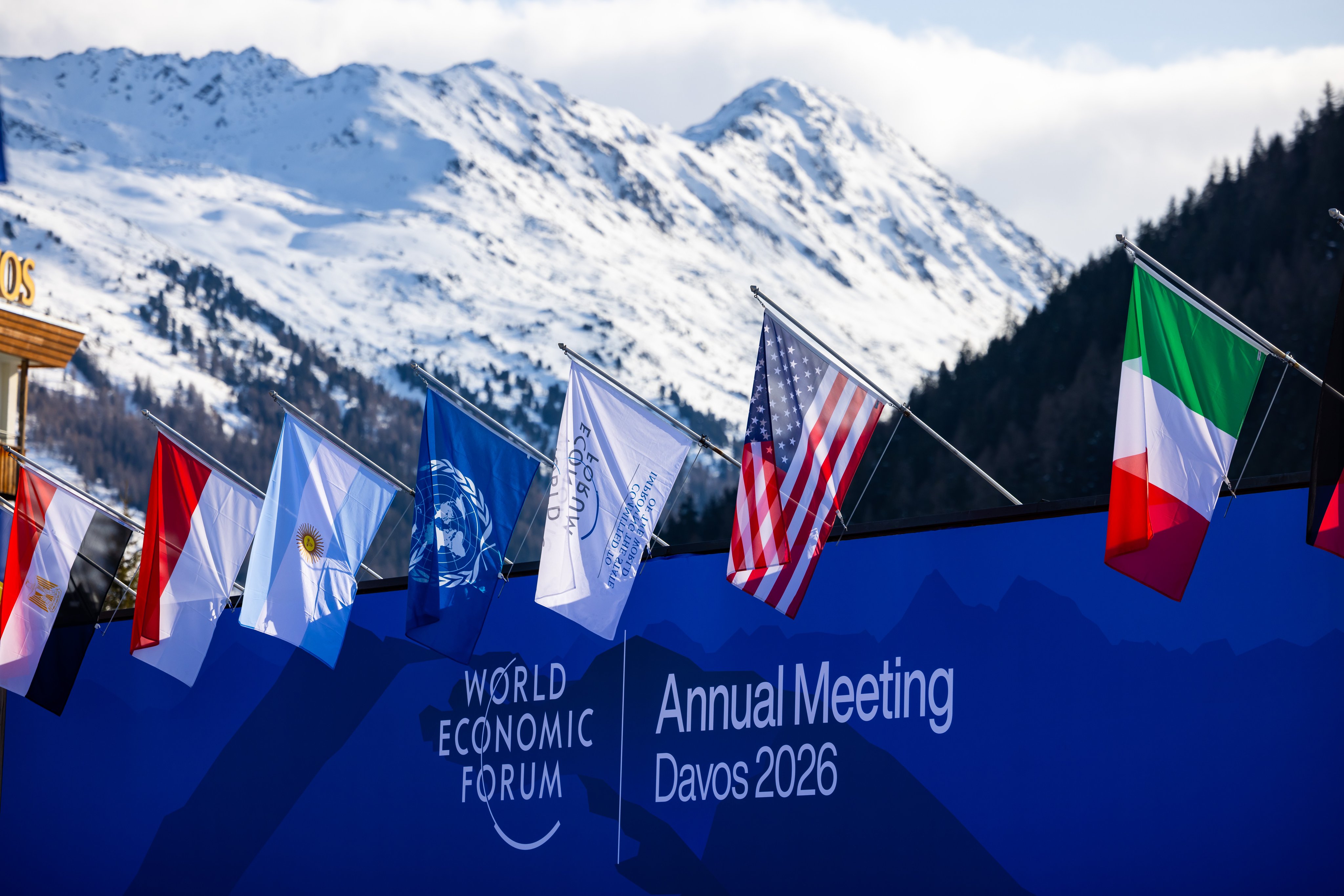
The World Economic Forum's 2026 Annual Meeting is currently taking place. Photo: X
This year too, it drew nearly 3,000 leaders from 400 top political figures, and around 850 CEOs. India too sent its largest-ever delegation to the World Economic Forum (WEF) Annual Meeting 2026, featuring over 100 CEOs, several Union ministers, chief ministers from multiple states, and other officials.
From A Management Seminar To A Global 'Power Hub'
The World Economic Forum began modestly. Founded in 1971 by Klaus Schwab, a German engineer and professor at the University of Geneva, it started as a European-focused management symposium.
Around 450 business leaders attended the first meeting at the Davos Congress Centre, many of them curious about western-style management techniques during a period of post-war economic uncertainty.
According to historical accounts of the Forum's early years, including material published by encyclopaedic and academic sources, the initial aim was pragmatic rather than philosophical: help European companies compete in a rapidly changing global economy.
Over time, however, the guest list expanded. Politicians joined CEOs. NGOs followed governments. Media arrived soon after. By the late 1990s and early 2000s, Davos had transformed into a symbol of globalisation itself, and with that transformation came a label that would not always flatter its attendees.
Great to finally welcome @elonmusk to #Davos.
— Børge Brende (@borgebrende) January 22, 2026
His conversation with Larry Fink on AI, robotics and the future of technology reflected both ambition and optimism about what lies ahead.
Innovation is moving fast, and with the right leadership and collaboration, it can be a… pic.twitter.com/ShS3IH2GGv
What Davos has increasingly become is not just a policy forum, but a high-stakes networking arena where visibility itself is currency. Alongside heads of state and central bankers, influencers, actors, athletes, and digital creators now form a visible layer of the Davos ecosystem.
The World Economic Forum has actively leaned into this shift. In recent years, social media creators with millions of followers, Hollywood and Bollywood actors attached to climate or humanitarian causes, and high-profile activists have been invited to participate in panels and closed sessions.
Why Davos, Of All Places?
Davos is not Geneva, Zurich, or any other obvious power hub. It is a remote ski town in the Swiss Alps, beautiful, expensive, and deliberately inconvenient.
When Klaus Schwab founded what would become the World Economic Forum in 1971, then known as the European Management Forum, he chose Davos precisely because of its isolation. The original idea was not spectacle but focus.
As historians and Forum material often note, the town offered privacy, minimal distraction, and a sense of retreat from everyday politics.
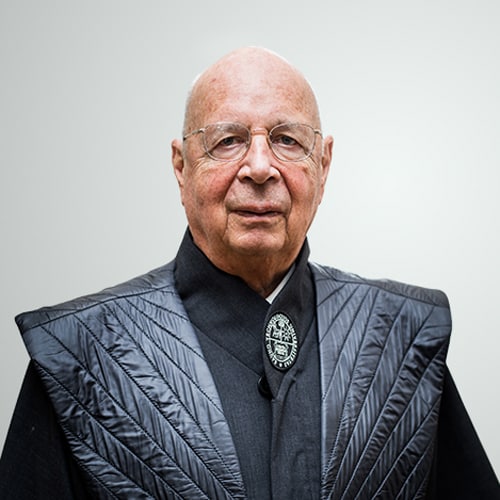
Klaus Martin Schwab was born on March 30, 1938 in Ravensburg, Germany. Photo: X
There is also a cultural layer to the choice. Davos famously appears in Thomas Mann's book The Magic Mountain, a novel about European intellectuals debating civilisation and decay in a secluded sanatorium above the world.
That symbolism was not lost on early organisers. The mountains created distance, both physical and psychological, from national capitals and domestic pressures.
As the Forum itself has previously framed it, Davos offered an "escape from the everyday", a neutral ground where borders felt softer and conversations could stretch beyond election cycles.
The Birth Of "Davos Man"
The term "Davos Man" was coined by political scientist Samuel P Huntington in 2004. Writing about globalisation and elite culture, Huntington described Davos Man as part of a transnational "global superclass" that viewed national borders as outdated and national loyalty as optional.
In his formulation, Davos Man belonged everywhere and nowhere at once. He spoke the language of global markets, moved easily between continents, and saw nation-states less as communities and more as regulatory obstacles.
CNBC later summarised the idea neatly, describing Davos Man as "affluent, influential, and more loyal to global networks than to any single country".
It was clearly, not a compliment. The phrase quickly became a critique of elite detachment, suggesting that those shaping global decisions were increasingly removed from the consequences faced by ordinary citizens.
What Defines A Davos Man?
At his core, Davos Man is not defined by wealth alone, though wealth certainly helps. He is defined by access.
He sits on multinational boards, attends invite-only forums, and speaks in terms of "stakeholders" rather than voters. He believes in interconnected economies, cross-border cooperation, and the moral superiority of global consensus. National governments, in this worldview, are often slow, emotional, and unsuited to managing planetary-scale problems.
As various media reports have noted over the years, the Davos Man mindset often assumes that technocratic solutions, driven by capital and expertise, are preferable to messy democratic processes. That assumption is precisely what has made the term controversial.
The Backlash
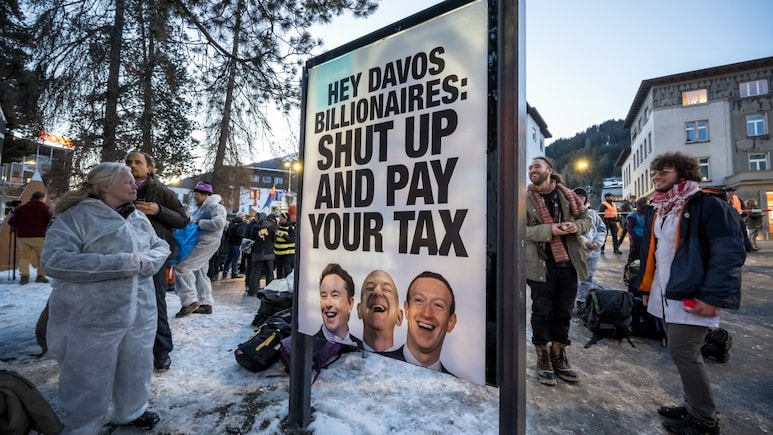
By the early 2000s, Davos had become a lightning rod. Protesters gathered outside its barricades each year, accusing the Forum of being a talking shop for the rich. The World Social Forum was launched in 2001 specifically as a counterweight, positioning itself as the 'anti-Davos', focused on grassroots economic justice rather than elite consensus.
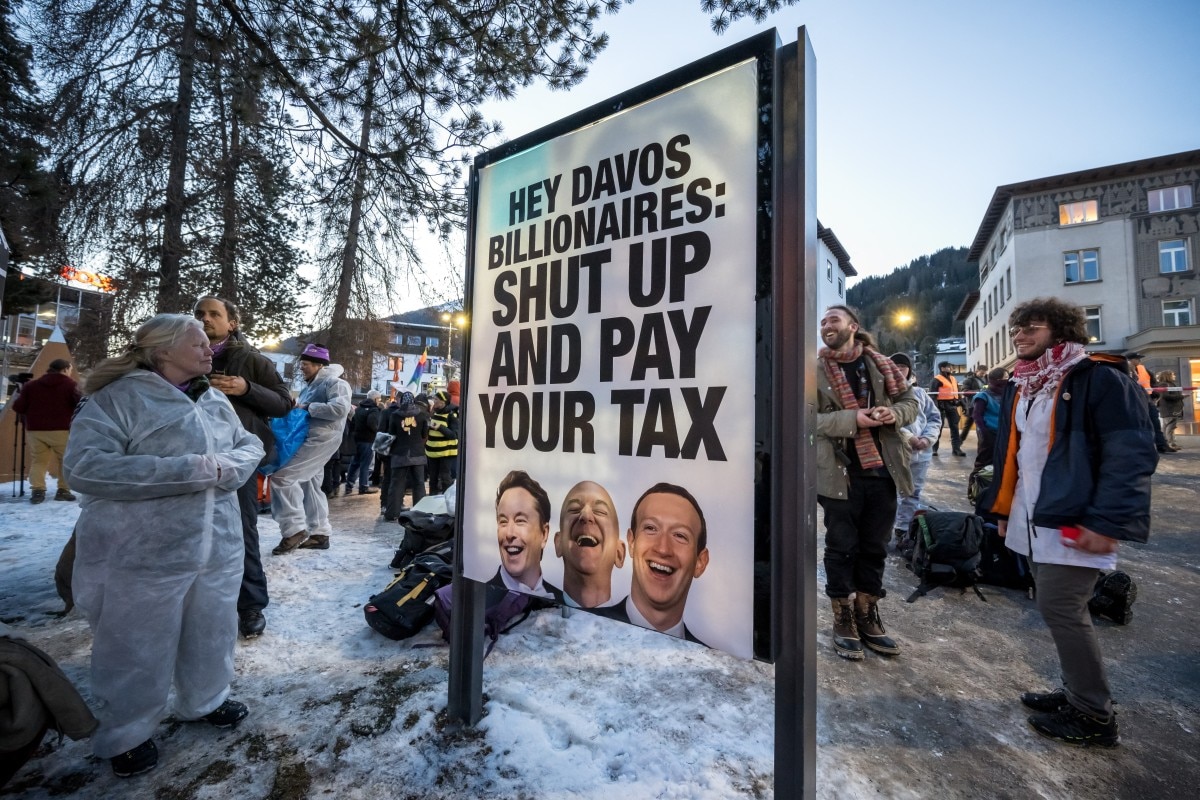
The 2026 Davos protest. Photo: AFP
The phrase "Davos Man" became shorthand for hypocrisy. Critics argued that the same executives who spoke passionately about inequality and sustainability benefited most from deregulation, tax cuts, and global supply chains that deepened those problems.
Peter S Goodman, author of Davos Man: How the Billionaires Devoured the World, has been particularly scathing. In an interview and excerpts published by The New York Times, Goodman says, "Davos men used to tell us that they were gathered here on the mountaintop, not just to do deals and make themselves richer, but to make the world better."
He added that the idea of the ultimate beneficiaries of the status quo fixing its flaws was "always a completely absurd proposition".
How Davos Itself Has Changed
Davos has not stood still. Goodman notes that the transformation is visible both physically and culturally. "There's like a Las Vegas Strip element to how things have developed," he observed, pointing to the way pop-up installations by tech giants, consultancies, and crypto firms have taken over the town.
Hotels have become negotiation hubs. Executives boast about never leaving their suites because "everyone else had to come to me". The tone, Goodman argues, has shifted decisively towards deal-making rather than moral grandstanding.
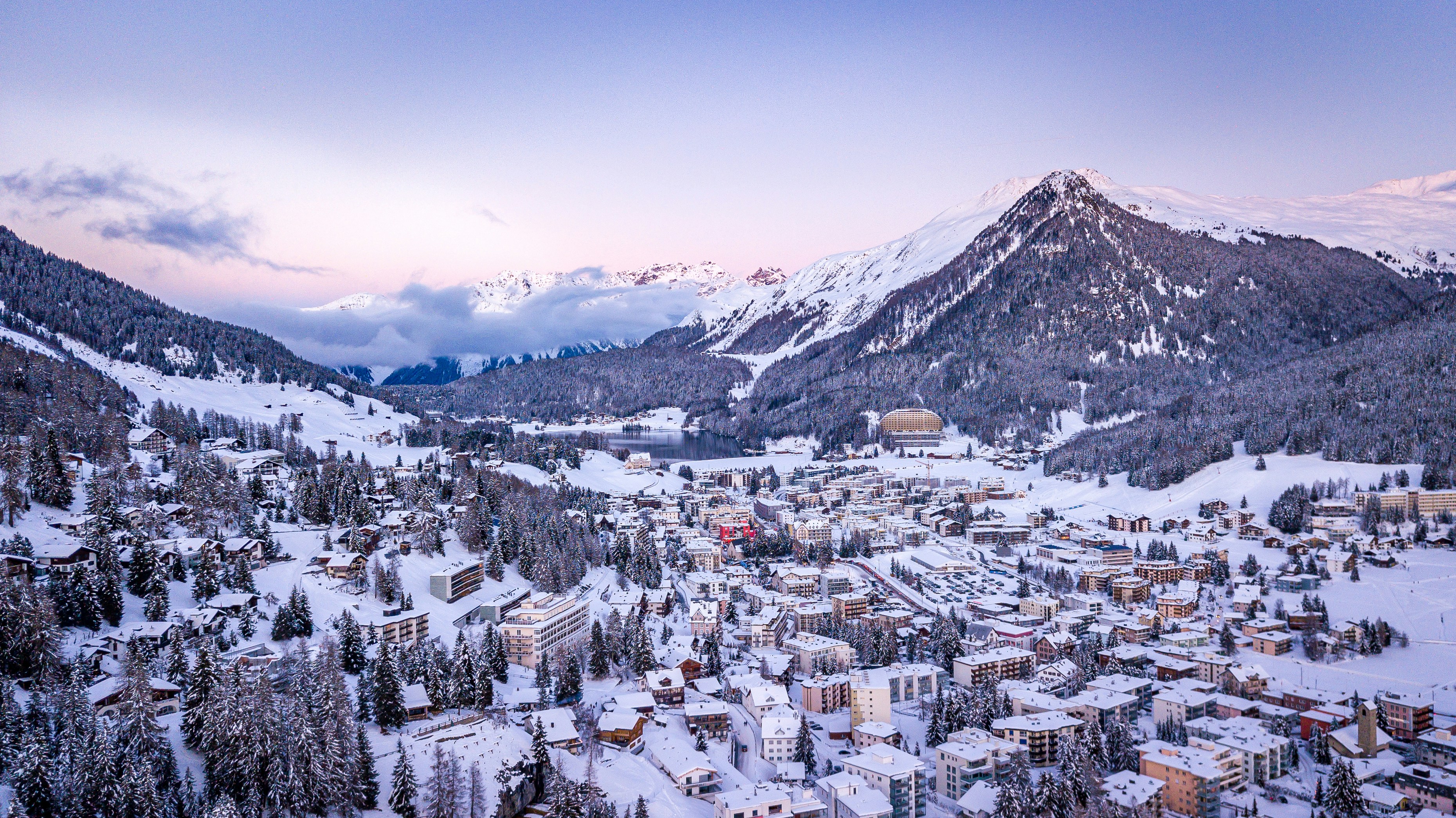
Davos has not stood still. Photo: Unsplash
He also suggests that the Forum's ethos has changed, particularly in recent years, with sustainability and social justice rhetoric dialled down to avoid political friction, especially during the Trump era. In his words, whatever virtue signalling remains is now "signalling to Trump".
Is Davos Man Also Evolving?
Not everyone agrees that Davos Man is frozen in time. Research published by the LSE Business Review by Shawn Pope and Patricia Bromley suggests the stereotype has softened.
Analysing years of WEF press releases, they found fewer references to endless growth and more emphasis on environmental limits, inclusion, and collaboration. Mentions of climate, pollution, and nature have increased significantly, while language around economic expansion has declined.
There is also now talk of "Davos Woman", with the Forum introducing gender quotas and actively promoting diversity in participation. According to the same analysis, the WEF increasingly frames itself not just as a place for dialogue, but as a launchpad for initiatives and partnerships.
Whether this represents genuine change or a smarter rebrand remains an open question for you to decide.
Who Is A Davos Woman
Davos Woman entered the Davos vocabulary as a deliberate attempt to soften and rebalance a space long dominated by Davos Man.
For decades, the World Economic Forum's corridors were overwhelmingly male (even now), reflecting the power structures of global business and politics.
Over the past few years, however, the Forum has pushed for greater female representation through participation targets and curated panels, ensuring women leaders, founders, economists, activists, and policymakers are no longer peripheral presences.
Yet Davos Woman is not simply the gendered flip side of Davos Man.
She operates within the same elite ecosystem, fluent in the language of global capital and international governance, but often framed as the face of inclusion, sustainability, and social impact. Her rise signals progress in representation, but it also highlights Davos's central contradiction: even as the Forum champions diversity, access to this world remains tightly controlled, expensive, and exclusive.
Contradiction Lies At The Heart Of Davos Man
Perhaps the most enduring feature of Davos Man is its contradiction. He speaks about inclusion at one of the most exclusive gatherings on earth. He calls for equality from inside a fortress of privilege. He champions global cooperation while flying home (in a private jet) to jurisdictions optimised for tax efficiency.
And yet, for all the criticism, Davos continues to matter because power still shows up. Deals are discussed. Signals are sent. Agendas are shaped.
The Davos Man of 2026 may looked different from his 2004 predecessor on paper, but the tension remains the same. Can a forum built on elite access genuinely improve the state of the world, or does it merely offer the appearance of concern?
As the mountains fills once again with black SUVs and earnest panel discussions, that question will hover in the cold Swiss air, unanswered, as it has been for over half a century.
Track Latest News Live on NDTV.com and get news updates from India and around the world
