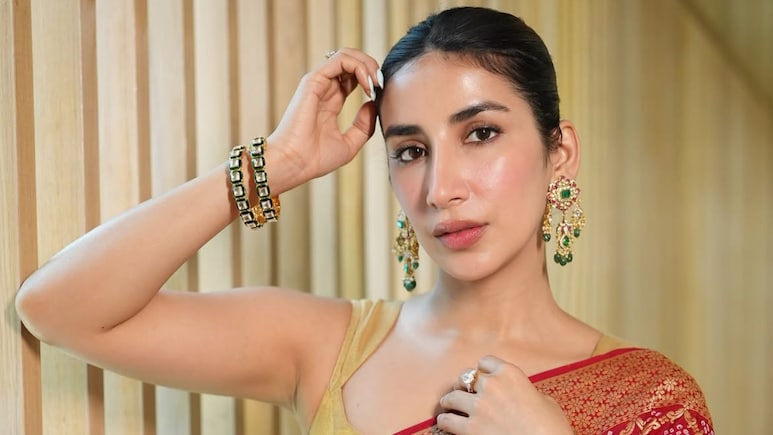
- Parul Gulati founded Nish Hair with an initial investment of Rs 5,000 in 2017
- She addressed stigma around hair extensions in India and made them accessible online
- Parul became the brand's face, creating daily content to build trust and grow sales
Actor, creator, and entrepreneur Parul Gulati has built one of India's most recognisable founder-led brands by solving a problem many people were once hesitant to discuss openly. The Nish Hair founder recently opened up about her entrepreneurial journey, sharing how a business that began with an investment of just Rs 5,000 grew into a company worth around Rs 50 crore.
Speaking during a chat hosted by Divya Jain, Parul shed light on the early days of Nish Hair, the challenges of introducing hair extensions to the Indian market, and how social media became her most powerful marketing tool.
The Idea Came From A Gap Nobody Was Addressing
Parul revealed that her desire to start a business was sparked while she was working as an actor and appearing in television commercials. During one shoot, she met a woman who was successfully managing a full-time job, modelling assignments, and her own business at the same time.
The encounter left a lasting impression on her.
From that day, she became determined to find a business idea of her own. What she eventually realised was that the opportunity had been in front of her all along.
At the time, hair extensions were rarely discussed in India. People suffering from hair thinning or hair loss often associated such products with wigs, and there was a strong social stigma attached to using them. Parul decided to change that.
Her goal was simple: make hair solutions accessible, affordable, and available online while helping remove the taboo around them.
"It all started with a lot of passion, a lot of ideas," she said, recalling how she launched the venture with just Rs 5,000. Looking back on the journey, she added, "How I got here, God has only witnessed."
When Nish Hair launched in 2017, the creator economy was still in its infancy. Influencer marketing was nowhere near as developed as it is today, and Parul could not afford celebrity endorsements for her young brand.
Instead, she became the face of the company herself.
Initially, the plan was temporary. She hoped that one day she would be able to hire major stars as brand ambassadors. Until then, she decided to record videos on her phone and post content regularly.
That decision later became one of the biggest reasons behind the brand's growth.
Parul recalled spending years creating content daily, experimenting with formats and speaking directly to potential customers online.
"I was posting so much from morning to night," she said.
She described herself as a strong believer in founder-led content, explaining that consumers often connect more deeply with the person behind a product than with a traditional advertisement.
Today, she jokes that she remains Nish Hair's marketing department.
"I am the marketing department," she said. "I don't give them a budget because I just make reels."
The First Product And The First Sale
Long before Nish Hair became a recognised brand, Parul was personally making and selling the products herself.
Her first hair extension was stitched with basic machinery and designed to add volume to thinning hair. Finding customers, however, required far more effort.
She often attended television commercial auditions where dozens of models would sit together in waiting rooms. There, she would deliberately remove her hair extension in front of people, sparking curiosity and conversation.
The strategy worked.
Soon, fellow actors and models started asking where the product came from and whether they could buy one.
Her first paying customer was an actress named Menka, who wanted a customised hairpiece. Although similar products could have been priced between Rs 10,000 and Rs 12,000, Parul agreed to sell it for Rs 5,000 because it would help recover her initial investment.
The process was not smooth. The first version was rejected, forcing her to redesign and improve it before finally making the sale.
"My first sale took a full month to convert," she said.
Looking back, she believes the experience taught her an important lesson about entrepreneurship.
"I think an idea is only good if it gets executed; otherwise, it's just a useless thought in your head."
Before social media became the company's primary growth engine, Parul spent weekends at flea markets introducing customers to a product many had never seen before.
She approached shoppers personally, encouraged them to try the extensions and focused on building trust rather than pushing sales.
One simple tactic proved surprisingly effective.
After customers tried on the products, she encouraged them to take photographs using their own phones. Many would later revisit those images and return to buy the hairpiece they had initially left behind.
The strategy helped drive conversions and gradually build awareness.
By the time she had completed around 12 flea market events across different cities, the business had begun showing significant potential.
She recalled earning Rs 1 lakh during one event in Ahmedabad, a moment that convinced her she was onto something much bigger.
The same customer interactions also inspired product expansion, leading Nish Hair to develop additional offerings such as hair toppers alongside clip-in extensions.
Why Virality Alone Doesn't Sell
Despite building a large social media presence, Parul believes many brands misunderstand the purpose of content.
According to her, viral content and successful sales content are not always the same thing.
"Virality is easy to get with any hook, but virality doesn't bring sales," she said.
Her most effective content strategy focused on helping potential customers understand the product within seconds.
One of her most successful hooks involved removing her hair extensions on camera, immediately capturing viewers' attention and demonstrating the transformation.
She remains a strong advocate of consistency, recommending that founders post content every day and visibly showcase what they are selling.
"Jo dikhta hai, woh bikta hai," she said, emphasising that customers cannot buy products they never see.
Taking Nish Hair To Cannes
As the brand grew, Parul looked for unconventional ways to market it.
One of the most talked-about examples came when she attended the Cannes Film Festival wearing a dress made from real human hair supplied by Nish Hair.
She said the idea came from her desire to represent her business on one of the world's biggest stages.
Although the original plan involved an elaborate gown, a shortage of material shortly before departure forced the design team to scale it down.
Still, the outfit generated widespread attention and aligned perfectly with her belief that every founder should champion their product wherever possible.
Lessons From Shark Tank And Entrepreneurship
Parul also reflected on her appearance on Shark Tank India, admitting that she entered the show believing investors would eagerly compete for her business.
However, despite her confidence in the product, she felt nervous because she lacked familiarity with business terminology and finance jargon.
Her actual pitch reportedly lasted nearly an hour, although viewers only saw a much shorter edited version on television.
Today, her advice to aspiring entrepreneurs remains straightforward: trust your instincts and execute quickly.
"The best way to kill any idea is to ask 10 people," she said.
For her, success did not begin with funding rounds or advertising budgets. It started with solving a real problem, believing in the product and being willing to put herself in front of the camera every day.
Also Read: Meet Kanika Tekriwal, A Cancer Survivor Who Built A Rs 420 Crore Empire From Just Rs 5,600 Investment
Track Latest News Live on NDTV.com and get news updates from India and around the world
