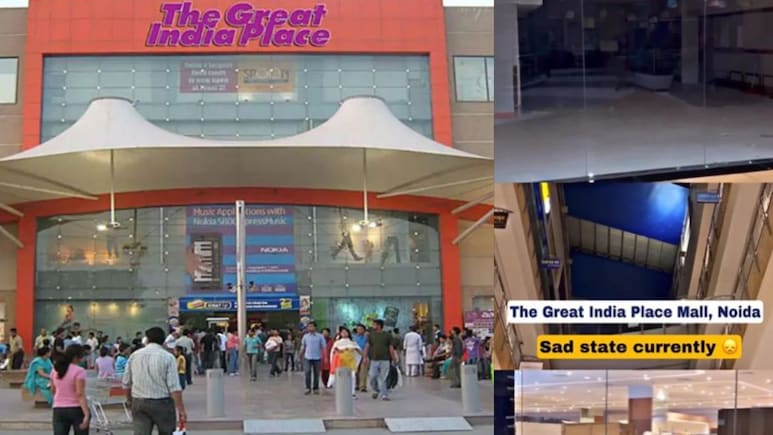
- The Great India Place mall in Noida opened in 2007 as a major retail and entertainment hub.
- Competition from newer malls like DLF Mall of India since 2017 caused a decline in GIP's footfalls.
- The mall faced financial stress with over Rs 1,000 crore debt by 2023 and sought potential buyers.
Once a shopper's paradise and a weekend ritual for NCR families, The Great India Place in Noida is back in the spotlight, but for very different reasons.
A clutch of recent Instagram videos show long silent corridors, shuttered storefronts and escalators carrying more dust than people.
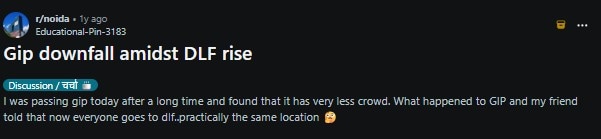
Viewers on social media and Reddit, are asking the same question again and again: how did one of India's biggest malls end up looking like a ghost town?
Let's start from the very beginning.
How GIP Became Noida's Crown Jewel
When The Great India Place opened in 2007, it was nothing short of a retail spectacle.
Developed by Unitech Group in partnership with Appu Ghar Group under Entertainment City Limited, GIP was part of a massive entertainment district spread over nearly 150 acres on a long-term lease from the Noida Authority.
This grand shopping mall also shares its boundary Gardens Galleria Mall, Worlds of Wonder (WOW), Kidzania and Decathlon which are all part of the larger Entertainment City Limited development, making it one of the most expensive commercial hub of Noida in Delhi NCR.
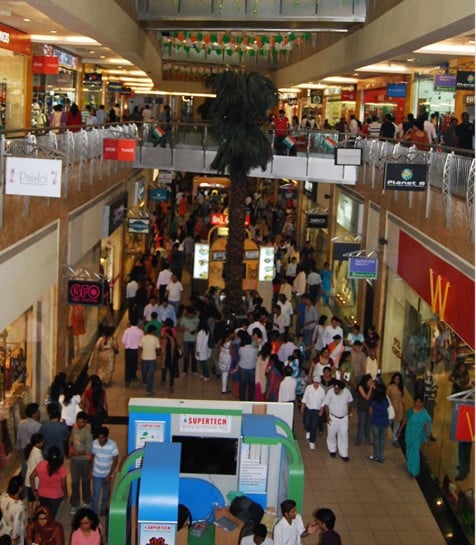
The Great India Place opened 2007. Photo: GIP
At over 65,34,000 feet across six floors, it positioned itself as a one-stop family destination at a time when organised retail in India was still finding its feet.
With more than 230 outlets, a multiplex, bowling alleys, food courts and easy access from Delhi and East UP due to its location close to a metro station, GIP quickly became synonymous with Noida itself.
For a whole generation, a day out meant shopping at Pantaloons or Shoppers Stop, catching a film, grabbing a burger, and letting kids loose at Worlds of Wonder next door. At its peak, the mall claimed footfalls of around 30,000 visitors a day.
It wasn't just a mall, it was where birthdays were celebrated and weekends were spent.
The Golden Years Of A Next-Stop Destination
GIP's early success lay in its timing and scale. It brought together national and international brands under one roof when such experiences were rare.
Fashion, electronics, jewellery, sportswear and dining were neatly stacked floor by floor, making it easy for families to spend hours without stepping out.
Brands like Big Bazaar, Pantaloons, Shopper's Stop, Adidas, Nike and Raymond anchored the mall, while Reliance Digital and Titan drew gadget lovers. The presence of Tanishq and Kalyan Jewellers added a touch of occasion shopping. The food court and various eateries helped too. For Noida residents, there was little reason to travel to South Delhi anymore.
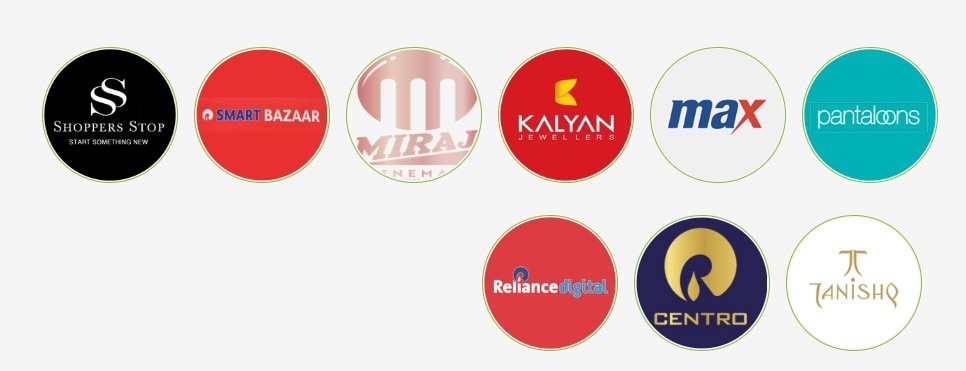
Brands listed at GIP. Photo: GIP
The surrounding Entertainment City amplified this pull. Worlds of Wonder, KidZania turned the area into a full-day outing zone, cementing GIP's status as a landmark rather than just another shopping complex, especially for Delhi NCR people looking to spend their weekends.
The First Cracks Begin To Show
The 2010s brought a wave of new malls across NCR, but the real turning point came in 2017 with the opening of DLF Mall of India, just a short distance away.
Bigger, newer and far more polished, DLF Mall introduced zoning concepts, international brands and a curated retail experience that GIP struggled to match.
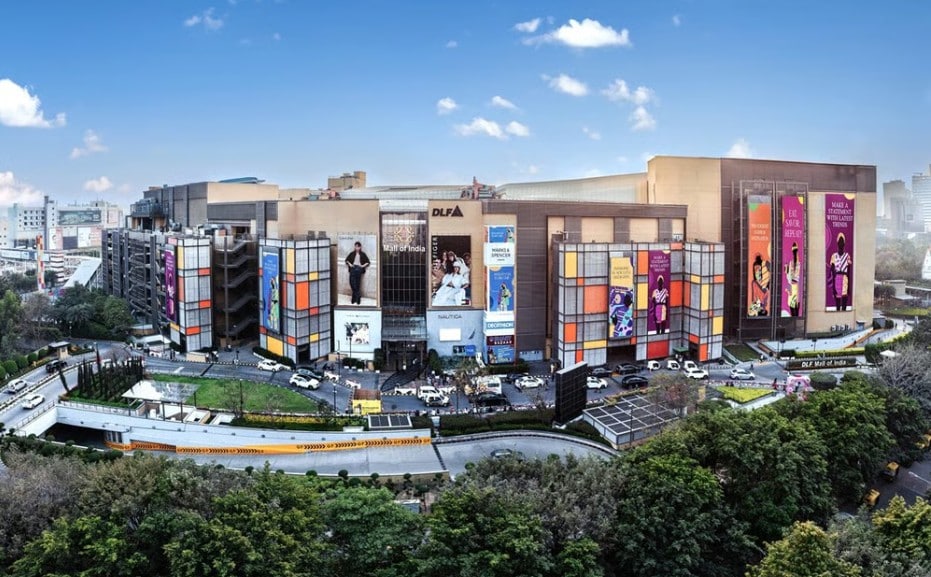
The DLF Mall Of India. Photo: X
At the same time, GIP's own structural weaknesses began to surface. Unlike newer malls where developers retain ownership and lease out space, a significant portion of GIP's retail units had been sold to individual investors.
This fragmented ownership made cohesive tenant planning difficult. Empty shops stayed empty longer, and the retail mix slowly lost its edge.
As competition intensified, footfalls began to thin out, especially among younger shoppers drawn to shinier, better-managed spaces.
Covid, Debt And A Downward Spiral
If competition bruised GIP, the pandemic delivered a body blow. Prolonged closures during the pandemic drained revenues, and many brands never returned. By 2022, visitors began noticing entire sections with shutters permanently down.
Behind the scenes, financial stress was mounting. By 2023, Entertainment City Limited was grappling with debt exceeding Rs 1,000 crore, largely owed to public sector banks. To ease the pressure, the promoters invited expressions of interest to sell the entire 147-acre complex, including GIP, Worlds of Wonder and Gardens Galleria.
Sale rumours intensified when reports suggested that the DS Group, known for its pan masala and hospitality ventures, was exploring a Rs 2,000 crore bid (the latest valuation). But despite the buzz, no deal materialised, leaving the mall in limbo.
The ED Probe And Further Damage To Perception
In 2024, GIP's troubles returned to headlines after the Enforcement Directorate attached properties worth around Rs 291 crore linked to International Recreation and Amusement Ltd, an operator with assets inside the mall.
The case was connected to alleged money laundering and cheating of investors in an unrelated real estate scheme.
While the attachment did not change GIP's core ownership or shut the mall, it added another layer of uncertainty. For shoppers and especially the brands who wanted to open stores in the Mall, perception matters, and GIP's image took another hit.
The Viral Videos And The Ghost Mall
Fast forward to now, and social media has given GIP's decline a visual form. Instagram reels show deserted walkways, darkened shopfronts and food courts with more security guards than diners. The contrast between memory and reality is stark, which is precisely why the videos are spreading so fast.
So Is GIP Actually Dead?
Despite the optics, The Great India Place is not shut down. Over 200 brands continue to operate, largely focused on value fashion, electronics and dining. Stores like Zudio, Reliance Trends, Adidas, McDonald's and Miraj Cinemas still draw regular crowds, particularly on weekends.
What's Next For GIP
Fragmented ownership, rising competition, lack of reinvestment and massive debt all played a role in GIP's downfall. Where newer malls constantly refresh experiences, GIP remained stuck in an older retail model.
What happens next depends largely on ownership clarity. A successful sale or restructuring could revive the property, especially given its prime location and emotional equity among NCR residents. Without it, the mall risks ageing further into irrelevance.
Track Latest News Live on NDTV.com and get news updates from India and around the world
