





- Muslims accuse Dhar officials of staging dummy prayers on cemetery land violating court orders
- Supreme Court allowed prayers inside Bhojshala-Kamal Maula complex with separate entry not followed
- Muslim leaders plan contempt petition alleging administration misled community and judiciary
"You cannot ask us to offer namaz in kabristan (graveyard)." That single accusation has now pushed the Bhojshala-Kamal Maula mosque dispute back to the doors of the court.
Barely hours after the district administration showcased Madhya Pradesh's Dhar as a model of constitutional compliance, senior leaders of the Muslim community accused the authorities of deception, staging a 'dummy prayer'.
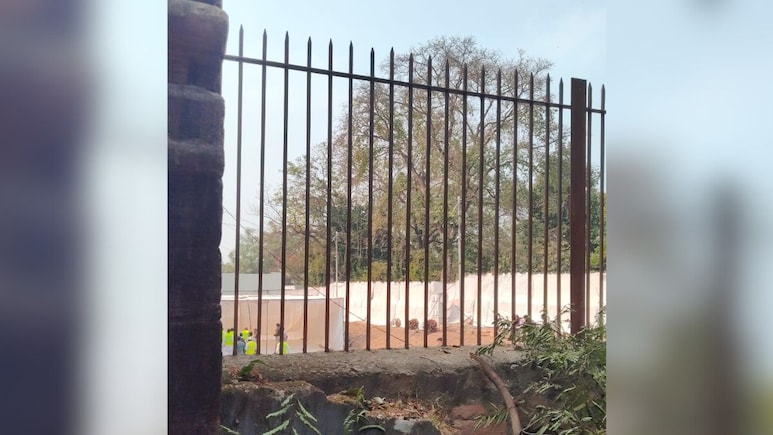
They alleged the authorities have committed a contempt of the Supreme Court, claiming that Muslims were directed to offer prayers on cemetery land rather than at the designated place inside the disputed complex.
"We objected clearly and in writing. You showed us an ASI map that places our so-called prayer spot on survey numbers 317, 316, 312, 912 and 918 all registered Waqf kabristan land," said Abdul Samad, president of the Muslim Society and chairman of the Maulana Kamaluddin Welfare Society, Dhar.
"Tell us, which prayers in Islam are offered in a cemetery? This itself violates the court's intent."
Samad described Friday's events as "reprehensible" and announced that the community would return to court with a contempt petition, accusing the administration of deliberately misleading both Muslims and the judiciary.
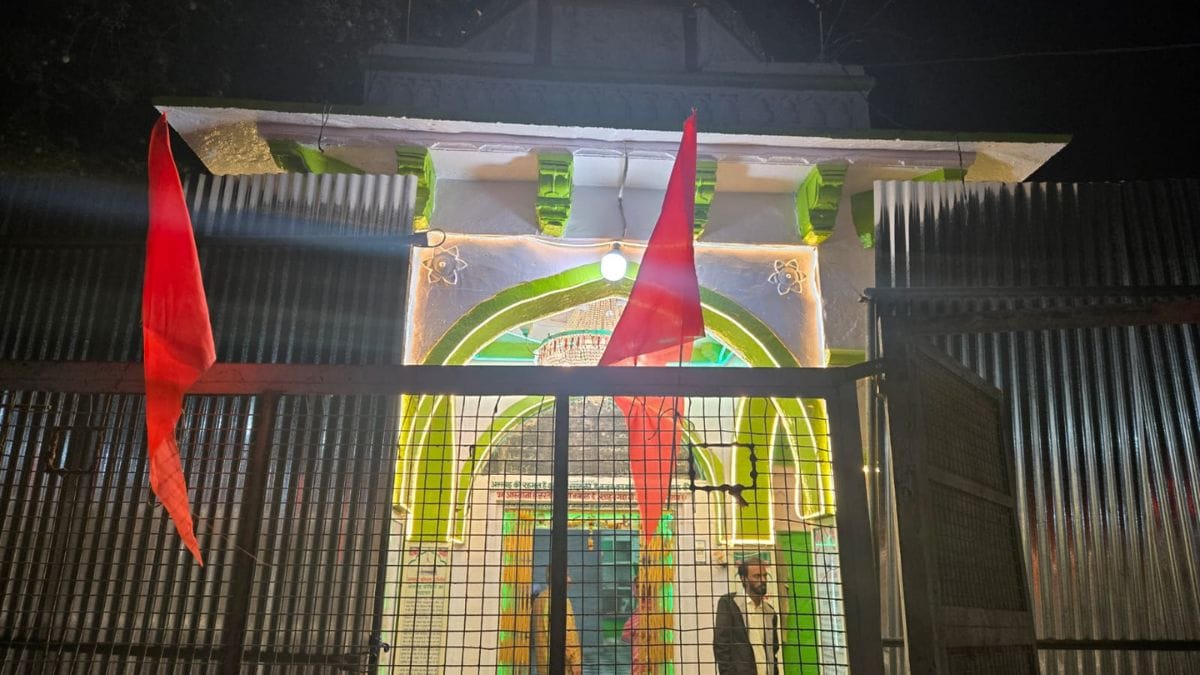
According to Samad, the Supreme Court clearly ordered that Muslims be allowed to offer prayers inside the premises, with separate entry and exit between 1 pm and 3 pm.
"That never happened," he said. "We even told the collector we would reduce our numbers and fully cooperate. Instead, a dummy prayer was conducted."
Those allegations echo earlier claims made by Imran Khan, a resident of Dhar's Gulmohar Colony, whose video went viral on Friday afternoon.
Imran alleged that on Thursday night, district officials and police took him and other Muslims away under police security, assuring them they would be allowed to offer prayers at the ASI-protected Bhojshala-Kamal Maula complex.
"At 1:40 pm, no one came to us," Imran said in the video. "We were brought here by Deputy Collector Roshni Patidar and DSP Anand Tiwari with promises of prayer. Now they are filming a dummy namaz. We don't even know who these people are."
He claimed that 15-20 Muslims were kept waiting, while others were brought in to perform prayers merely to create visual proof of compliance.
The district administration denies the charges. Officials insist that, in line with the January 22 Supreme Court order, 15-17 Muslim men offered prayers peacefully at the designated place inside the Bhojshala complex between 1 pm and 3 pm.
Dhar Collector Priyank Mishra declined to engage with the allegations. "I don't want to comment on such claims," he said. "Officially, prayers were offered peacefully at the designated place by 15-17 people, as per the Supreme Court's arrangement. Earlier discussions were held about symbolic prayers, and action was taken based on the names provided."
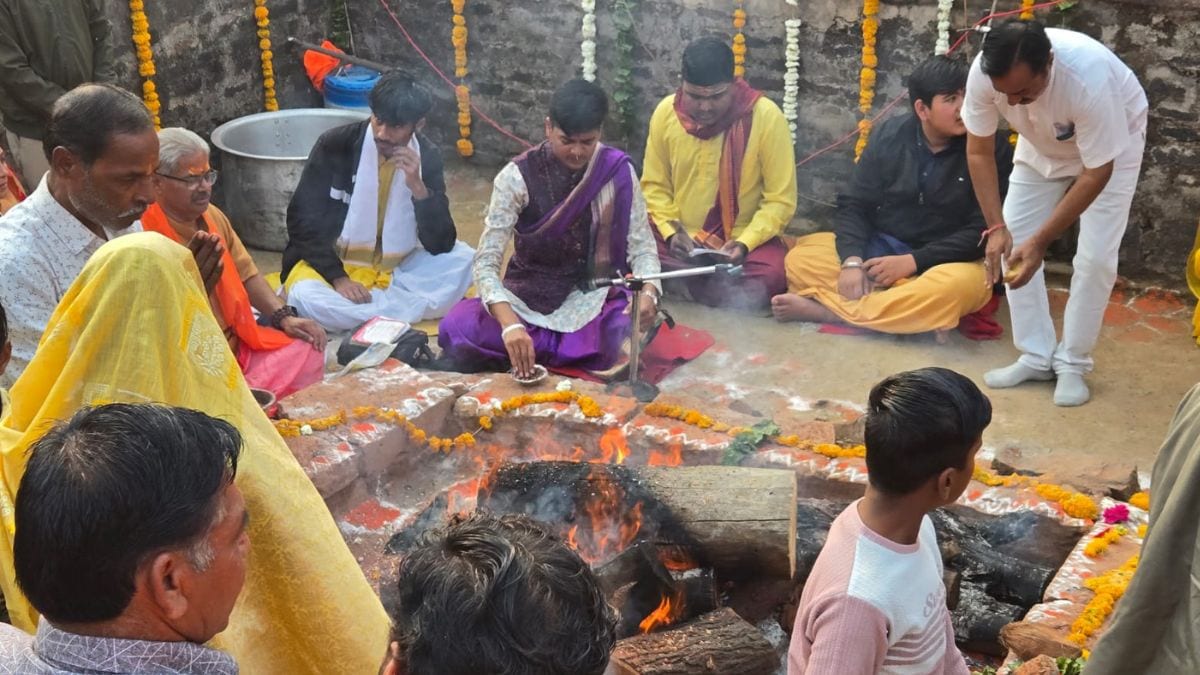
The controversy is striking because the highly sensitive coincidence of Basant Panchami and Friday prayers, which had triggered violence in 2013 and 2016, passed off entirely peacefully this time.
Under heavy security, thousands of Hindu devotees arrived in Dhar in massive processions and offered uninterrupted prayers from sunrise to sunset. Hindus regard the site as the 11th-century Bhojshala temple and Sanskrit college dedicated to Goddess Saraswati by Parmar ruler Raja Bhoj, while Muslims view it as the Kamal Maula Mosque.
A senior police officer said Muslim worshippers were escorted safely in an anti-riot vehicle and allowed to pray without obstruction. Chief Minister Dr Mohan Yadav praised the administration, calling the day an example of peaceful coexistence under Supreme Court supervision.
Hindu leaders also thanked the government for enabling continuous Basant Panchami prayers after a decade. Yet beneath the surface calm, anger is building.
Beyond allegations of "dummy prayers," members of the Muslim community also quietly objected to the fact that the area in front of the shrine entrance inside the complex was fully covered with sheets and thin fabric, raising further doubts about transparency.
Track Latest News Live on NDTV.com and get news updates from India and around the world

