





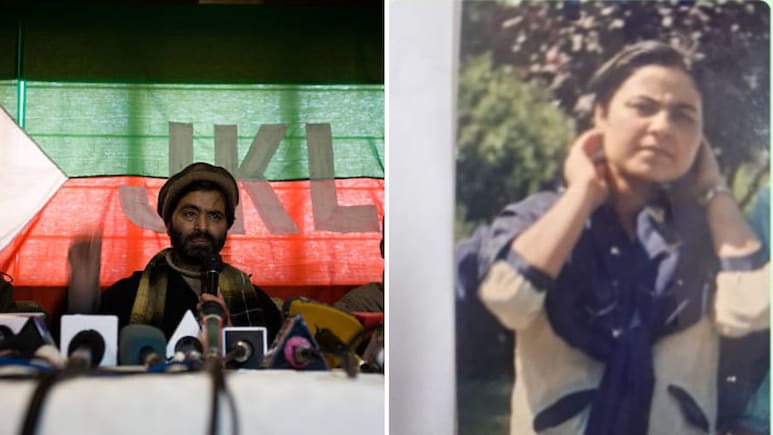
- State Investigation Agency filed a 737-page chargesheet on Sarla Bhat's 1990 murder case
- Yasin Malik named as mastermind behind abduction, torture, and killing of SKIMS nurse
- Sarla Bhat killed to instill fear and force Kashmiri Pandits’ exodus from the Kashmir Valley
A 737-page chargesheet filed today by State Investigation Agency (SIA) in Kashmir names the jailed JKLF chief terrorist Yasin Malik as the mastermind behind the 1990 abduction, torture and killing of SKIMS nurse Sarla Bhat, a crime buried for decades under a climate of terror and silence. NDTV has exclusively accessed the chargesheet filed this afternoon in Kashmir with shocking details of conspiracy for mass-exodus of Kashmiri Pandits.
On the morning of April 18, 1990, Sarla Bhat, a staff nurse at the Sher-i-Kashmir Institute of Medical Sciences (SKIMS) in Srinagar was abducted from near her hospital, tortured and shot dead with an automatic rifle at Omer Colony, Malbagh. She was among the last Kashmiri Pandit women still at her post as the Valley descended into one of the darkest chapters in its modern history.
Thirty-six years later, on June 29, 2026, the State Investigation Agency (SIA) of Jammu and Kashmir filed a 737-page chargesheet before a special TADA/POTA court in Srinagar, naming Mohammad Yasin Malik, then Chief Commander terrorist of the Jammu and Kashmir Liberation Front, as the man who ordered her killing.
The filing marks one of the most significant breakthroughs in the investigation of legacy terror crimes in the region, and sends a blunt message to those who believed the passage of time had placed them beyond accountability.
The Nurse Who Stayed
To understand why Sarla Bhat was killed, one must understand what it meant to remain in Kashmir in early 1990.

Beginning January of that year, a wave of targeted killings had already driven most Kashmiri Pandit families out of the Valley. Prominent community members, lawyer Tikka Lal Taploo, sitting High Court judge Justice Neelkanth Ganjoo, poet Sarwanand Kaul Premi, broadcaster Lassa Kaul, had been murdered in quick succession. The killings were designed to terrorise an entire community into flight.
Most Kashmiri Pandit nurses at SKIMS had already left with their families. Sarla Bhat stayed.
Sources with knowledge of the investigation told NDTV that Sarla Bhat was regarded as an upright, modern young woman who refused to abandon her profession despite escalating threats. The Soura neighbourhood on the outskirts of Srinagar, where SKIMS is located, was at the time considered something of a stronghold for JKLF and its supporters.
Wounded JKLF terrorists, injured in encounters with security forces, were frequently brought to SKIMS for treatment. Sarla Bhat, as a nurse in the hospital, was exposed to their presence. According to investigation sources, JKLF top terrorists grew increasingly paranoid that a Kashmiri Pandit nurse at SKIMS might pass information about injured terrorists to police or intelligence agencies. She was threatened multiple times. She did not leave.
The incident that appears to have sealed her fate came when J&K Police, acting on intelligence, launched a raid at Narwara on 8th April 1990 targeting top JKLF operatives during which several terrorists were apprehended. Yasin Malik, who was present, spotted the police and escaped but was injured. The chargesheet, according to investigation sources, establishes that Malik then concluded it was a Kashmiri Pandit nurse who might have tipped off the police.
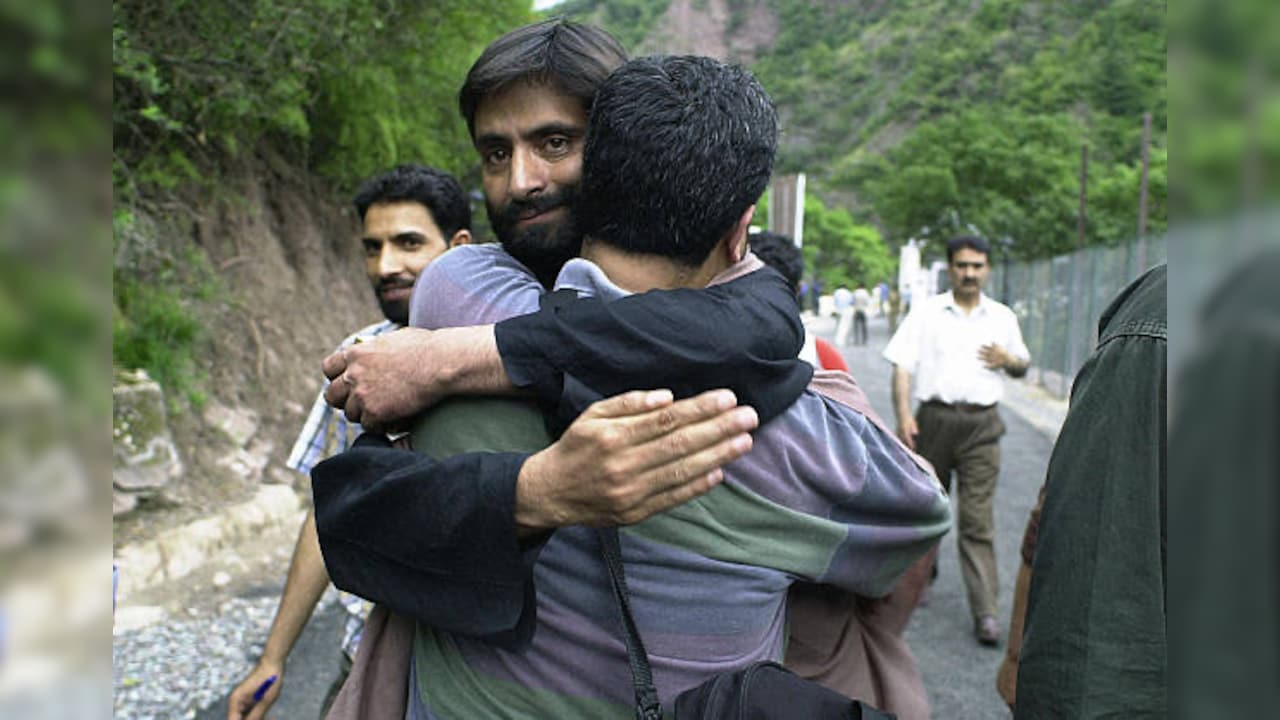
It was a conclusion with no evidentiary basis. The SIA chargesheet explicitly states that the allegation branding Sarla Bhat as an informer was "entirely false", a fabricated pretext manufactured to justify what was, in reality, a premeditated assassination. The investigation found her murder was part of JKLF's systematic campaign of targeted violence designed to spread fear among Kashmiri Pandits and create conditions for their forced displacement and exodus from the Valley.
Decades Of Silence, Then A Reckoning
The case was transferred to SIA J&K in March 2024 under orders from the J&K DGP. What followed was an investigation that had to reconstruct events across three and a half decades, locating witnesses who were now in their 70s and 80s, persuading families that had long lost faith in the state to come forward, and piecing together oral testimony, forensic evidence, ballistic analysis, documentary records and electronic evidence.
The investigation was led under the supervision of senior IPS officer Nitish Kumar, presently ADG CID/SIA, Jammu and Kashmir. Sources told NDTV that the crucial investigative work was carried out by Divya Dev, a 2018-batch IPS officer serving as Superintendent of Police, SIA, credited with unravelling the conspiracy and building the critical case file that prosecutors will now place before the court. The young IPS officer who originally hails from Tamil Nadu went door to door in search of crucial witnesses and to gather information to make the case watertight.
Another Kashmiri officer who played a remarkable role in the investigation was Tahir Ashraf Bhatt, the present SSP of SIA in Kashmir. J&K Police teams also visited Tihar Jail more than once to interrogate Yasin Malik.
Nurses who had worked at SKIMS in 1989 and 1990 were traced and questioned. Journalists who had reported closely on terrorism in Kashmir during those years were interviewed. Many potential witnesses, now elderly, had to be personally approached by senior SIA officers who took on the task of convincing, reassuring and supporting victim families - people who had spent decades doubting that justice would ever come and lost faith in investigative agencies and the judiciary.
The chargesheet names Malik alongside Khurshid Ahmad Chalkoo, identified as the man who pulled the trigger and three others: Abdul Hamid Sheikh, Mohammad Yousuf Sofi alias Idrees, and Ghulam Mohammad Taploo. The latter three are dead. Malik is currently in judicial custody in connection with a separate terror financing case in which he is serving a life sentence. Chalkoo is believed to have fled to Pakistan-occupied Jammu and Kashmir; proclamation proceedings against him have been initiated.
"The investigation established that Ms. Sarla Bhat was last seen alive at SKIMS on 18 April 1990 at about 1430 hours and was subsequently abducted by JKLF terrorists. Eye witnesses and protected witnesses consistently stated that she was seen in the company of the accused near Buchpora Crossing, thereafter taken towards the Illahibagh-Lal Bazar area, where she was brutally assaulted, dragged, tortured and ultimately shot dead with automatic rifle fire during the evening of 18 April 1990", a Senior J&K Police Officer told NDTV.
Adding scientific value to the case, FSL Ballistic Examination, confirmed that all three cartridge cases recovered from the scene were fired from the same 7.62 × 39 mm firearm, fully corroborating witness accounts of burst rifle fire.
Offences charged include abduction, wrongful restraint, murder, criminal conspiracy and destruction of evidence under RPC, as well as relevant sections of TADA and the Arms Act.
Police has also gathered Electronic evidence, including an authenticated televised interview of Farooq Ahmad Dar @ Bitta Karate, preserved with a certificate under Section 65-B of the Indian Evidence Act, wherein he acknowledged participation in targeted killings carried out on instructions from senior JKLF leadership, thereby reinforcing the existence of an organized command structure behind such crimes.
"The SIA investigation conclusively establishes that Ms. Sarla Bhat was abducted, tortured and Killed on 18 April 1990 by JKLF terrorists pursuant to a criminal conspiracy executed under the command structure of the organization. The ocular evidence, medical and ballistic findings, recovery of the Terror Claim Note, electronic evidence, witness testimonies and surrounding circumstances form a coherent and compelling chain of evidence proving that the Killing was not an isolated act but part of JKLF's systematic campaign of targeted violence against the Kashmiri Pandit community intended to spread terror and facilitate their forced exodus from the Kashmir Valley", a Senior J&K Police officer told NDTV.
The Larger Picture
Sarla Bhat's killing was not an isolated atrocity. Estimates by Kashmiri Pandit community organisations place the number of community members killed since 1989 at between 1,500 and 2,000, though no official government documentation of all the killings exists due to lackadaisical approach of successive Governments in J&K. Over half a million Kashmiri Pandits were displaced in the exodus. Community groups have long demanded a commission of inquiry into the forced displacement and killings, with several describing the events as genocide and ethnic cleansing.
Sources in J&K Police told NDTV that the Sarla Bhat investigation has yielded fresh leads and witnesses in several other long-unresolved cases, including the conspiracies behind the killings of Justice Neelkanth Ganjoo, lawyer Tikka Lal Taploo and poet Sarwanand Kaul Premi. Further investigation and chargesheets in those cases may follow beginning with the case of killing of Justice Neelkanth Ganjoo.
For now, the filing of the chargesheet in the Sarla Bhat case represents something that her family and thousands of Kashmiri Pandit families watching closely had waited decades to see, the law catching up.
Track Latest News Live on NDTV.com and get news updates from India and around the world

