





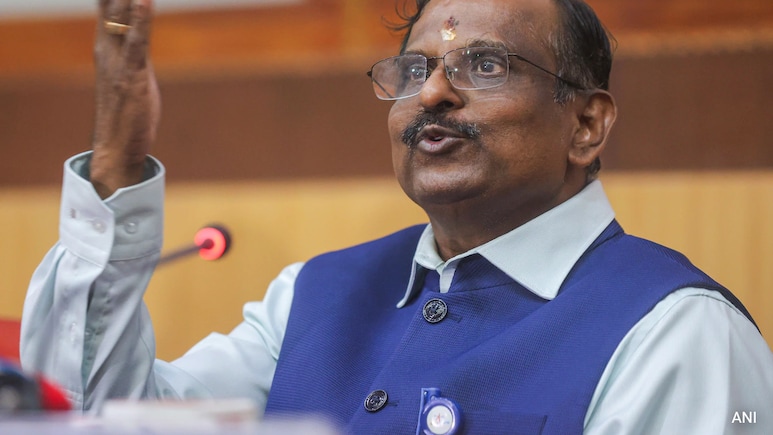
Indian Space Research Organisation (ISRO) chairman Dr V Narayanan on Thursday said the space agency is currently working on the development of reusable launch vehicle (RLV) technology, underlining India's focus on cost-effective access to space.
Speaking to reporters on the sidelines of a convocation ceremony at D Y Patil International University in Pimpri Chinchwad here, the ISRO chief said the programme is at an experimental stage.
"There is no doubt that reusable launch vehicles make launches more cost-effective. We are working towards reusable launch vehicle technology development right now," he said while responding to queries on competition from private players such as SpaceX.
The ISRO chairman asserted India does not view global private launch providers as competitors.
"We don't consider this as competition with anybody. The Indian space programme is meant for India. Strength only respects strength, and without a vibrant space programme, no one will support us," he said.
On the Gaganyaan human spaceflight mission, the ISRO chief said the programme is targeted for 2027, with three uncrewed missions planned before the crewed flight.
While dates for the first uncrewed mission have not yet been finalised, Narayanan said both the current and next year have been declared as "Gaganyaan years", and work is progressing as planned.
Providing an update on future planetary missions, he said Chandrayaan-4 and Chandrayaan-5 are approved programmes and are targeted for execution around 2028.
He also said activities related to the Shukrayaan (Venus) mission are progressing as per schedule.
Responding to questions on recent issues related to PSLV missions, the ISRO chairman said the organisation does not view them as setbacks.
"Everything is a learning process. Committees are analysing the data and working towards understanding the systems better," he said, adding that detailed findings would be shared after the analysis is complete.
Under the leadership of Prime Minister Narendra Modi, ISRO has set a target to expand India's space economy from the current 2 per cent to 8 per cent, with a focus on serving national needs and the common citizen, he said. PTI SPK BNM
(Except for the headline, this story has not been edited by NDTV staff and is published from a syndicated feed.)
Track Latest News Live on NDTV.com and get news updates from India and around the world

