





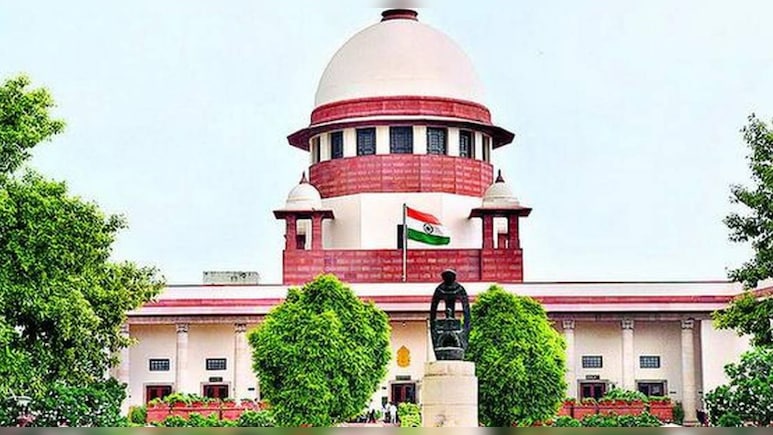
The Supreme Court on Tuesday questioned why all assets of acid attack accused cannot be auctioned to provide compensation to victims, highlighting the need for higher, more effective financial rehabilitation.
The top court emphasised that the state must ensure better implementation of compensation, noting that existing amounts (minimum Rs 3 lakh) are insufficient for lifelong treatment and rehabilitation.
"We need an extraordinarily painful punishment to prevent these heinous crimes," Chief Justice Surya Kant said.
The Court was hearing a PIL plea filed by a 2009 acid-attack survivor and founder of NGO Brave Souls Foundation, Shaheen Malik.
The Chief Justice said the top court will make sure that the acid attack survivor gets the best lawyer to fight her case in the high court.
This assurance came from the Chief Justice after the acid attack survivor told the court that "all accused have been acquitted by a lower court".
Earlier, the top court had directed the lower court to expedite the hearing in this case, which has been pending for seven years.
"I have already spent 16 years of my life fighting this case, but unfortunately, all the accused are acquitted," Shaheen told the top court.
"I was 26-year-old when I was attacked, now I am 42. I have lost crucial years in the fight, but still don't know where I stand," she said.
Previously, the court had sought reply from Centre and states on her PIL, highlighting that those who are forced to drink acid are not covered under the disability act.
The petition filed by the survivor states that the Rights of Persons with Disabilities Act, 2016 does not consider those acid attack victims who are forced to ingest acid as disabled. Only those on whom acid is thrown are considered disabled, says the law.
The court has directed all states and Union Territories to file a year-wise list of acid attacks, indicating whether a chargesheet was filed, the number of cases registered, and how many are still pending. It also sought to know the particulars of acid attack victims, including their qualifications, marital status, and employment details.
Furthermore, the Supreme Court nudged the Centre to introduce a law similar to the one regarding dowry deaths, which shifts the onus of proof onto the accused.
In July 2013, the top court ordered the Centre and state governments to regulate the sale of acid to curb attacks on women. It ruled that acid should be sold only to individuals who present a valid identity card.
Buyers, the court stated, must also explain why they need the chemical, and all sales must be reported to the police. Additionally, it mandated that acid should not be sold to anyone below the age of 18.
Track Latest News Live on NDTV.com and get news updates from India and around the world

