





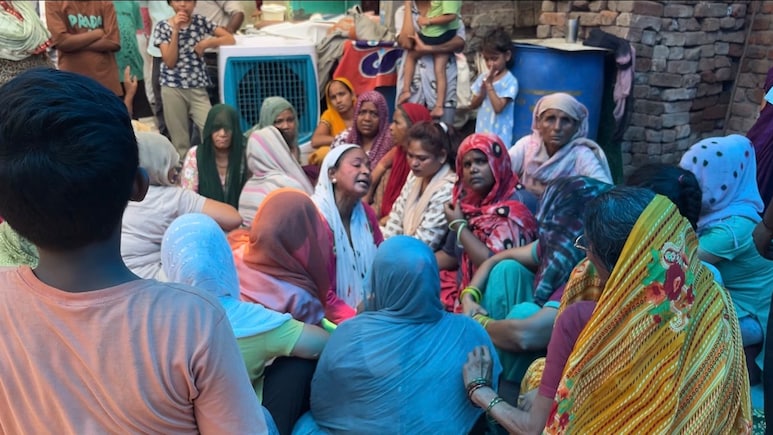
On the outskirts of Delhi in Sultanpuri's Indira Jheel, three families grieve their sole breadwinners. On June 26, tragedy struck when Chand, Arun, and Sandeep entered a septic tank at a factory in Mundka and died within minutes of inhaling toxic gas. Three people, the factory owner Suraj Marwah and contractors Jayant and Neeraj, have been arrested. A case has been filed under the Manual Scavenging Act and the SC/ST Act.
Speaking on the deaths, Delhi's mayor, Pravesh Wahi, told NDTV, "The incident occurred on a private property. There was negligence in this case. We, too, are worried about this. We will try to ensure that this never happens again."
He added, "The safety protocol must be followed. Sanitation workers cannot be forced into septic tanks. Workers must refuse if coerced."
When questioned on the occurrence of such deaths despite legal provisions in place, Wahi said, "It is the work of the government to make the laws, but to implement them is not just on the government but on the citizens as well. The citizens must abide by what is prescribed for them."
Shattered Households
Kiran, a grieving mother, sat beneath a tent the family put up outside their rented room. Surrounded by women, she screams for her son, Chand. He was the first of the three to enter the tank.
"True to his name, my son would light up every room he walked into. The entire neighbourhood is mourning him", she said. "I don't know what the factory worker did, but he forced my son into a chemical tank."
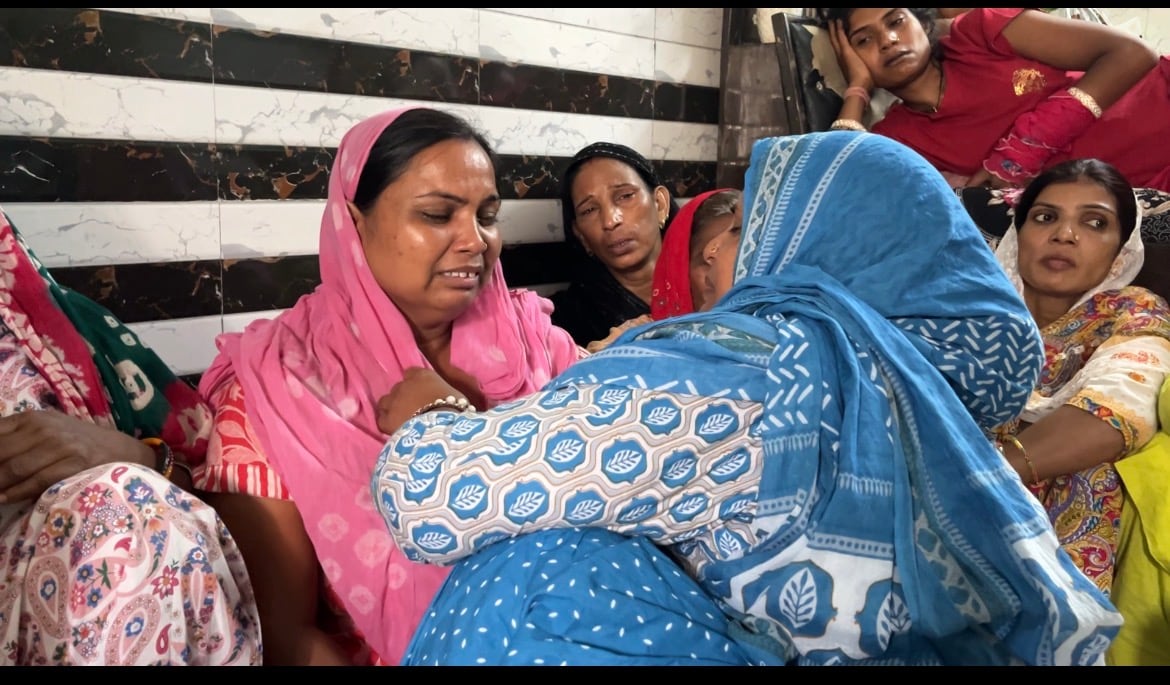
Narinder Singh stood with folded hands among relatives, eyes full of tears. He lost his youngest brother Arun, the family's sole breadwinner.
He alleged his brother's job never required him to enter the tank. "They lured him with extra money and forced him to go inside, saying he would only be paid if he cleaned the tank."
Yards from Arun's house is Sandeep's. He was the last to enter the tank, trying to rescue his neighbours. Arun's wife, Nisha, sat numb at her aunt's home. "He left without eating," she told visitors, as if he might still walk in for his meal.
"The next minute, my husband is gone," Nisha said. "I want justice. How do I feed my family and run the house?"
Bharti, Sandeep's aunt, interrupted Nisha. "Sandeep kept crying for help. He went inside in his undergarments, without any protective gear. No provisions, no safety."
Law vs Reality
But these three men should never have been inside the tank.
Section 9 of the Manual Scavengers and Their Rehabilitation Act, 2013, lays down punishment for engaging any person in hazardous cleaning of sewers and septic tanks. Not just this, the Prevention of Atrocities Act, 1989, penalises forcing a person into manual scavenging.
The Perils of Manual Scavenging
Brothers Bhim Singh and Manish Singh still do this work. Manish is a full-time sanitation worker. Bhim works part-time in sanitation alongside a full-time job as a peon at a Juvenile Home in Majnu ka Tila. On days off, Bhim too does sanitation work.
Manish says he has been in the job for four years. Bhim says he knows 10 others who do it without protective gear.
"We strip and go inside the sewers and clean the drains. Some of us are underground for three to four hours at a stretch," Bhim said. "From the heat outside to the smell inside, the filth and exhaustion, sometimes when we enter, we feel we'll die inside and never come back to the surface."
Manish, described by his brother as an 'alcoholic', drinks as a ritual. "We drink before we enter the drains. Do you think it's possible to do this job without being numb? It's normal for us to be inebriated. The whole team meets, finishes a few bottles, then gets to work. This is our remedy, our coping mechanism."
Asked about the legality, Bhim said, "We know this is illegal and deadly, but what choice do we have? We get Rs 400-450 in hand each day. If it helps feed our stomachs, do we have any other choice?"
On the lack of protective gear, the brothers laughed. Individually, they earn roughly Rs 12,000 a month; the equipment costs close to Rs 20,000.
From waking up with palpitations to uneasiness, they cite a lack of education and poverty as key reasons for staying in the profession.
Sanitation workers on the ground say they undergo no health checks and are often forced by contractors to continue. Workers allege that Contractors take most of the money and make them work long hours in unsafe spaces.
The Contractors' Side
Contractors maintain that neither they nor the government ever compel sanitation workers to step down into a tank or sewer.
Sagar, a contractor, stated: "Neither private nor government employees are supposed to go down a tank, nor are they made to go down. I tell all my employees not to step down even if someone coerces them."
Another contractor, Jai Pal, added, "Such tragedies happen when companies looking to cut costs, employ cheaper labour and send them down to clean instead of calling in expensive machines."
The Cost of Keeping the City Clean
Speaking on condition of anonymity, a sanitation worker said he feels filthy after his job. "No matter how much we bathe, the filth stays. It creeps into our nails and into our minds."
Unsurprisingly, all men who work in such jobs hail from the same caste bracket.
Sanitation workers like Bhim and Manish carry out the heavy, highly illegal task of keeping the city clean. Burdened by circumstances and compelled by need, the two brothers, like many others, do work that keeps the city running. Each day, with every drain they clean, their only hope is to make it out alive and in time for the next day.
Track Latest News Live on NDTV.com and get news updates from India and around the world

