





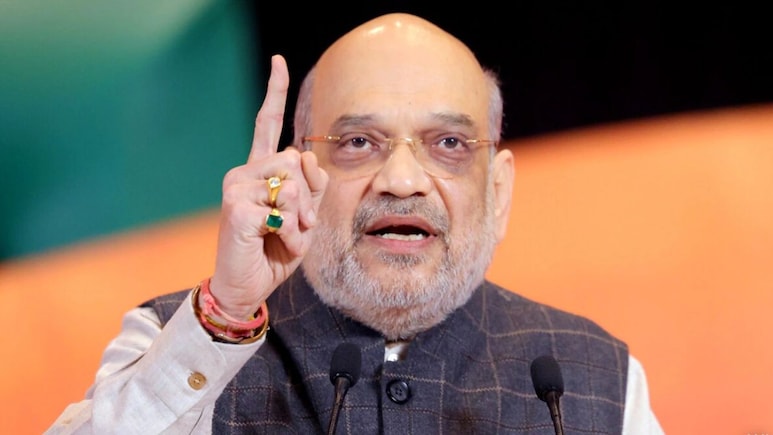
- Amit Shah linked India's development by 2047 to strong internal security measures
- He urged proactive action against infiltration, terrorism, and narcotics trafficking
- Criminal justice reforms aim to resolve cases in 3 years and raise conviction rates
Union Home Minister Amit Shah laid out an expansive internal security vision for the next two decades, asserting that India's goal of becoming a developed nation by 2047 rests on the foundation of strong internal security. Speaking at the valedictory session of the Intelligence Bureau's National Security Strategy Conference in New Delhi, Shah called for proactive measures against infiltration, terrorism, narcotics trafficking and emerging security threats.
Linking national security with economic and social progress, the Home Minister said a developed India cannot be achieved unless internal security is strengthened further. He argued that if previous governments had anticipated challenges such as narcotics trafficking, Naxalism and unrest in the Northeast before they escalated, the country would not have faced decades of security and governance challenges.
Shah said India has successfully overcome the threats posed by what he described as three major internal security hotspots. He credited state police forces, central agencies and Central Armed Police Forces for the achievement, calling it a result of sustained coordination and determined action.
Stressing the need for long-term planning, the Home Minister urged intelligence and security agencies to focus on trends that could shape the country's security environment over the next 15 to 20 years. He said the National Security Strategy Conference should identify future challenges in advance and formulate strategies to neutralise them before they evolve into major crises.
On criminal justice reforms, Shah said the government is aiming for full implementation of the three new criminal laws within the next year. He said the reforms are designed to ensure criminal cases can be resolved up to the Supreme Court level within three years while raising conviction rates by 25 per cent.
The Home Minister also highlighted efforts to strengthen border security. He said the Centre had consulted all land border states over the past eight months and shared a comprehensive four-pillar border security framework with them. The objective, he said, is to make India free from illegal infiltration within a short period.
In one of the strongest remarks of his address, Shah said, "This country is not a Dharamshala and only the citizens of the country have the right to live in this country." He warned that illegal infiltrators pose risks to national security, economic stability and demographic balance.
On counterterrorism efforts, Mr Shah pointed to the crackdown on the Popular Front of India after it was banned, describing the operation as a notable example of effective coordination between the Centre and states. He also called for the PRAHAR strategy to move beyond policy documents and become part of day-to-day security operations to ensure the complete dismantling of terrorist networks.
Addressing the challenge of narcotics, the Home Minister asked all states to implement the Narcotics Control Vision Document 2026 to 2029 at the ground level. He urged police forces to follow the strategy of Detect, Disrupt and Destroy to combat drug trafficking and protect future generations from the menace of drugs.
Highlighting the growing role of technology in policing, Mr Shah said integrated databases connecting CCTNS, ICJS, NATGRID and NAFIS have created a powerful intelligence ecosystem. He encouraged young officers to use artificial intelligence, data integration and behavioural pattern analysis to generate actionable intelligence and anticipate future threats.
The Home Minister also said the Modi government has strengthened mechanisms to bring economic offenders and fugitives back to India. According to him, around 274 fugitives were extradited or deported between 2019 and 2026. He urged all states to ensure that offenders hiding abroad are brought within the reach of Indian law.
Shah noted that the government has upgraded the Multi-Agency Centre to improve intelligence sharing and generate multidimensional security outcomes. He warned that global instability, energy and resource insecurity, supply chain disruptions, rising radicalisation and cyber misinformation campaigns are emerging challenges that require constant vigilance.
Calling for a coordinated national effort, the Home Minister said India is capable of leading one of the world's most successful campaigns against narcotics. He said the fight can only be won through close cooperation between the Centre and every department of state governments.
Concluding his address, Shah said the country's security architecture must be built around the principle of identifying threats early and eliminating them before they grow into larger challenges. Such an approach, he said, will help create a secure, infiltrator-free and narcotics-free India.
Track Latest News Live on NDTV.com and get news updates from India and around the world

