





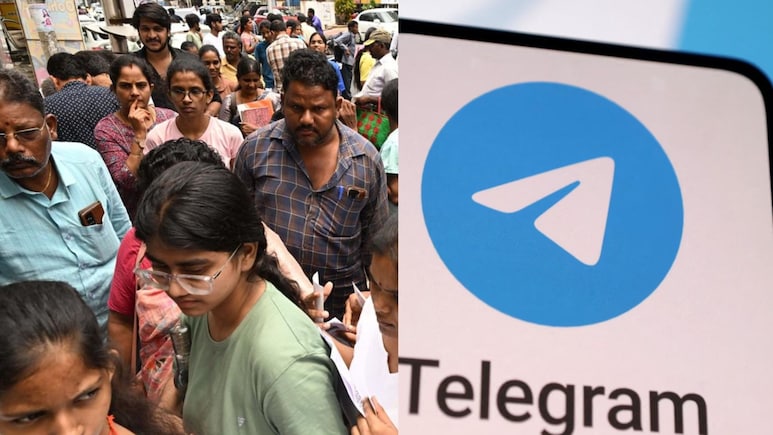
The government on Wednesday defended its decision to block access to messaging app Telegram ahead of a nationwide medical entrance retest, following last month's paper leak scandal.
Officials stated the ban was a preemptive move to prevent organised fraud and extortion targeting students, rather than an attempt to suppress discussion around paper leaks.
The NEET exam was scrapped in May following allegations that the question paper was leaked in advance, including reports that it had been circulated through Telegram channels.
Responding to the ban, Telegram founder and CEO Pavel Durov said the week-long ban "hasn't stopped anything" but "punishes" 150 million ordinary users of the messaging app in India and "not the insiders who leaked the exam materials".
Telegram has challenged the government's order before the Delhi High Court.
According to government, the block is "targeted, time-bound and tied specifically to the NEET re-exam window".
The electronics ministry issued the order restricting access to Telegram until Monday, the day of the retest. Message-editing features, which allow users to alter existing posts, will remain restricted until June 30.
The primary threat was not misinformation alone but an active fraud ecosystem operating on Telegram, said officials.
Authorities claim that channels carrying names such as "Paper Leaked NEET" and "Re-NEET 2026" were allegedly demanding payments ranging from Rs 14,000 to Rs 25,000 and, in some cases, several lakh rupees from students by falsely claiming access to leaked examination papers.
Government sources contend that the issue is closer to financial fraud than a free speech concern, with scammers exploiting examination-related anxiety to extort money from students and parents.
Officials argue that administrators can edit older messages while retaining the original timestamp, allowing fraudsters to create fabricated evidence of paper leaks after the event. Such edited posts were allegedly used to generate panic and lend credibility to false claims of question paper leaks.
Telegram does not have a registered office or grievance redressal mechanism in India. The enforcement agencies, the sources said, faced difficulties securing timely cooperation from the platform.
The sources cited international reports linking the Telegram platform to organised criminal activity, fraud networks and illicit marketplaces, while also referencing actions taken by countries such as Vietnam, Iraq, Kenya, Algeria and Jordan to restrict online platforms during examination periods or for law-enforcement reasons.
Officials maintain that India's action is narrower in scope than measures adopted by several other countries, as it targets a single platform for a limited duration linked to a specific examination.
Track Latest News Live on NDTV.com and get news updates from India and around the world

