





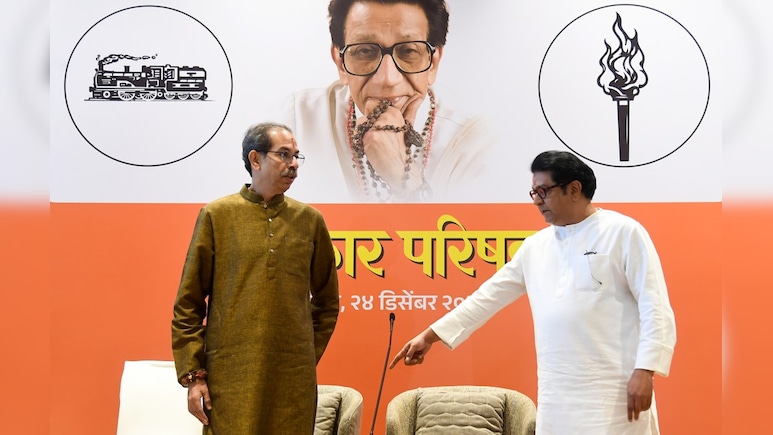
As it approaches its 60th foundation day, the Shiv Sena stares at another possible split. Uddhav Thackeray camp is struggling to keep its flock together. A familiar script seems to be playing out.
Since its formation by Bal Thackeray in 1966, Shiv Sena has been known for its aggressive Hindutva and regional identity politics. But internal strife and the exit of top leaders have been a recurring reality for the party.
From 1991 to 2022, Shiv Sena has faced major jolts every decade.
1991: Chhagan Bhujbal
The first major rebellion in Shiv Sena's history came from Chhagan Bhujbal. He quit the party with 17 MLAs and joined Sharad Pawar's camp. In later years, he held key posts like Deputy Chief Minister and Home Minister in Congress-NCP governments. His exit was the first major challenge to the party's organizational structure.
1999: Ganesh Naik
Dominant in Navi Mumbai, Ganesh Naik left Shiv Sena for the NCP due to personal ambitions. After nearly two decades in NCP, he joined the BJP in 2019 and continues to hold sway over Navi Mumbai politics.
2004: Narayan Rane
Former Chief Minister Narayan Rane quit Shiv Sena following differences with Uddhav Thackeray. After stints with Congress and his own Swabhiman Party, Rane eventually joined the BJP. Today, he is the BJP's strong face in the Konkan region.
2007: Raj Thackeray
This one was personal for the Thackeray family. As patriarch Bal Thackeray receded from active politics and handed over the Shiv Sena to his son Uddhav Thackeray, nephew Raj Thackeray rebelled. Unhappy with internal family differences and Uddhav Thackeray's growing stature, Raj Thackeray quit Shiv Sena and formed the Maharashtra Navnirman Sena (MNS). Despite early electoral success, the party failed to sustain its political ground and is currently electorally marginal. Raj's exit was seen as an ideological and family split that divided Shiv Sena's core strength.
2022: Eknath Shinde
It wasn't just a leader who rebelled - Shiv Sena itself split into two. The party was formally divided by Eknath Shinde in 2022. A majority of MLAs and MPs walked out with Shinde. Unlike all previous exits, Shinde's rebellion was deeper in impact. It was not just a few leaders leaving, but a shift of the party's core base and a large section of the legislature. It plunged Uddhav Thackeray's Shiv Sena into a legal and organizational crisis.
At the peak of the rebellion, between 40 and 46 MLAs with Shinde camped in Guwahati. The Shinde faction formed the government with the BJP and was recognized as the official Shiv Sena, winning the party name and 'bow and arrow' election symbol. The exodus of MPs to the Shinde camp accelerated after the government formation.
Uddhav Thackeray's faction is now called Shiv Sena (Uddhav Balasaheb Thackeray), or Shiv Sena UBT, with the 'flaming torch' as its election symbol. The Shinde faction legally claims to be the real Shiv Sena.
2026?
Will there be a replay of 2022 with the MPs deserting Uddhav Thackeray for Eknath Shinde? Or Can Uddhav Thackeray avert the storm? Watch this space.
Track Latest News Live on NDTV.com and get news updates from India and around the world

