



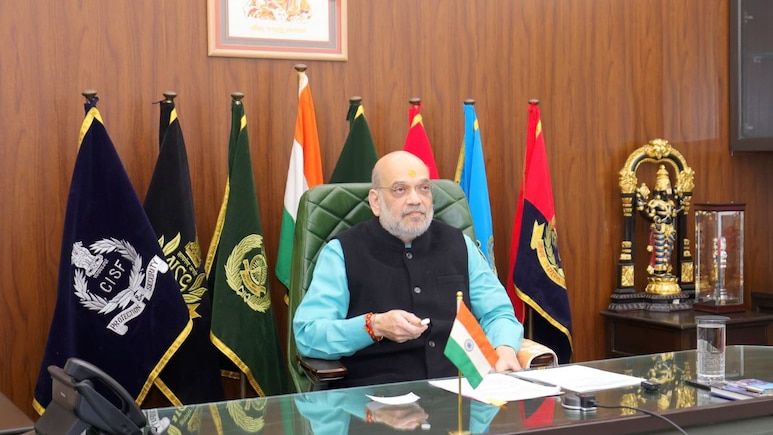
Union Home Minister Amit Shah launched the National IED Data Management System (NIDMS), a first of its kind digital platform aimed at strengthening India's fight against improvised explosive device (IED) threats. Developed by the National Security Guard (NSG), the system is expected to plug long-standing gaps in intelligence sharing and post blast investigations.
The virtual launch from the NSG campus in Manesar marks a move away from fragmented record keeping toward a unified national database. Until now, details related to IED blasts and recoveries were scattered across state police units and central agencies. The new platform brings this information together on a secure interface accessible to authorised users in real time.
The minister said the NIDMS will act as a "shield" and "national asset" against terrorist incidents, as it will provide a "comprehensive" data to the police, various investigative agencies, state Anti-Terrorist Squads, federal agencies like the NIA and central forces to analyse the patterns and modus operandi of various types of bombings.
Officials said the system will significantly improve the ability of security agencies to identify patterns, track explosive materials and link incidents across states. Inputs from one investigation can now immediately support operations elsewhere, allowing faster preventive action.
IEDs remain one of the most commonly used weapons by terror groups and insurgent outfits, targeting security forces and civilians. The government believes that a data driven approach will help decode operational signatures of terror modules and disrupt future attacks.
Beyond investigation, the platform is expected to enhance forensic standards and training for bomb disposal squads. The system is designed to evolve with changing threat patterns and integrate advanced analytical tools over time.
The launch of NIDMS is being seen as a key step in strengthening India's internal security framework, with a clear focus on coordination, prevention and technology led intelligence gathering.

