





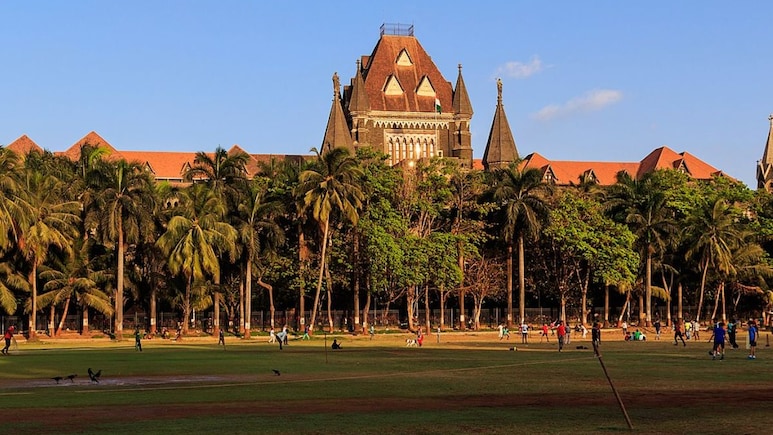
The Bombay High Court voiced serious concern over the loss of green cover in and around Mumbai, warning that the day may not be far when residents will have to carry oxygen cylinders and take periodic "oxygen shots" if forests and mangroves continue to be cleared for development projects.
The observation came on Tuesday during the hearing of a plea filed by the Maharashtra State Electricity Transmission Company Ltd (MSETCL), which has sought permission to cut 847 mangrove trees spread across 3.35 hectares of forest land in Palghar district. The land is required for the construction of a 13.06-km power transmission line linked to the Mumbai-Ahmedabad bullet train project.
-

-
 World-Class Chefs, Food And Music: The Fun Side Of NDTV World Summit 2026
-
 AI, Consciousness And Dharma: Why Ancient Indian Wisdom Matters Now
-
 NDTV World Summit: What To Expect From PM Modi's Keynote Address
-
 NDTV World Summit 2026: What To Watch Out For | PM Modi, Jaishankar, AI And Global Power Shifts
-
 A World Between Orders: What To Expect At NDTV World Summit 2026
-
 Who Is Rajiv Mehta? Lilavati Hospital Trustee To Speak At NDTV World Summit 2026
-
 Alain Ebobisse, Africa50 CEO, To Attend NDTV World Summit 2026. All About Him
-
 Kriti Sanon At NDTV World Summit: A Look At Her Career And Business Ventures
-
 Ex-CIA Director To Decode 'War In Times Of AI' At NDTV World Summit
-
 Who Is Vikram Rai, CEO, South Asia GE Aerospace, Set To Attend The NDTV World Summit 2026
A division bench comprising Acting Chief Justice Ravindra Ghuge and Justice Gautam Ankhad said the destruction of trees and mangroves was causing irreversible damage to the region's environment.
"It is a loss for this area. As it is, Bombay has so little oxygen that the day will not be far when people will carry oxygen cylinders to take oxygen shots," the court remarked.
The bench also criticised the state's approach to compensatory afforestation, particularly the practice of planting new trees hundreds of kilometres away from the area where the original trees are cut.
Referring to a proposal to undertake plantation work in Solapur, nearly 500 km from the affected site, the court said such measures do little to improve environmental conditions in the region that loses its green cover.
"The problem is that you all do not replant. The plants which you then plant have started dying. You only create a picture that you have planted something. You don't turn around and see whether it is alive after you have planted it," the court said.
While the High Court clarified that it is not trying to halt the high-profile bullet train corridor, it demanded a localised, strictly monitored environmental model where afforestation begins before trees are chopped down.
Following the court's stance, Maharashtra's Advocate General assured the bench that the government will move to identify degraded forest land within the same regional vicinity for the compensatory planting.
The High Court has reserved its final order on the plea as the state looks for nearby designated land plots before the next hearing.
Track Latest News Live on NDTV.com and get news updates from India and around the world

