





In what could prove to be a major breakthrough for food security, climate resilient agriculture and farmer livelihoods, the Hyderabad-based International Crops Research Institute for the Semi-Arid Tropics (ICRISAT) has secured long term humanitarian rights to deploy CRISPR Cas9 - the gene-editing technology across its mandate crops.
For India, which remains heavily dependent on imports of edible oils and continues to struggle with shortages of pulses, the development may have far reaching implications. Gene-editing can help increase crop productivity and yields without the fear of indulging in what is often called introducing ‘franken-foods' where genetic modification introduces foreign genes.
Gene-editing is like enhanced classical breeding but done at the molecular level and does not introduce any foreign genes and hence it is much more acceptable to the public.
The agreement gives ICRISAT access to one of the world's most powerful biological tools through a licensing arrangement with Corteva and The Broad Institute.
Importantly, the licence goes beyond laboratory research and allows the complete journey from scientific discovery to the development and deployment of improved crop varieties for farmers.
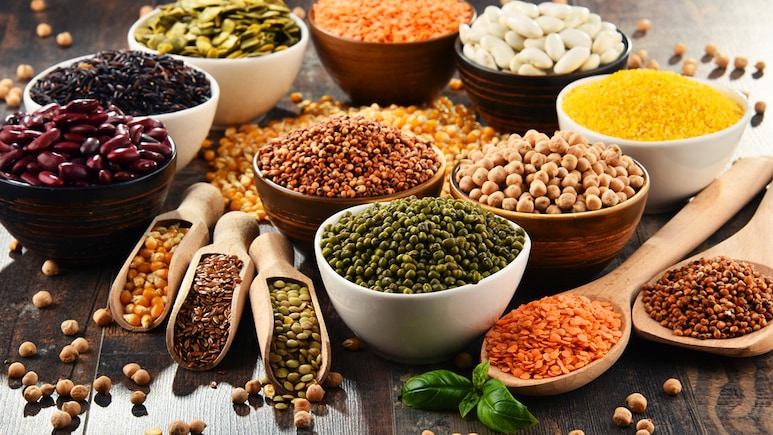
For India, this is particularly significant because many of ICRISAT's mandate crops are central to the country's nutritional and agricultural future. These include chickpea, pigeon pea, groundnut, sorghum, pearl millet and other millets. India is one of the world's largest producers and consumers of these crops. Yet the country continues to import millions of tonnes of edible oils annually and frequently faces deficits in pulses production. Any technology that can improve yields, increase resilience and reduce crop losses could therefore have major national importance.
ICRISAT Director General Dr Himanshu Pathak described the agreement as a transformational milestone. "Corteva's leadership in gene editing, combined with ICRISAT's world leading breeding programs and our other long standing partnerships with national agricultural research systems, this new capability will accelerate the delivery of practical crop innovations that strengthen food security, improve livelihoods and build more resilient agricultural systems across Asia and Africa," Dr Pathak said.
The timing of the announcement is especially noteworthy when viewed against India's own genome editing journey.
In May 2025, India celebrated a scientific milestone when Indian scientists developed and released what was described as the world's first genome edited rice varieties, Kamala and Pusa DST Rice 1. The varieties were designed to deliver higher yields, improved climate resilience and lower water consumption without introducing foreign DNA. They were hailed as a major achievement for Indian science and agriculture.
However, questions surrounding intellectual property rights and access to commercial gene-editing technologies have continued to linger. The CRISPR Cas9 system, which underpins much of modern genome editing research, is covered by a complex network of patents and licences around the world.
While Indian scientists successfully demonstrated the science, the challenge of large scale deployment and commercialisation has remained a subject of discussion within scientific and policy circles. It is this backdrop that makes the ICRISAT announcement especially interesting.
The institute has now secured a clear humanitarian deployment pathway for gene edited crops. Whether this development could eventually ease similar issues for Indian institutions such as the Indian Council for Agricultural Research (ICAR) remains an open question. Only time will tell.
But the fact that a Hyderabad based international agricultural institution has managed to secure long term access to the technology is undeniably good news for agricultural research in the region.
So what exactly is gene editing and why is it attracting so much attention?
Gene-editing is often compared to the precision correction of spelling errors in a document. Scientists are able to make very specific changes in a plant's own DNA without introducing genes from unrelated organisms. Using CRISPR Cas9, researchers can switch off unwanted traits, improve stress tolerance or enhance productivity by making targeted changes to existing genes.
This differs fundamentally from traditional genetic modification or genetic engineering, where genes from another species may be inserted into a plant. The new generation genome edited crops being developed under approaches generally do not contain foreign DNA and can be very similar to changes that might occur naturally or through conventional breeding, except that the process is much faster and more precise.
ICRISAT says the technology can accelerate development of crop varieties with improved drought tolerance, heat tolerance, resistance to pests and diseases, enhanced productivity and improved nutritional quality, all while avoiding the introduction of DNA from unrelated species.
That matters greatly in a country like India where climate variability is becoming increasingly severe. Farmers are coping with higher temperatures, erratic monsoons, water shortages and emerging pest pressures. Traditional breeding can take many years to combine desirable traits into a single variety. Gene editing offers the possibility of achieving similar outcomes far more rapidly.
The new licence is expected to strengthen ICRISAT's work in genomics, crop breeding, phenomics and seed systems. The organisation says it now has a more integrated innovation pipeline that can accelerate the journey from scientific discovery to improved varieties in farmers' fields.
Corteva, one of the parties to the agreement, also highlighted the humanitarian dimension of the collaboration.
"We're proud to collaborate with ICRISAT and help smallholder farmers across Asia and Africa access gene editing technology," said Dr Wendy Srnic, Vice President, Biotechnology for Corteva.
“We look forward to working together to develop crops that can better withstand extreme weather events, pests and diseases and help farmers feed their communities while building a more resilient global food system," Corteva says.
The Broad Institute, which is one of the pioneering institutions behind CRISPR intellectual property, is also part of the licensing arrangement that has made the deployment pathway possible.
According to ICRISAT, the agreement with The Broad Institute and Corteva provides the legal framework needed to move from research to farmer facing products.
For India, perhaps the biggest significance lies in the crops involved. Rice often captures headlines, but pulses, millets and oilseeds are equally important for nutrition, food security and import substitution.
Chickpea and pigeon pea are staples of the Indian diet. Groundnut remains an important oilseed crop. Sorghum and millets are increasingly being promoted as climate resilient crops suitable for dryland agriculture.
If gene-editing can help boost yields, improve resilience and reduce losses in these crops, the benefits could extend far beyond individual farmers. Reduced imports, improved self -sufficiency and stronger rural incomes could all become part of the equation.
The road ahead will still involve scientific, regulatory and market challenges. Yet the significance of ICRISAT securing a legal route to deploy CRISPR Cas9 technology cannot be overstated. For a country seeking solutions to climate stress, pulse shortages and edible oil dependence, this is a development worth watching closely.
And perhaps the biggest unanswered question remains: after ICRISAT's breakthrough in securing deployment rights, will Indian public sector institutions eventually obtain similar access for broader commercialization of genome edited crops?
The answer is not yet known. But for India's pulses, millets and oilseeds, this latest development is certainly a step in the right direction. Rights to use in rice and wheat may follow now that a window has been opened.
Track Latest News Live on NDTV.com and get news updates from India and around the world

