





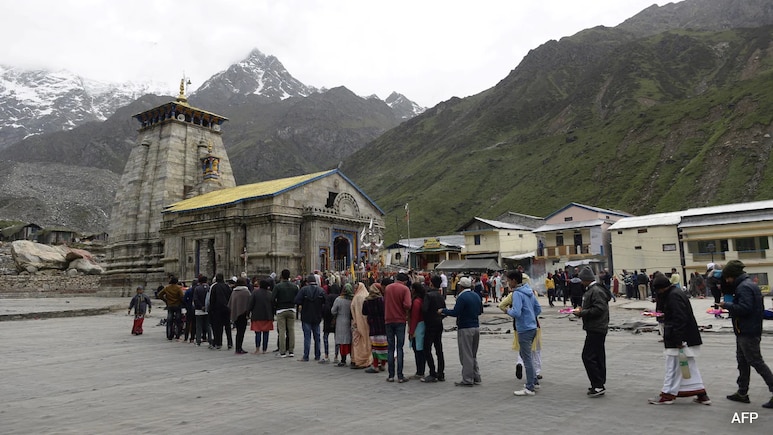
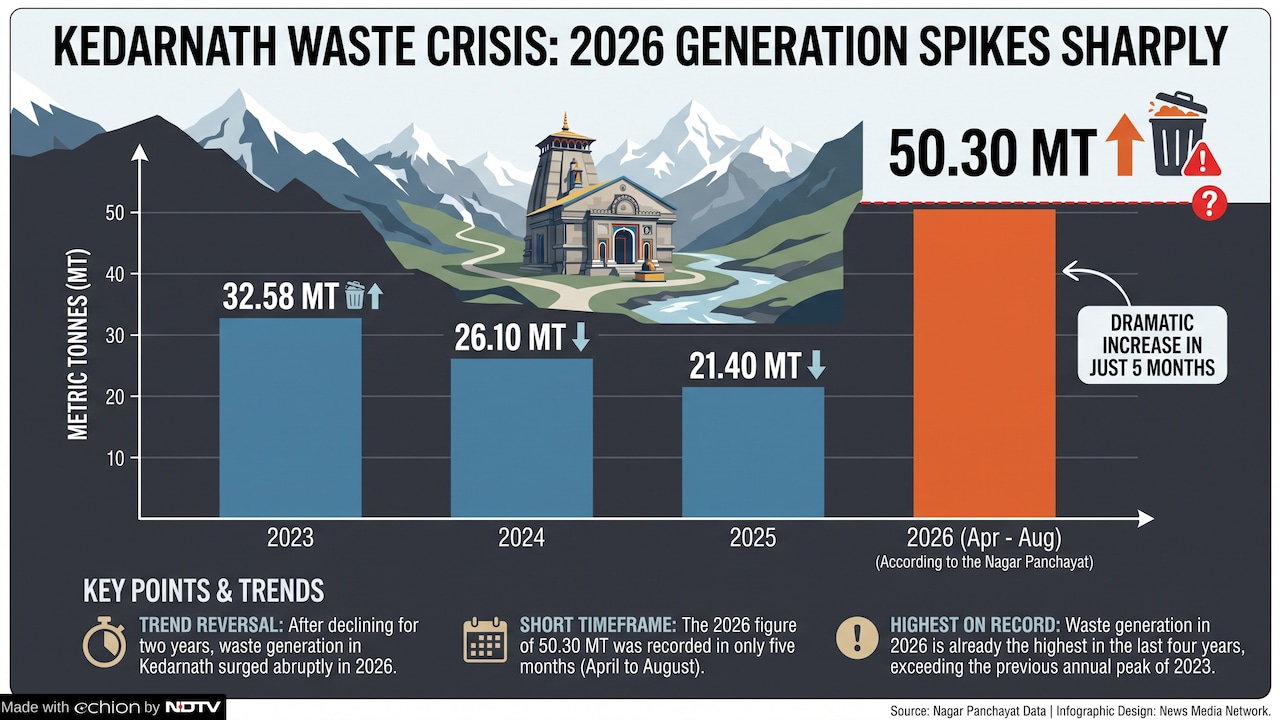
Kedarnath, one of India's most visited Himalayan pilgrimage sites, has recorded a sharp rise in waste generation this year as pilgrim numbers continue to climb. The shrine generated 50.30 metric tonnes of waste between April and August 2026, according to data provided by the Kedarnath Nagar Panchayat under the Right to Information (RTI) Act. The five-month figure is already more than twice the waste recorded during the entire pilgrimage season in 2025 and is higher than the total recorded in each of the previous three years.
More than 15 lakh pilgrims have visited the shrine in 2026 so far, with the pilgrimage season still underway.
The year-wise numbers show how sharply the waste burden has changed. Kedarnath generated 32.58 metric tonnes of waste in 2023, 26.10 tonnes in 2024 and 21.40 tonnes in 2025. In comparison, 50.30 tonnes has been generated in just five months of 2026.
How Is Kedarnath's Waste Being Managed?
The waste generated at Kedarnath is segregated into different categories, including plastic, organic waste and animal waste. Animal waste from the mules and ponies used to ferry pilgrims and supplies is collected separately.
Plastic and animal dung are processed near Sonprayag, while organic waste has to be transported nearly 70 km to Raintoli, the district headquarters. This adds significantly to the logistical cost of managing waste generated during the pilgrimage.
Around 20 metric tonnes of plastic waste was generated in Kedarnath between April and August 2026. Of this, 18.5 tonnes, or 92.5 per cent, had been processed, while around 1.5 tonnes remained.
Why Is Plastic Waste A Concern For The Himalayas?
Environmentalists like Chandan Nayal have raised concerns over the impact of plastic waste in the Himalayan region. According to Nayal, the most unfortunate aspect of plastic waste in the area is its potential role in accelerating snow melt that can further destabilise the environment.
Plastic waste that is improperly disposed of can break down into microplastics. These particles can settle in snowpacks, glaciers and high-altitude lakes across the Himalayan region.
Plastic and microplastics can also darken snow surfaces, causing them to absorb more solar radiation. This can accelerate snow and glacier melting. As snow and ice melt, trapped microplastics and pollutants can enter freshwater systems, including rivers such as the Ganga.
Kedarnath Sees A Massive Rise In Pilgrim Numbers
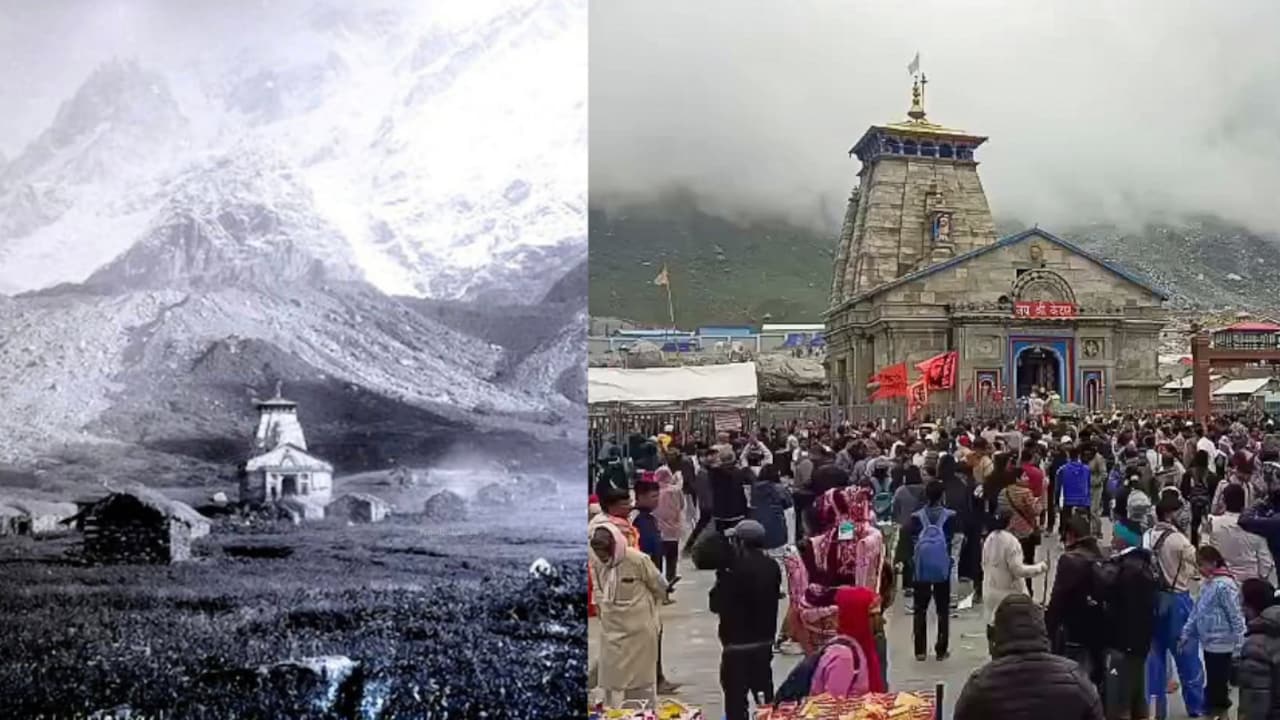
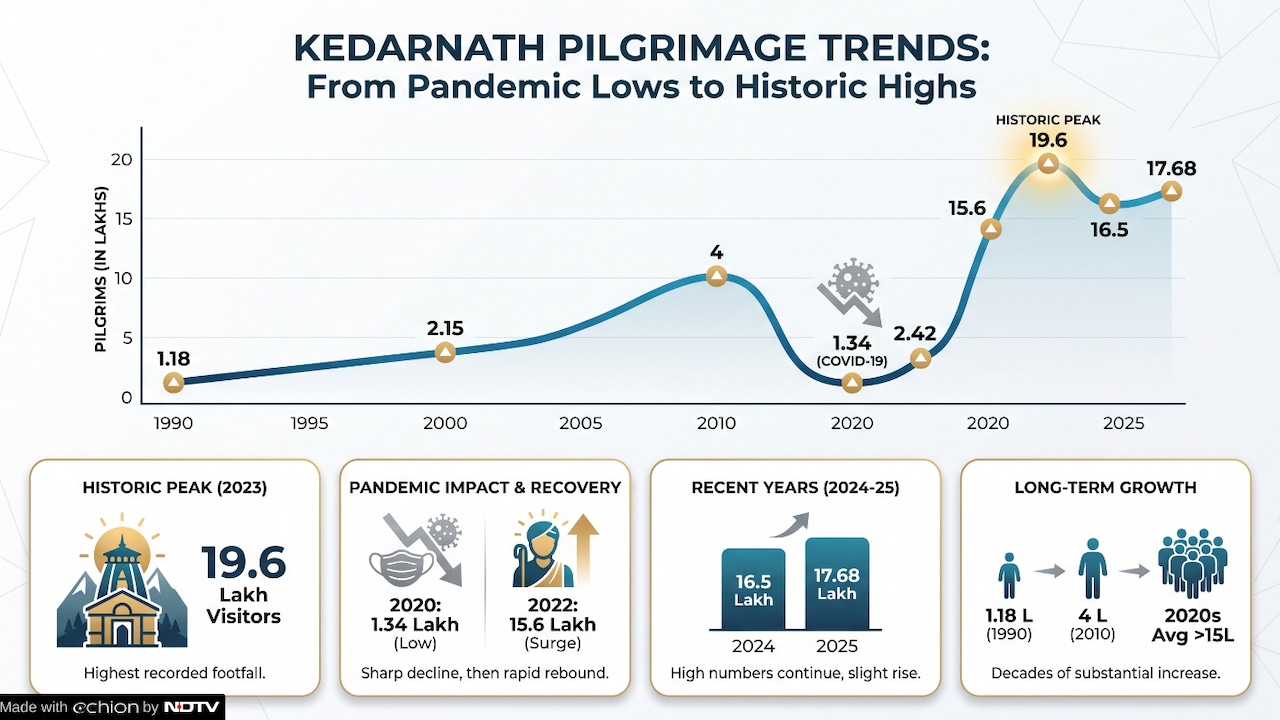
The rise in waste comes alongside a long-term increase in the number of people visiting Kedarnath. The shrine recorded 1.18 lakh pilgrims in 1990 and 2.15 lakh in 2000. The number rose to around 4 lakh in 2010, before reaching 15.63 lakh in 2022 and 19.61 lakh in 2023.
Kedarnath recorded 16.52 lakh visitors in 2024 and 17.68 lakh in 2025. More than 15 lakh pilgrims have already visited the shrine in 2026, according to the district administration.
The scale of the annual pilgrimage has raised questions about how many people the fragile mountain route can safely and sustainably accommodate.
Why Carrying Capacity Is A Concern
The 2026 pilgrimage began on April 22, and the temple doors are scheduled to close for the winter season on November 11. The administration has imposed a daily cap of around 13,000-15,000 registered pilgrims to manage the narrow 16-km trekking route between Gaurikund and Kedarnath.
However, during peak opening days, the number of visitors has routinely risen to 30,000-38,000 a day. Such crowd levels have resulted in intense congestion, safety concerns and broken barricades.
The rising visitor numbers and growing waste generation have, therefore, put the spotlight on the sustainability of tourism in Kedarnath. For a Himalayan pilgrimage destination already dealing with concerns over declining snow cover and glacier retreat, managing the environmental impact of the annual yatra remains a growing challenge.
In 2025, a team of researchers from the institutes including the GB Pant National Institute of Himalayan Environment in Uttarakhand found that the area under snow cover in the four Himalayan shrines and around them has declined significantly in about two decades. It said that snow cover retreat was the highest in Gangotri glacier (22.36 m per year) followed by Yamunotri (20 m per year), Badrinath (17.32 m per year) and Kedarnath (14.14 m per year) between 2002 and 2020.
Track Latest News Live on NDTV.com and get news updates from India and around the world

