





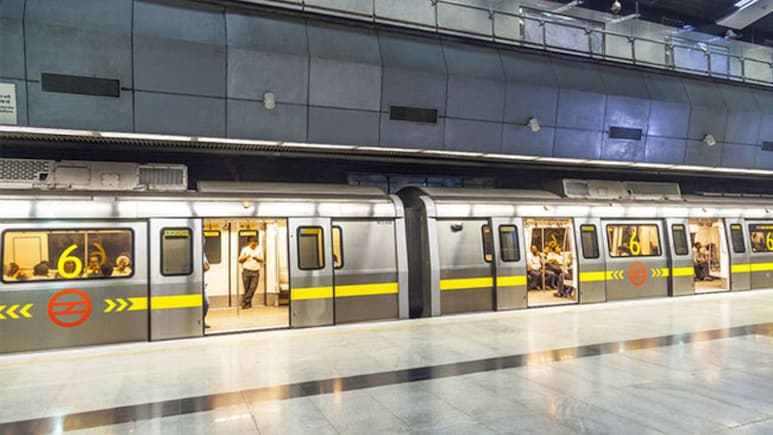
- Drunken behaviour in Delhi Metro will attract fines of Rs 2,000 to Rs 5,000 under new Bill
- Holding protests on Metro premises will incur fines up to Rs 10,000, replacing previous penalties
- Walking on Metro tracks will be fined up to Rs 20,000 under proposed amendments
Drunken behaviour, holding demonstrations, and walking on tracks in the Delhi Metro is set to attract heavy fines as the Centre brings in changes under the Jan Vishwas (Amendment of Provisions) Bill, 2026.
The Bill, introduced in Lok Sabha by Union Minister Jitin Prasada on Friday, proposes changes to the Metro Railways (Operation and Maintenance) Act, 2002, which governs Delhi Metro operations.
Anyone drunk on Metro premises will be fined between Rs 2,000 and Rs 5,000 if the Bill clears Parliament. This is currently capped at Rs 500. The passenger can also be removed from the Metro premises if found drunk.
The government has also tweaked the penalty for holding demonstrations on Metro trains and stations. Holding sit-in protests and putting up posters attracts a penalty of up to Rs 10,000 under the proposed law. Currently, such offences are punishable with imprisonment for a term which may extend to six months, or with a fine which may extend to one thousand rupees, or both. Walking on Metro tracks, which attracts a fine of up to Rs 500, will be penalised with up to Rs 20,000 once the tweaks come into force.
The Bill also proposes changes to the Calcutta Metro Railway (Operation and Maintenance) Temporary Provisions Act, 1985, which governs the functioning of Kolkata Metro. Smoking on Metro premises, including stations and trains, will attract a fine of Rs 2,000 if the Bill becomes law. Currently, this fine is Rs 250.
According to the government, this Bill marks a significant milestone in the Government's efforts to promote Ease of Doing Business and Ease of Living. It proposes amendments to 784 provisions of 79 Central Acts administered by 23 Ministries. It decriminalises 717 provisions to promote Ease of Doing Business and amends 67 provisions to facilitate Ease of Living.
"The Bill envisages a shift from criminal penalties for minor, technical, or procedural defaults to civil and administrative enforcement mechanisms," a government statement said.
"The Bill reflects the Government's commitment to fostering a trust-based legal and compliance environment, where citizens and businesses are not subjected to criminal sanctions for minor non-compliance. By reducing the burden of criminal liability and simplifying regulatory processes, the Bill is expected to enhance compliance, promote investment, and strengthen economic growth," it says.
Track Latest News Live on NDTV.com and get news updates from India and around the world

