





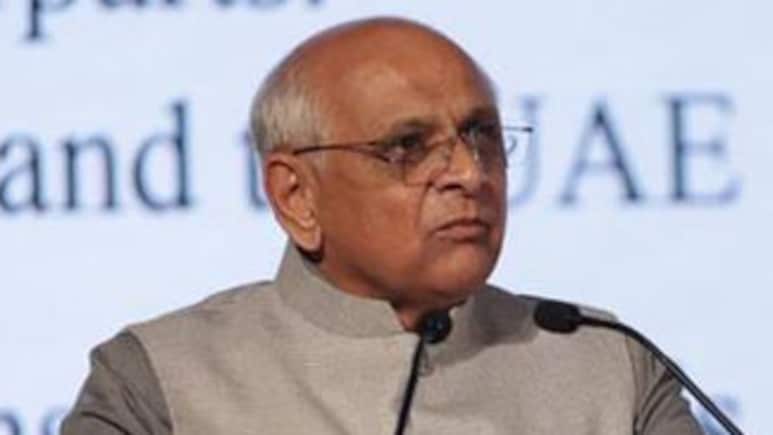
The Gujarat government has officially launched its landmark Viksit Gujarat Data Centre Policy 2026-29, positioning the state as a premier destination for global cloud providers and hyperscale artificial intelligence infrastructure. Unveiled by Chief Minister Bhupendra Patel and Deputy Chief Minister Harsh Sanghavi in Gandhinagar, the policy aims to build a scalable, secure and sustainable digital ecosystem to support India's rapidly expanding digital economy.
The policy sets an ambitious target of establishing 7.5 GW of data centre capacity in the state. Government officials project that the initiative will attract investments worth approximately Rs 6 lakh crore and generate large-scale, high-value employment in cloud engineering, cybersecurity and emerging technologies. The strategy aligns with the Centre's broader goal of positioning India as a global hub for cloud computing and artificial intelligence infrastructure.
One of the biggest highlights of the policy is the transformation of Dholera into what the government describes as the world's largest data centre city. Deputy Chief Minister Sanghavi said the region has already witnessed investor demand exceeding twice the capacity originally envisaged under the policy. To support this growth, the government is also developing Dholera as a hub for Global Capability Centres (GCCs), backed by infrastructure such as a new airport and a semi-high-speed rail link connecting it to Ahmedabad.
Sustainability forms a key pillar of the policy. All participating data centre projects will be required to source at least 51 per cent of their electricity from green and renewable energy sources. Recognising the sector's high water requirement, the government said supplies for data centres will not affect water allocated to farmers or existing industries.
Instead, water will be sourced through dedicated captive desalination plants that convert seawater into usable water. To support this infrastructure, the government will provide capital assistance covering 20 per cent of the eligible capital expenditure, excluding land costs, or up to Rs 2 crore per million litres per day, whichever is lower. The incentive applies to desalination plants with a capacity of up to 20 million litres per day for a 1 GW data centre, with proportionate support for smaller projects.
To improve global competitiveness, the policy offers an extensive package of fiscal incentives. These include a 2.5 per cent capital subsidy on eligible fixed capital investments in the Dholera region, an interest subsidy of up to 4 per cent on term loans, and a power tariff concession of Rs 1 per unit for 20 years. Investors will also receive a complete exemption from stamp duty and registration fees on land transactions, along with reimbursement of electricity duty for two decades.
Beyond financial incentives, the government has relaxed several regulatory and building norms for hyperscale infrastructure. The policy provides flexibility in floor space index (FSI), ground coverage limits and parking requirements. It also permits the vertical stacking of diesel generators and utility infrastructure across multiple floors or rooftops, subject to fire safety approvals.
Technology companies will also benefit from a single-window clearance mechanism through the state's incentive portal. Additional non-fiscal benefits include permission to procure power through open access and dual electrically diverse incoming feeders to ensure uninterrupted operations. Data centre management and maintenance have also been classified as an essential service under state law.
The government is simultaneously working to strengthen Gujarat's international digital connectivity. Officials said the state will soon have multiple operational subsea cable landing stations, significantly improving data transmission speeds and making Gujarat more attractive to global technology companies. The Department of Science and Technology will serve as the nodal agency for implementing, monitoring and coordinating the policy during its three-year tenure.
Track Latest News Live on NDTV.com and get news updates from India and around the world

