




India's economic rise is often tracked through GDP growth, investment inflows and its climb up global rankings. Beneath those headline numbers, another change is underway. Millions of Indians are moving out of poverty, signalling broader, more inclusive gains in living standards.
"Over the past decade, India has made remarkable progress in reducing poverty across both monetary and non-monetary dimensions, recording one of the fastest poverty declines in the world," the World Bank said in its latest assessment.
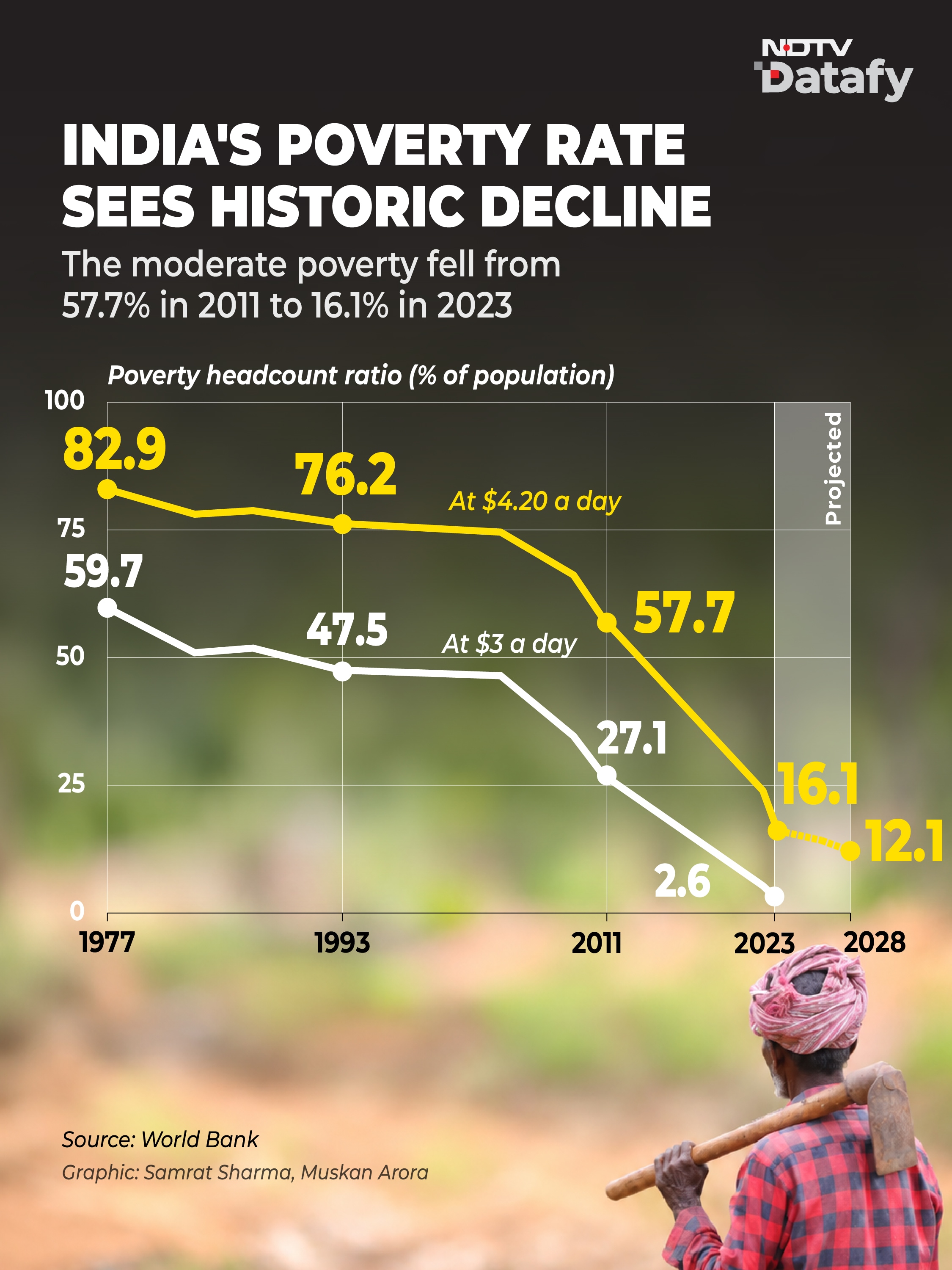
According to the report, the share of India's population living below the lower-middle-income country poverty line of $4.20 a day fell from 57.7 per cent in 2011 to 16.1 per cent in 2023. The World Bank expects the poverty rate to fall further, from 14.2 per cent in 2026 to 12.1 per cent by 2028.
Extreme poverty, measured at a threshold of roughly $3 a day, also fell sharply. The share of Indians living below that level dropped from 27.1 per cent in 2011 to 2.6 per cent in 2023, which shows the scale of the reduction over that period.
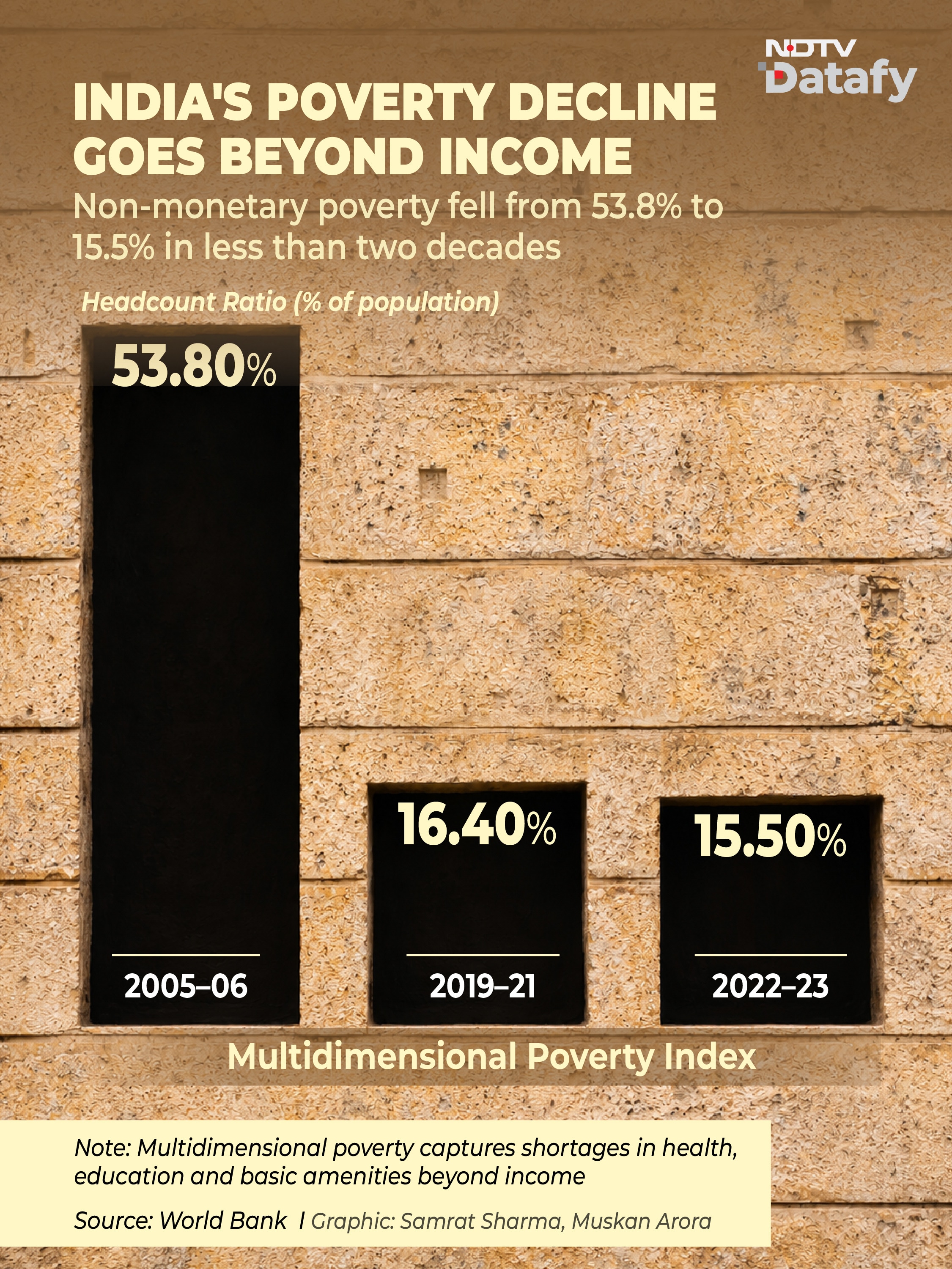
The improvement extends beyond income. Measures of multidimensional poverty, which capture deprivations in areas such as nutrition, sanitation, housing, education and access to basic services, also show significant progress.
According to the Oxford Poverty and Human Development Initiative's Multidimensional Poverty Index, poverty fell from 53.8 per cent in 2005-06 to 16.4 per cent in 2019-21. The World Bank's latest estimate, using its own multidimensional measure, puts the figure at 15.5 per cent in 2022-23.
The distinction matters because income alone does not fully reflect living standards. Two households may earn similar incomes, but differences in access to toilets, nutrition, healthcare, education and other basic amenities can lead to vastly different quality of life.
The World Bank attributed the fall in poverty largely to strong consumption growth, rising employment, particularly among women, and expanded social support programmes, including food subsidies.
As poverty falls, though, it is becoming more concentrated among households with lower educational attainment, fewer productive assets, weaker access to stable employment and higher dependency ratios.
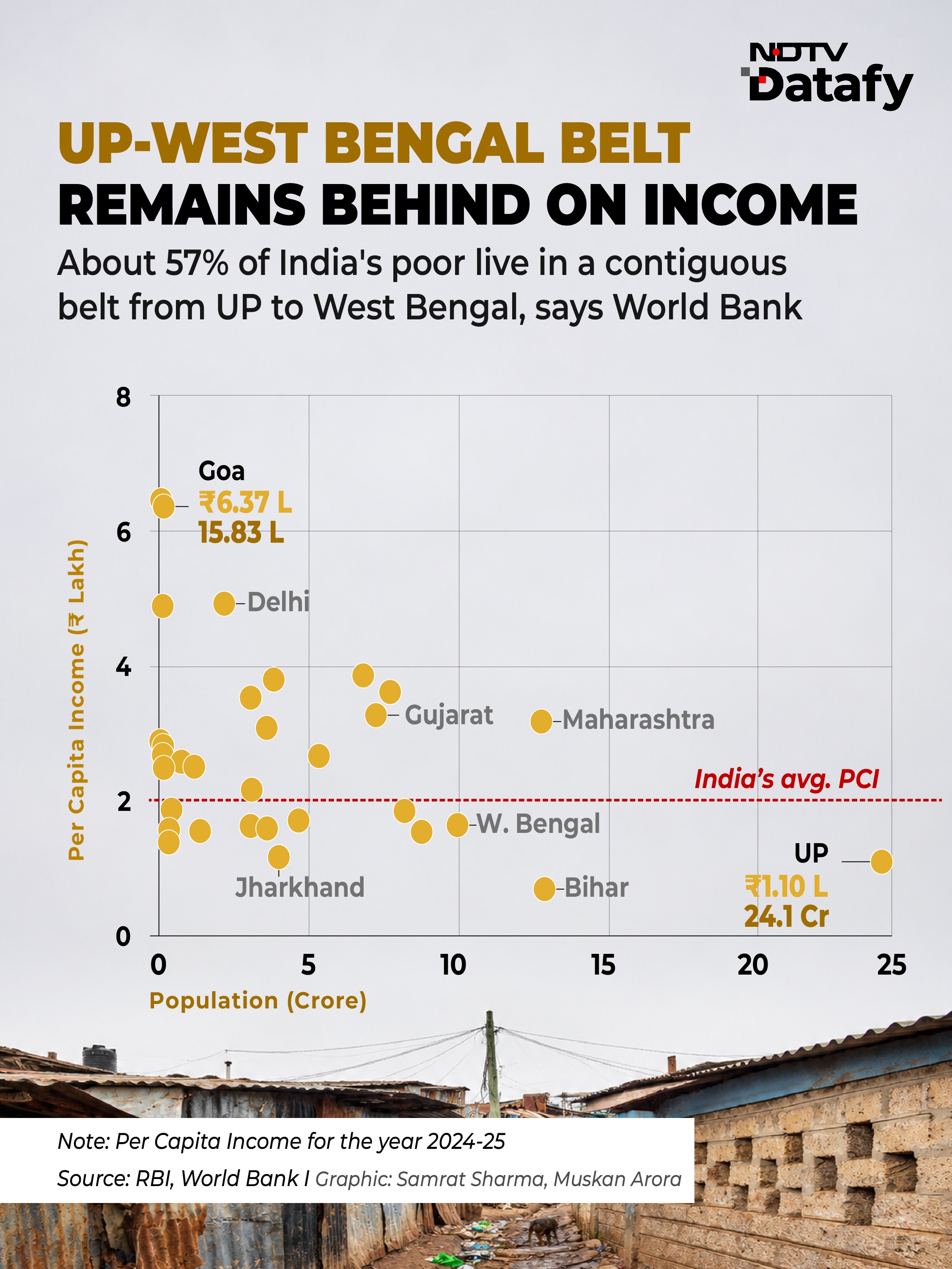
The report also highlighted a growing geographic concentration of poverty. Living standards have improved across most states, but a contiguous belt stretching from Uttar Pradesh to West Bengal accounts for about 57 per cent of India's poor population.
The pattern closely mirrors income disparities. Bihar, with a per capita income of about Rs 69,211, remains at the bottom of the state rankings, according to the Reserve Bank of India's 2024-25 figures. Uttar Pradesh, India's most populous state, has a per capita income of roughly Rs 1.10 lakh, while Jharkhand (Rs 1.17 lakh) and West Bengal (Rs 1.64 lakh) also lag behind wealthier states.
As poverty becomes more concentrated in these regions, further reductions at the national level will increasingly depend on creating productive jobs, raising incomes and improving human capital outcomes across this corridor.
Track Latest News Live on NDTV.com and get news updates from India and around the world

